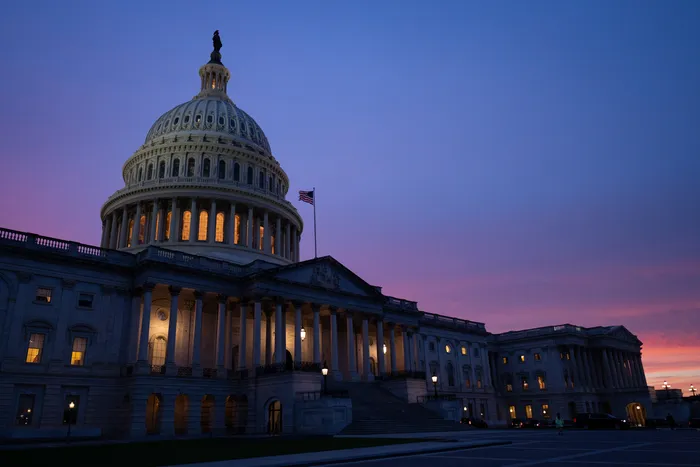
U.S. Representatives Mike Lawler (R-NY-17) and Pat Ryan (D-NY-18) have introduced bipartisan legislation titled the National Security Commission on Quantum Computing Act of 2026 (H.R. 9318). The proposed bill outlines the creation of an independent, 11-member advisory panel tasked with conducting a systematic evaluation of global quantum technology advancements. Operating as a legislative study framework, the commission is chartered to draft actionable policy recommendations for both Congress and the executive branch to safeguard domestic intellectual property, insulate cryptographic defense layers, and sustain federal technological positioning within the defense and advanced computing landscapes.
Commission Assembly and Mandate Architecture
If enacted into law, the 11-member bipartisan commission will execute a broad assessment of the operational opportunities and structural challenges associated with the accelerating transition to quantum-capable ecosystems. The panel’s primary investigative directives encompass:
- Foreign Dependency and Threat Tracking: Monitoring adversarial state capital allocations, state-backed research infrastructure developments, and foreign direct investments in physical quantum hardware sub-components.
- Sovereign Industrial Base Protection: Identifying strategic supply chain vulnerabilities across raw semiconductor pipelines, cryogenic dilution refrigeration systems, and high-purity laser routing architectures.
- Public-Private Interoperability: Designing structured integration pathways to enhance resource-sharing between commercial technology foundries, national research laboratories, and state-linked educational hubs.
- Workforce Incubation Mechanics: Evaluating domestic STEM training pipelines, technical apprenticeship frameworks, and regional skill development goals required to cultivate the next generation of specialized hardware engineers and systems technicians.
Legislative Context and Strategic Posture
The bill’s introduction lands amid tightening global timelines regarding post-quantum cryptography (PQC) readiness frameworks. With defense organizations actively preparing for the systematic disruption of traditional mathematical public-key encryption layers within the next five to ten years, the piece of legislation attempts to map out an institutional roadmap before structural decryption vulnerabilities materialize. Representative Ryan, a member of the House Armed Services Committee, emphasized that technological advantages dictate modern conflict boundaries, establishing the study commission as an immediate operational planning priority.
The proposal has been formally recorded and referred for cross-committee review across multiple panels, including the House Committee on Armed Services, the Committee on Foreign Affairs, the Committee on Science, Space, and Technology, the Committee on Energy and Commerce, and the Committee on Education and the Workforce.
The official legislative announcement from Representative Lawler’s congressional office can be reviewed here. For direct access to the complete statutory language detailing structural appointee selection criteria and formal reporting timelines, read the legal text here, and monitor live committee assignments, co-sponsor additions, and subsequent floor vote calendars via the Library of Congress tracking registry here.
June 18, 2026