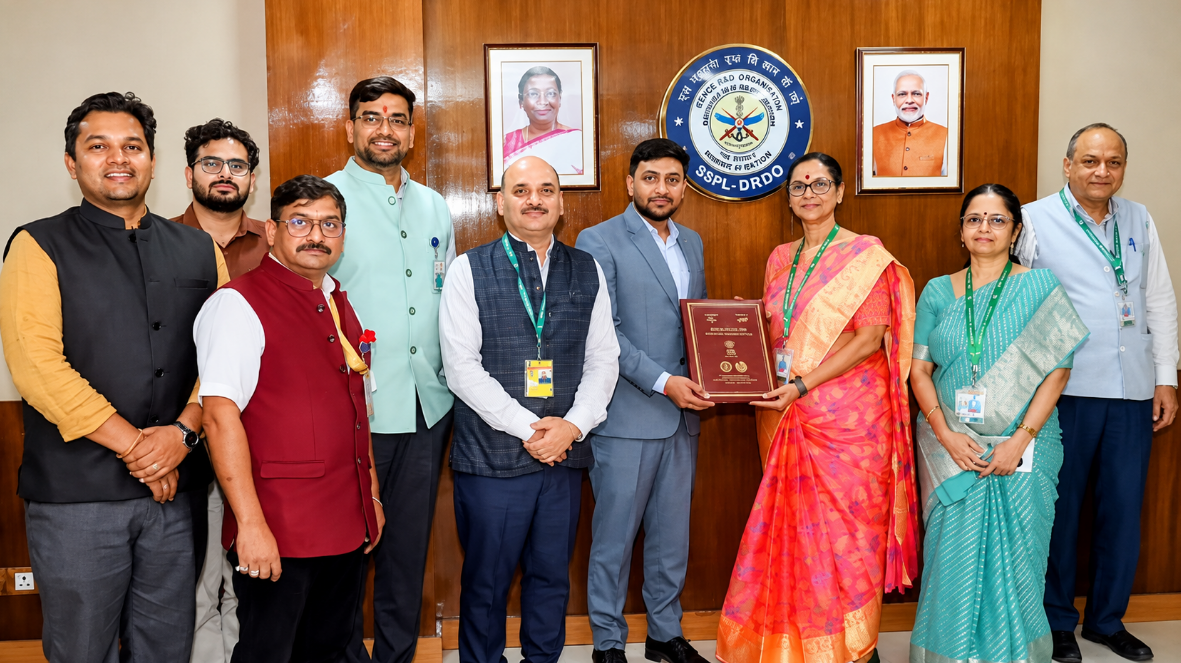
India’s Defence Research and Development Organisation (DRDO) has executed its first high-value deep-tech project agreement under the Technology Development Fund (TDF) scheme with domestic startup Zero mK India. The collaborative contract targets the indigenous engineering and fabrication of a 20 millikelvin (20 mK) dilution refrigerator, establishing a secure domestic supply chain for sub-kelvin cryogenic hardware essential for quantum computing and defense applications.
The agreement represents the first high-value project sanctioned under the expanded ₹500-crore (~$52.2 million USD) TDF corpus approved by Defence Minister Rajnath Singh. Dilution refrigerators provide the ultra-low temperature, sub-absolute-zero environment (spanning down to 20 mK) required to preserve phase coherence in solid-state quantum processing units, including superconducting circuits, silicon spin qubits, and quantum sensing arrays. The project is monitored, mentored, and technically evaluated by the director and scientific team at DRDO’s Solid State Physics Laboratory (SSPL) in Delhi.
| [ DRDO TDF Deep-Tech Cryogenic Project Overview ] | ||
|---|---|---|
| Entity / Program | Technical & Cryogenic Targets | Strategic & Policy Context |
| • DRDO & Zero mK India • TDF Scheme Grant • Mentorship: SSPL Delhi | • Operating Temp: 20 mK (0.02 K) • Sub-kelvin 3He/4He dilution circulation • Scalable QPU testing & packaging stage | • National Alignment: National Quantum Mission • Fund: ₹500-Crore TDF Deep-Tech Corpus • Reduces import dependency on Western cryo vendor systems |
Aligning with India’s National Quantum Mission (NQM), the project mitigates sovereign import vulnerabilities for specialized cryogenic equipment. By developing indigenous sub-kelvin refrigeration capabilities, the initiative supports domestic research laboratories, defense communication programs, and commercial quantum hardware developers building sovereign quantum computing infrastructure.
Review the official press release via the Press Information Bureau (PIB Delhi) here.
September 25, 2026