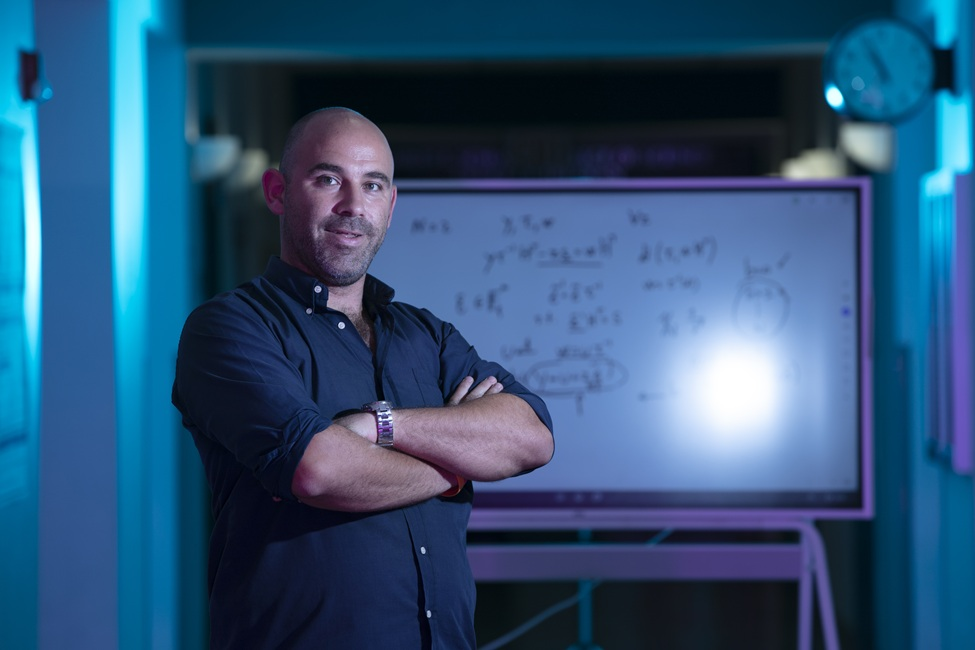
The National Science Foundation (NSF) has awarded a $399,964 grant (Award No. 2528909) to researchers at Florida Atlantic University’s (FAU) Charles E. Schmidt College of Science. Led by Dr. Edoardo Persichetti, professor of mathematics and statistics and director of the Center for Cryptology and Information Security, alongside co-principal investigator Dr. Veronika Kuchta, the three-year project (active May 15, 2026 – April 30, 2029) aims to develop advanced cryptographic primitives designed to secure decentralized systems and digital infrastructure against future quantum computing attacks.
While global standardization efforts led by the National Institute of Standards and Technology (NIST) have primarily focused on foundational PQC mechanisms—such as public-key encryption and digital signatures (including FAU-contributed standards like the Hamming Quasi-Cyclic (HQC) key encapsulation mechanism and CRYSTALS-DILITHIUM)—this NSF initiative (Collaborative Research: SaTC 2.0: RES: Post-Quantum Cryptographic Protocols with Advanced Functionalities) moves beyond basic primitives to build sophisticated capabilities including blind signatures, threshold signatures, multisignatures, and verifiable random functions.
| [ FAU NSF Post-Quantum Cryptography Project Overview ] | ||
|---|---|---|
| Project Attribute | Institutional & Technical Scope | Core Deliverables & Research Focus |
| • Grant Details | • NSF Award #2528909: $399,964 (May 2026 – April 2029) | • Collaborative Research: SaTC 2.0: RES: Post-Quantum Cryptographic Protocols with Advanced Functionalities. |
| • Principal Investigators | • Dr. Edoardo Persichetti (PI) & Dr. Veronika Kuchta (Co-PI) | • Department of Mathematics & Statistics / Center for Cryptology and Information Security. |
| • Mathematical Frameworks | • Lattices, error-correcting codes, and group actions | • Rigorous security proofs utilizing zero-knowledge proofs and algebraic structural assumptions. |
| • Advanced Functions | • Blind, threshold, and multisignatures; verifiable random functions | • Securing decentralized architectures, privacy-preserving transactions, and distributed ledgers. |
Advancing Algebraic Foundations and Workforce Training
The research team will investigate algebraic structures spanning lattice-based cryptography, error-correcting codes, group actions, and isogeny-based frameworks. By combining zero-knowledge proofs with structured security assumptions, the project seeks to optimize protocol efficiency, scalability, and bandwidth overhead for modern privacy-preserving applications.
In addition to foundational cryptographic research, the NSF award directly supports student mentoring, research experiences, and cybersecurity outreach programs. The initiative builds upon FAU’s growing institutional leadership in quantum-safe security, complementing hardware installations such as the university’s D-Wave Advantage2™ annealing quantum system at its Boca Raton campus.
Review the official university announcement on the FAU Newsdesk Portal here and examine the official grant abstract on the NSF Award Search Portal here.
October 22, 2026