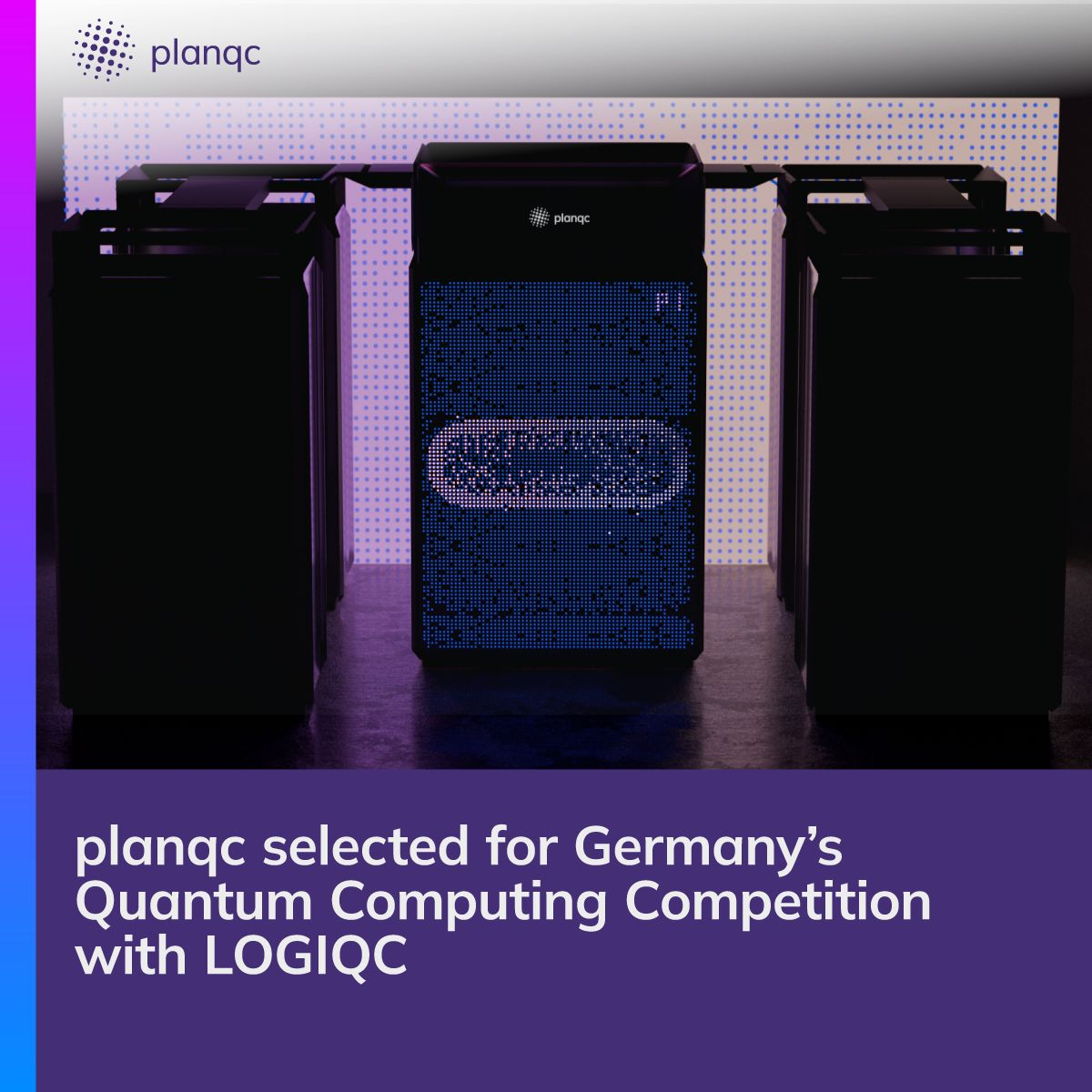
The German Federal Ministry of Research, Technology and Space (BMFTR) has advanced six industrial and academic consortia through the outline phase of its flagship Mission-Driven Hardware Competition: Fault-Tolerant Quantum Computing With Pilot Line Development (Quantum Computing Competition). Anchored under Germany’s High-Tech Agenda Deutschland (HTAD), the competition allocates up to €640 million ($717.2 million USD) in total national funding across all selected hardware tracks to deploy at least two state-of-the-art fault-tolerant quantum processing units (QPUs) by 2030.
The national competition evaluates the three most mature hardware platforms—neutral atoms, trapped ions, and superconducting circuits—with two consortia selected per technology stream to submit full proposals. Selected consortia must demonstrate functioning entry systems by March 31, 2027, before advancing toward 2030 fault-tolerant scaling goals.
| [ BMFTR Quantum Computing Competition Consortium Highlights ] | ||
|---|---|---|
| Project / Consortium | Hardware Modality & Lead Partners | Funding & Technical Scope |
| • LOGIQC Project | • Neutral Ytterbium (Yb) Atoms • Led by planqc (with TOPTICA, MPQ, LMU, FZJ, Univ. of Tübingen) | • Selected under the umbrella €640M ($717.2M USD) national program; universal logical qubit operations; pilot-line laser distribution and optical facilities |
| • NFQC-1k Project | • Trapped-Ion Microtraps • Expansion with AQT Germany & QVLS (LUH, TU Braunschweig, PTB) | • €122M (~$138.8M USD) total project volume; 1,000 physical / 50 logical qubit QPU; <0.01% logical gate error rate; QFT verification |
In the neutral-atom category, Munich-based startup planqc leads the LOGIQC (Logical Operations, Gates and Infrastructure for Quantum Computing) consortium, originating from the Munich Quantum Valley (MQV). The project targets a hardware-efficient, error-corrected neutral-atom QPU built on ytterbium atom arrays, alongside establishing dedicated pilot-line optical and laser infrastructure under the overall €640 million BMFTR program fund.
Concurrently, AQT Germany GmbH and regional partners within the Quantum Valley Lower Saxony (QVLS)—including Leibniz University Hannover (LUH), TU Braunschweig, and the Physikalisch-Technische Bundesanstalt (PTB)—have formally detailed their specific roles within the €122 million (~$138.8 million USD) NFQC-1k trapped-ion project. AQT Germany contributes commercial optical control and 19-inch rack-mounted cryogenic packaging, while academic partners supply ion-trap physics, micro-optical fabrication, and metrology error-mitigation benchmarks for the 1,000-qubit system.
Review the neutral-atom selection on the planqc Press Release here, inspect the trapped-ion expansion on the here, and read regional ecosystem coverage on the here, examine our previous coverage on the QUDORA-led NFQC-1k project announcement here.
October 5, 2026