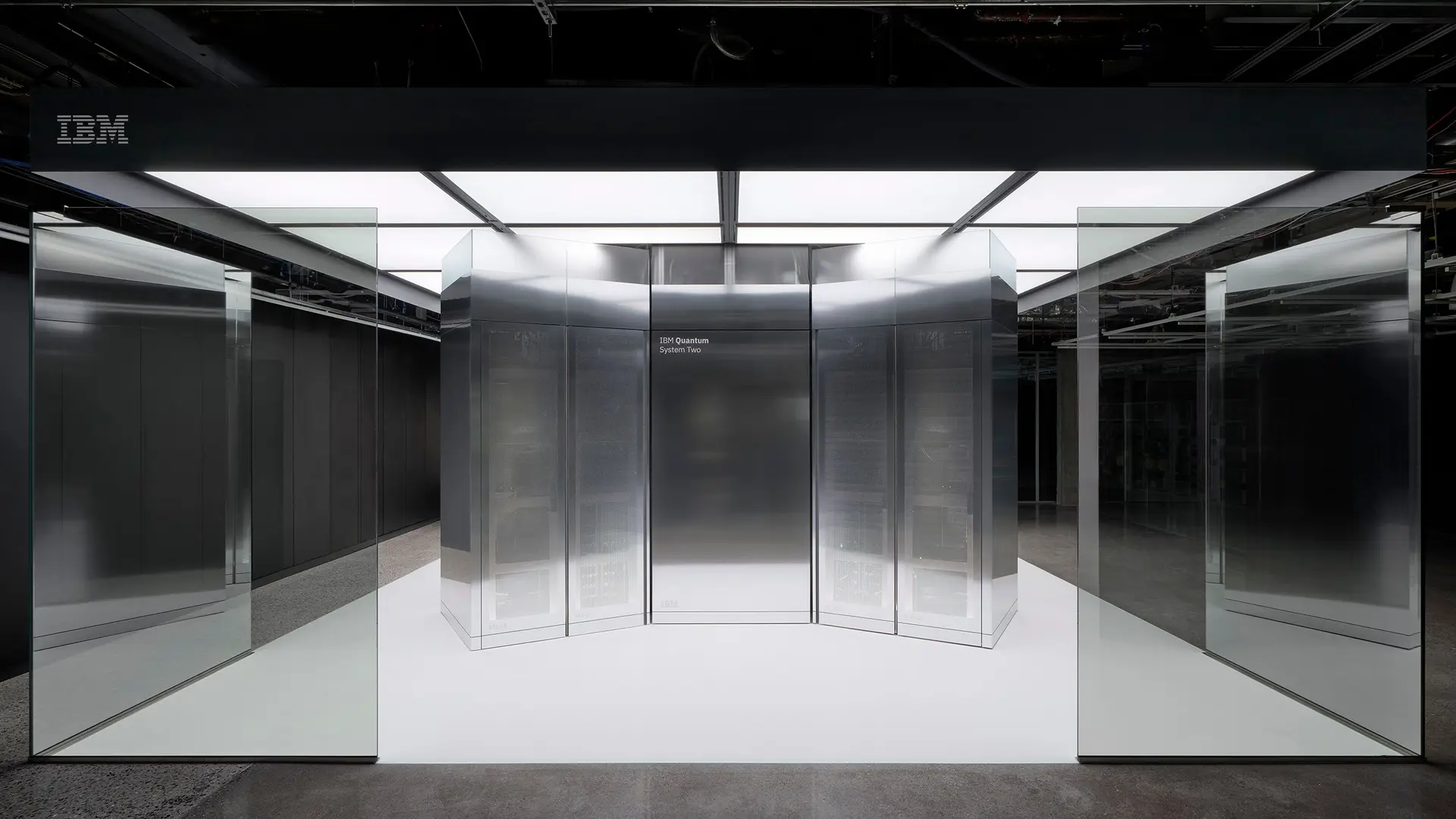
In alignment with federal initiatives to establish an integrated national research platform, IBM (NYSE: IBM) has announced a $50 million commitment in quantum computing access to support the U.S. Department of Energy’s (DOE) Genesis Mission. The five-year compute contribution will grant researchers across DOE national laboratories and collaborating academic institutions direct access to IBM’s utility-scale QPU fleet. In parallel, IBM was selected as a lead performer under a Phase I Genesis Mission Request for Applications (RFA) project focused on agentic AI-driven quantum algorithm discovery.
                         [ IBM Genesis Mission Support Matrix ]
  Compute Contribution──► $50 Million equivalent in utility-scale QPU access over 5 years.
  Primary Backends    ──► 156-qubit IBM Quantum Heron & 120-qubit IBM Quantum Nighthawk.
  Performance Target  ──► Up to 100,000 circuits/sec & 5,000+ QuOps via Nighthawk QPUs.
  Core Project Track  ──► Agentic AI assistants for quantum algorithm-use case inversion.
  Ecosystem Partners  ──► DOE National Labs (ORNL, LBNL, LANL) & NQIS Research Centers.
Agentic AI for Inverse Quantum Application Discovery
As part of its Phase I Genesis Mission RFA selection, IBM is introducing an inverted workflow model designed to match existing quantum algorithms with real-world scientific problems:
- Inverted Workflow Concept: Rather than starting with a complex material or chemical problem and attempting to map it onto quantum hardware, the project begins with mathematically proven quantum algorithms.
- Agentic AI Literature Screening: An agentic AI assistant ingests scientific literature, identifies physical or chemical system models matching the underlying algorithmic structures, and proposes candidate applications.
- Expert Criteria Validation: Human researchers define formal benchmark parameters, while the AI agent conducts large-scale automated literature searches to identify candidates beyond manual analytical limits.
This AI-guided discovery framework builds on recent collaborative demonstrations between IBM, Oak Ridge National Laboratory (ORNL), and Cleveland Clinic, where an integrated loop combining AI screening agents, classical GPU supercomputers, and IBM quantum processors was used to simulate molten salts for tritium fuel production in fusion reactors.
Deploying Utility-Scale QPUs Across the National Lab System
The $50 million compute commitment will be powered by IBM’s latest utility-scale systems, including its 156-qubit IBM Quantum Heron and 120-qubit IBM Quantum Nighthawk processors. The Nighthawk-based systems are engineered to deliver high-throughput execution—capable of reaching up to 100,000 quantum circuits per second and exceeding 5,000 Quantum Operations (QuOps).
Beyond raw QPU time, IBM will provide technical integration support to pair its systems directly with classical High-Performance Computing (HPC) clusters and AI supercomputing infrastructure across DOE facilities—including Lawrence Berkeley National Laboratory, Oak Ridge National Laboratory, Los Alamos National Laboratory, and DOE National Quantum Information Science (NQIS) Research Centers.
Read the full corporate announcement on the IBM Research Blog here, and track federal project parameters via the U.S. Department of Energy Genesis Mission Hub here.
July 22, 2026

