
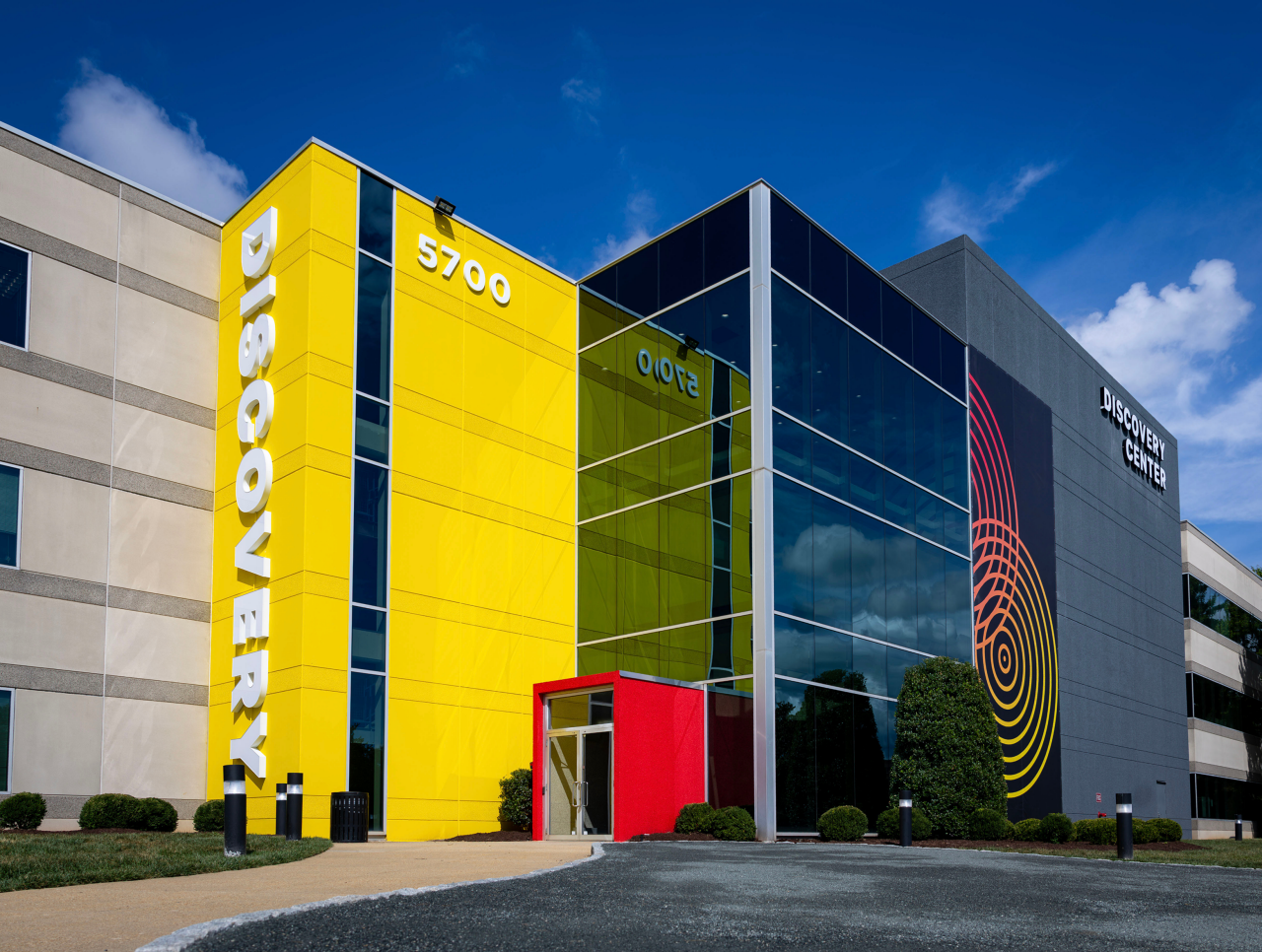
Microsoft Quantum has officially opened its 15,000-square-foot Quantum Research Center within the Discovery District in College Park, Maryland. Developed in partnership with the University of Maryland (UMD) and supported by Governor Wes Moore’s state-backed Capital of Quantum initiative, the facility combines classified research zones, a hardware makerspace, and dedicated testing infrastructure designed to accelerate full-stack quantum system integration and workforce training.
A primary operational objective of the Maryland center is providing physical hardware access for independent testing and evaluation by the Defense Advanced Research Projects Agency (DARPA) under its Underexplored Systems for Utility-Scale Quantum Computing (US2QC) program and broader Quantum Benchmarking Initiative (QBI). Microsoft delivered its latest Majorana 2 topological quantum processing chip—which incorporates a lead-based material stack replacing aluminum for improved topological protection—to the facility for site-level verification by DARPA and its evaluation partners, including the Air Force Research Laboratory (AFRL), Johns Hopkins University Applied Physics Laboratory (JHU-APL), and Los Alamos, Oak Ridge, Lawrence Berkeley, and Lawrence Livermore National Laboratories.
| [ Microsoft Quantum Research Center & Ecosystem Integration Framework ] | ||
|---|---|---|
| Facility Subsystem | Hardware & Partner Infrastructure | Strategic Mission & Deliverables |
| DARPA Testbed | • Majorana 2 Topological QPU (Lead Material Stack) • Dilution Refrigerator Infrastructure | • Independent hardware verification for US2QC/QBI • Fault-tolerant topological qubit validation |
| Hardware Makerspace | • AMD, Bluefors, Intel, IQM, Fermilab, Riverlane • Quantum Motion & Fermilab QICK Control Stack | • Hands-on hardware assembly and debugging • Cross-modality control sequence synthesis |
| QDK Analytics Preview | • Quantum Tensor PCA Algorithm Library • Azure Quantum OS & LSEG Financial Workflows | • Higher-order pattern discovery in noisy datasets • Financial risk modeling (XVA, ESG, liquidity) |
To support experiential learning across the full hardware stack, Microsoft launched a quantum hardware makerspace in collaboration with industry and national laboratory partners, including AMD, Bluefors, Intel, IQM, Quantum Motion, Riverlane, and Fermilab. The makerspace integrates Fermilab’s open-source Quantum Instrumentation Control Kit (QICK)—an FPGA/RFSoC-based control and readout framework adapted across superconducting, trapped-ion, cold-atom, and silicon spin-qubit architectures—to train students and researchers on physical signal processing, pulse design, and component integration. Additionally, Microsoft established annual measurement-based quantum computing workshops and funded new quantum postdoctoral research fellowships at UMD.
Concurrently, Microsoft announced the private preview of the Microsoft Quantum Development Kit (QDK) for analytics, featuring a specialized library for Quantum Tensor Principal Component Analysis (Quantum Tensor PCA). Developed to isolate higher-order correlations in high-dimensional datasets, the software stack is undergoing evaluation in partnership with the London Stock Exchange Group (LSEG) across financial risk modeling, mortgage prepayment analytics, counterparty credit risk (XVA), and market data feed reliability.
Alongside the facility launch, Microsoft Quantum published a landmark technical paper on arXiv (arXiv:2609.20549), co-authored by Dr. Matthias Troyer, Dr. Chetan Nayak, and Nobel Laureate Dr. John Martinis. The publication introduces a formal definition of scalable logical qubits, establishing an auditable framework across four coupled dimensions: reliability (10⁻¹² to 10⁻¹⁵ logical error rates), scale (100 to 1000+ logical qubits with O(N log ε⁻¹) overhead scaling), capability (universal operations with low-latency real-time decoding and measurement-conditioned control flow), and performance (fast logical cycle times and cost efficiency).
Review the facility overview on Microsoft Quantum Blog here, inspect software details at Microsoft QDK Analytics Preview here, examine research preprints on arXiv Classical and Quantum Tensor PCA here, read the logical qubits foundational paper on arXiv Scalable Logical Qubits here, read the national lab announcement via Fermilab Newsroom here, and explore our prior coverage of Microsoft’s Original Announcement to Build the Maryland Quantum Research Center here, Quantum Motion’s Hardware Base in the Discovery District here, IQM’s U.S. Quantum Technology Center in Maryland here, and Riverlane’s U.S. Headquarters Expansion in College Park here.
September 22, 2026