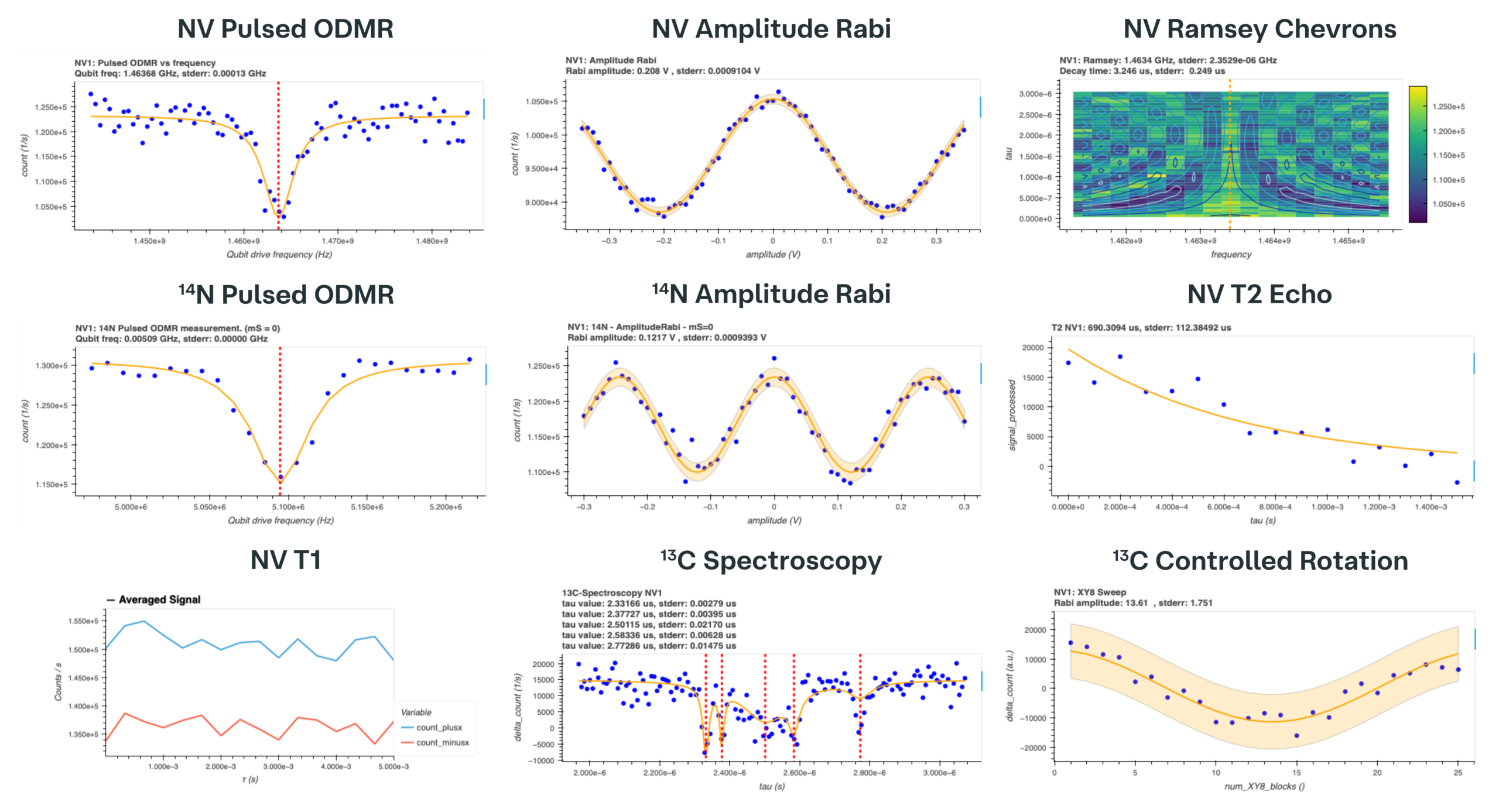
Qruise has announced a strategic collaboration with XeedQ and the Modular Supercomputing and Quantum Computing (MSQC) group at Goethe University Frankfurt to automate the calibration and control of nitrogen-vacancy (NV) center quantum systems. Utilizing its QruiseOS software, the team successfully demonstrated the automated “bring-up” of the XQ1 (known as “Baby Diamond”), a 5-qubit portable QPU developed by XeedQ. This integration allows researchers to execute complex experiments—ranging from basic optically detected magnetic resonance (ODMR) to advanced gate tomography—without the manual tuning typically required for room-temperature quantum hardware.
The collaboration achieved single-qubit gate fidelities exceeding 99.8% by integrating QruiseOS with the system’s control stack, which is powered by a Quantum Machines OPX. A key technical achievement involved the use of QruiseML to create a “differentiable digital twin” of the entire QPU. This digital model simulates the physical behavior of the qubits and their control electronics, allowing for the optimization of control pulses that are robust against variations in Rabi frequency and amplitude. These optimized pulses were validated on the hardware, showing a high degree of correlation between simulated predictions and experimental performance.
Looking forward, Qruise and MSQC intend to expand their focus toward entangling gates to improve the reliability of multi-qubit operations. By providing a hardware-agnostic software layer that simplifies the characterization and debugging of physical systems, Qruise aims to lower the barrier for research and education institutions using accessible platforms like XeedQ’s portable systems. As MSQC hosts the first quantum computer in the German state of Hesse, this partnership is a critical step toward the seamless integration of NV-center devices into High-Performance Computing (HPC) environments.
You can find the official announcement regarding the Qruise and Goethe University collaboration here.
May 2, 2026