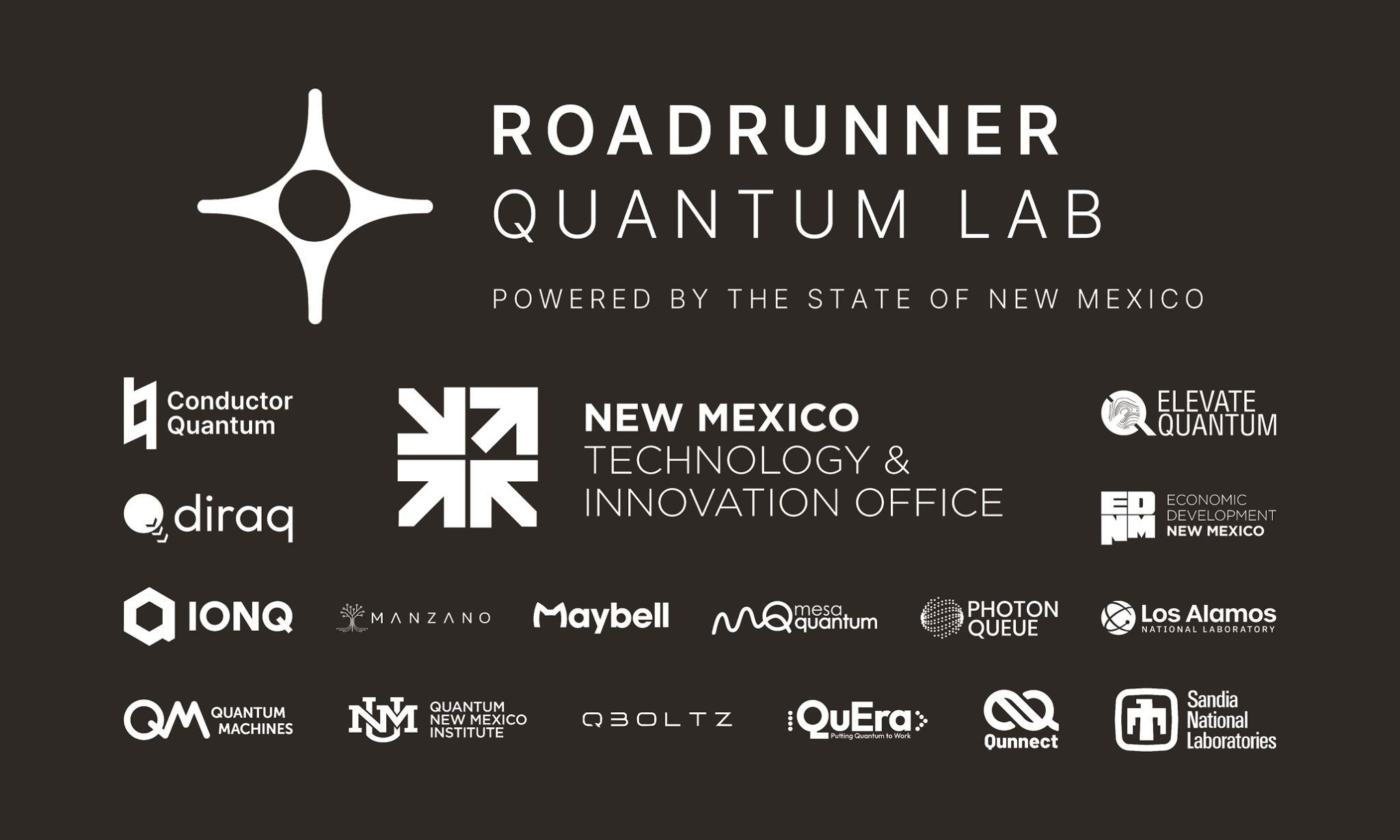
Roadrunner Venture Studios and the New Mexico Technology and Innovation Office (TIO) have launched the Roadrunner Quantum Lab (RQL), a 35,000-square-foot multi-tenant testing, benchmarking, and commercialization hub in Albuquerque’s Innovation District. Supported by $25 million in state venture studio backing—part of New Mexico’s $450 million quantum commitment—the facility integrates shared cryogenic infrastructure, dilution fridges, a multi-node quantum network, and dedicated optical laboratories to transition physics research into commercial hardware.
A central technical capability is the Quantum Demonstration Facility (QDF), operated via a cooperative research joint venture between Sandia National Laboratories and Los Alamos National Laboratory (LANL). The QDF provides resident startups with direct access to national lab scientists, characterization tools, and independent device benchmarking under formal Cooperative Research and Development Agreements (CRADAs). Additionally, Tech Hub operator Elevate Quantum (EQ) is installing open-access sub-kelvin cryogenic component testing rigs and hands-on technician training suites, operating alongside a separate low-volume quantum packaging facility in Albuquerque.
The facility debuts with a comprehensive roster of 15 quantum hardware, software, sensing, and capital partners:
| [ Complete Roadrunner Quantum Lab Resident Cohort & Ecosystem Partners ] | ||
|---|---|---|
| Tenant / Partner Entity | Technology Modality & Hardware Platform | RQL Technical Deployment & Facility Objectives |
| • QuEra Computing (Anchor Tenant) | • Neutral-atom quantum processing units • Rydberg-state optical trap arrays | • Constructing $4M open-access photonics/optics test facility • On-site hybrid QPU-HPC co-design compute infrastructure |
| • Maybell Quantum | • Sub-kelvin cryogenic fridges • High-density quantum wiring & shielding | • Deploying dilution refrigerators directly inside RQL • Providing shared cryogenic infrastructure for resident QPUs |
| • Qunnect | • Quantum networking & memories • Entanglement distribution over fiber | • Co-deploying ABQ-Net (New Mexico’s first regional quantum network) • Integrating room-temperature photon memory links |
| • Diraq | • Silicon MOS spin qubits • CMOS-compatible quantum dot processors | • Deploying hardware characterization & test/measurement station • Supporting DARPA Quantum Benchmarking Initiative (QBI) work |
| • IonQ | • Trapped-ion quantum architecture • Barium-ion Superion QPU platform | • QPU application development with national laboratories • Joint quantum networking and sensing research |
| • Quantum Machines | • Hybrid quantum-classical control hardware • OPX control orchestration platform | • Establishing multi-modality control & pulse characterization hub • Direct RF pulse control integration for spin, atom, & superconducting QPUs |
| • QBoltz | • Photonic Ising machine (QBrain) • Room-temperature optical optimization | • Hardware prototyping & applied research for combinatorial logistics • Interfacing Ising solvers with resident QPU architectures |
| • Mesa Quantum | • Chip-scale quantum PNT sensors • Proprietary Q-VCSEL laser platform | • Dedicated testing & validation laboratory for atomic PNT sensors • Scaling volume manufacturing for NIST/Sandia-derived designs |
| • Elevate Quantum (EQ) | • Regional Tech Hub operator • Open-access cryogenic testing | • Operating shared sub-kelvin component test rigs • Hands-on workforce training for commercial technicians |
| • Photon Queue | • Free-space linear optical quantum memory • Room-temperature photon storage | • Branch office for optical memory assembly, tuning, & laser testing • Supplying memory devices to adjacent customer Sandia National Labs |
| • Sandia National Labs & Los Alamos National Lab | • National laboratory research coalition • Independent device benchmarking | • Co-operating the site-wide Quantum Demonstration Facility (QDF) • CRADA-backed hardware characterization & algorithm development |
| • Univ. of New Mexico (UNM) (Quantum New Mexico Inst.) | • Academic research partner • Quantum New Mexico Institute | • On-site academic research node & workforce talent pipeline • Operating user facilities (CHTM) for nanofabrication & packaging |
| • Conductor Quantum | • Cloud QPU infrastructure & orchestration • AI-driven QPU control benchmarking | • RQL office base to interface hardware control code with local QPUs • Cloud integration for resident quantum testbeds |
| • Manzano Systems | • Integrated photonic signal processing • Photonic IC prototyping | • Design, rapid prototyping, & characterization of photonic chips • Advanced manufacturing integration for quantum networking |
| • Noblespace & Playground Global | • Real estate & Venture Capital | • Real estate conversion (35,000 sq ft) and deep-tech venture funding • Backing resident teams (Mesa Quantum, Photon Queue) |
By bringing together neutral-atom, spin, trapped-ion, photonic, and cryogenic hardware under one roof alongside local national lab scientists, the Roadrunner Quantum Lab bridges laboratory physics research with venture creation. With anchor infrastructure like QuEra’s photonics testbed, Qunnect’s ABQ-Net quantum network, and Maybell’s dilution refrigerators, RQL establishes a Southwest regional launchpad for utility-scale quantum hardware commercialization.
Review the primary release via PR Newswire here, inspect state economic strategy details on New Mexico Economic Development Department here, and examine facility specs at Roadrunner Quantum Lab Portal here.
September 30, 2026