
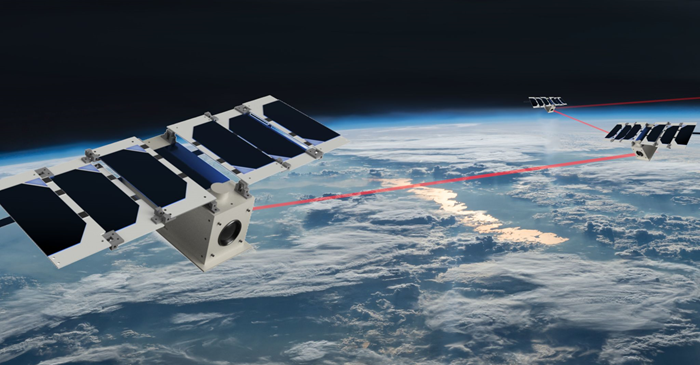
Cybersecurity and digital identity conglomerate WISeKey International Holding Ltd has finalized the orbital insertion of its WISeSat 4.0 satellite, marking the 21st spacecraft deployed by its space-technology subsidiary, WISeSat.Space Corp. Transported from Vandenberg Space Force Base in California, the payload was launched into low-Earth orbit (LEO) as part of SpaceX’s Transporter-16 rideshare mission. The operation forms part of a systematic infrastructure renewal strategy designed to account for the typical five-year operational lifespan of LEO units, allowing the group to cycle updated hardware configurations into its active satellite network throughout 2026 and 2027.
The QS7001 Cryptographic Integration and Space-Based Wallet Topologies
The WISeSat 4.0 orbital platform serves as a physical verification environment for converged security hardware developed by WISeKey’s semiconductor subsidiary, SEALSQ Corp. The satellite payload integrates a cryptographic QS7001 secure microcontroller chip directly alongside WISeKey’s hardware-embedded Root of Trust (RoT). This configuration is engineered to execute post-quantum cryptography (PQC) protocols, isolating data streams from future decryption threats across high-risk industrial infrastructure sectors, including defense networks, energy grids, and transnational logistics pathways. Furthermore, the localized processing architecture supports the phased deployment of decentralized SEALCOIN.AI digital wallets, establishing an on-orbit settlement layer to process machine-to-machine (M2M) economic transactions and secure device-to-device (D2D) data tokenization routines without requiring terrestrial routing relays.
Decentralized Layer Division: Infrastructure Hosting and Cloud Services
The deployment advances the systemic architecture of the Quantum Spatial Orbital Cloud (QSOC), a programmatic initiative aimed at scaling an independent, 100-satellite sovereign security network by 2033. To manage this infrastructure at scale, WISeKey implements a commercial asset division modeled after land-based hyperscale colocation data centers. Under this framework, WISeSat functions strictly as the physical capacity and infrastructure provider, engineering the satellite bus configurations, securing launch manifests, and operating the ground-station communication networks. Conversely, SEALSQ operates as the independent cloud services layer on top of the physical array, directly managing end-user subscription models, distributing quantum key distribution (QKD) tokens, and delivering contractually guaranteed 99.9% system uptime service-level agreements (SLAs) to enterprise and government clients.
The official corporate announcement documenting the SpaceX launch parameters, orbital trajectory details, and SEALCOIN protocol specifications can be reviewed directly through the active WISeKey Pressroom here. For a comprehensive historical overview tracking the long-term expansion of the QSOC framework, constellation capacity metrics, and the integration of post-quantum chips into automated edge environments, read our recent coverage on the orbital security ecosystem here.
June 12, 2026