

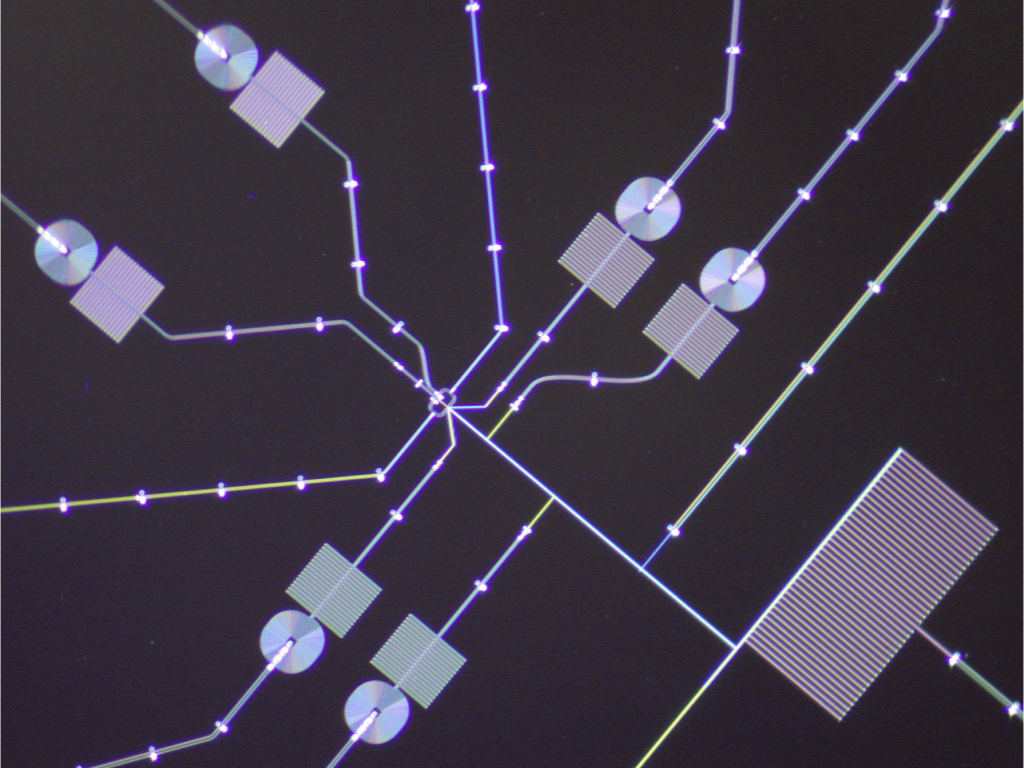
EeroQ has been developing a unique modality that involves using electrons bound to the surface of superfluid helium as the qubits. This approach is less mature than other, more common modalities, but it might be able provide significant advantages in the future including long coherence times, small qubit size, fast gates, and CMOS compatibility once the technology is developed further.
The company has just published a technical paper in Nature Physics describing a successful demonstration of Strong coupling of a microwave photon to an electron on helium that provides a mechanism to readout the state of the qubit. The approach uses a cavity to amplify the strength of the interaction between the electron and a single photon to provide for the exchange of the quantum information. This is the first time ever an electron on helium qubit has been physically demonstrated. Up until now, these qubits had only existed in theory.
As a next step, the company plans to demonstrate gate operations using their eHe technology. Unlike the approaches that some quantum companies have chosen, the company’s development strategy is to perfect the qubits and gate operations using small chips. But this will allow scaling up the number of qubits very rapidly to 10,000 qubits or more because they won’t have to work on improving both the number of the qubits and the quality of the qubits at the same time. Also, their technology can be manufactured in a CMOS foundry.
For additional information about this advance, you can view a press release provided by the company here and also access the technical paper published in Nature Physics here.
In GQI Portal
The players behind the news
The team that writes QCR tracks every company, deal and technology in the GQI Factory, GQI's verified database of the quantum industry. Next up: every story linked to its players, coming to QCR's paid plans.
- Players Companies and institutions across the quantum industry, by segment.
- Scorecards How the players compare on hardware, software, funding and more.
Newsletter
QCR Alerts in your inbox
The latest reporting and analysis from Quantum Computing Report. Free, unsubscribe any time.