

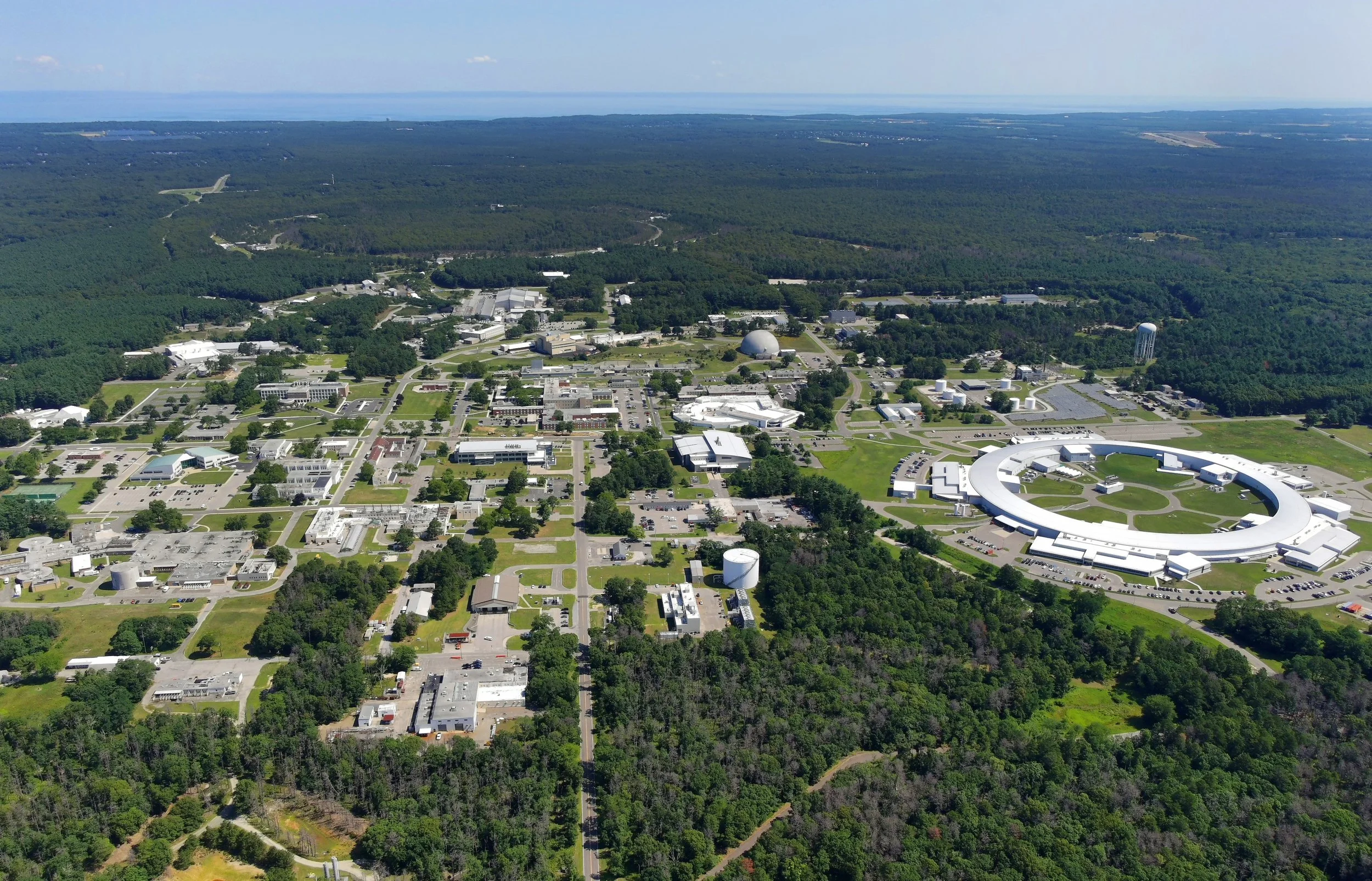
Photonic quantum hardware developer PsiQuantum and the U.S. Department of Energy’s (DOE) Brookhaven National Laboratory have established a strategic software collaboration to accelerate the development of fault-tolerant quantum algorithms and scientific applications. Under the agreement, Brookhaven scientists will utilize PsiQuantum’s open-access Construct software platform to design and optimize resource requirements for utility-scale quantum workloads.
| [ PsiQuantum & Brookhaven National Lab Partnership Scope ] | ||
|---|---|---|
| Software & Tooling Stack | Federal Initiative Alignment | Target Research Domains |
| • PsiQuantum Construct Platform | • DOE Quantum Genesis Initiative | • Materials Science & Chemistry |
| • Open-Access Quantum Circuit Compiler | • Target FTQC Capability by 2028 | • High-Energy Physics Simulations |
| • Fault-Tolerant Resource Estimator | • Broader DOE Genesis AI Mission | • Quantum-Safe Cryptography |
Supporting the DOE Quantum Genesis Initiative
The collaboration directly aligns with the DOE’s Quantum Genesis initiative—a federal program aimed at deploying a fault-tolerant, scientifically relevant quantum computing capability by 2028 as part of the broader, AI-focused Genesis Mission. The partnership connects public sector national laboratory research directly with commercial fault-tolerant software engineering:
- Fault-Tolerant Algorithm Design: Brookhaven researchers will use Construct to map complex scientific problems onto logical qubit architectures, compiling quantum circuits and calculating exact physical resource overheads (such as T-gate counts and error-correction budgets).
- Construct Open-Access Availability: First released publicly as a free platform in May 2026, Construct provides developers with a full suite of software tools to construct, simulate, and optimize fault-tolerant quantum subroutines prior to hardware availability.
- Public-Private Leadership: Led by Gabriella Carini (Associate Laboratory Director for Discovery Technologies at Brookhaven) and Heath Bumgardner (VP of Government Relations at PsiQuantum), the project serves as a model for public-private integration across DOE national laboratories.
Review the official press release via PsiQuantum here.
In GQI Portal
The players behind the news
The team that writes QCR tracks every company, deal and technology in the GQI Factory, GQI's verified database of the quantum industry. Next up: every story linked to its players, coming to QCR's paid plans.
- Players Companies and institutions across the quantum industry, by segment.
- Scorecards How the players compare on hardware, software, funding and more.
Newsletter
QCR Alerts in your inbox
The latest reporting and analysis from Quantum Computing Report. Free, unsubscribe any time.