

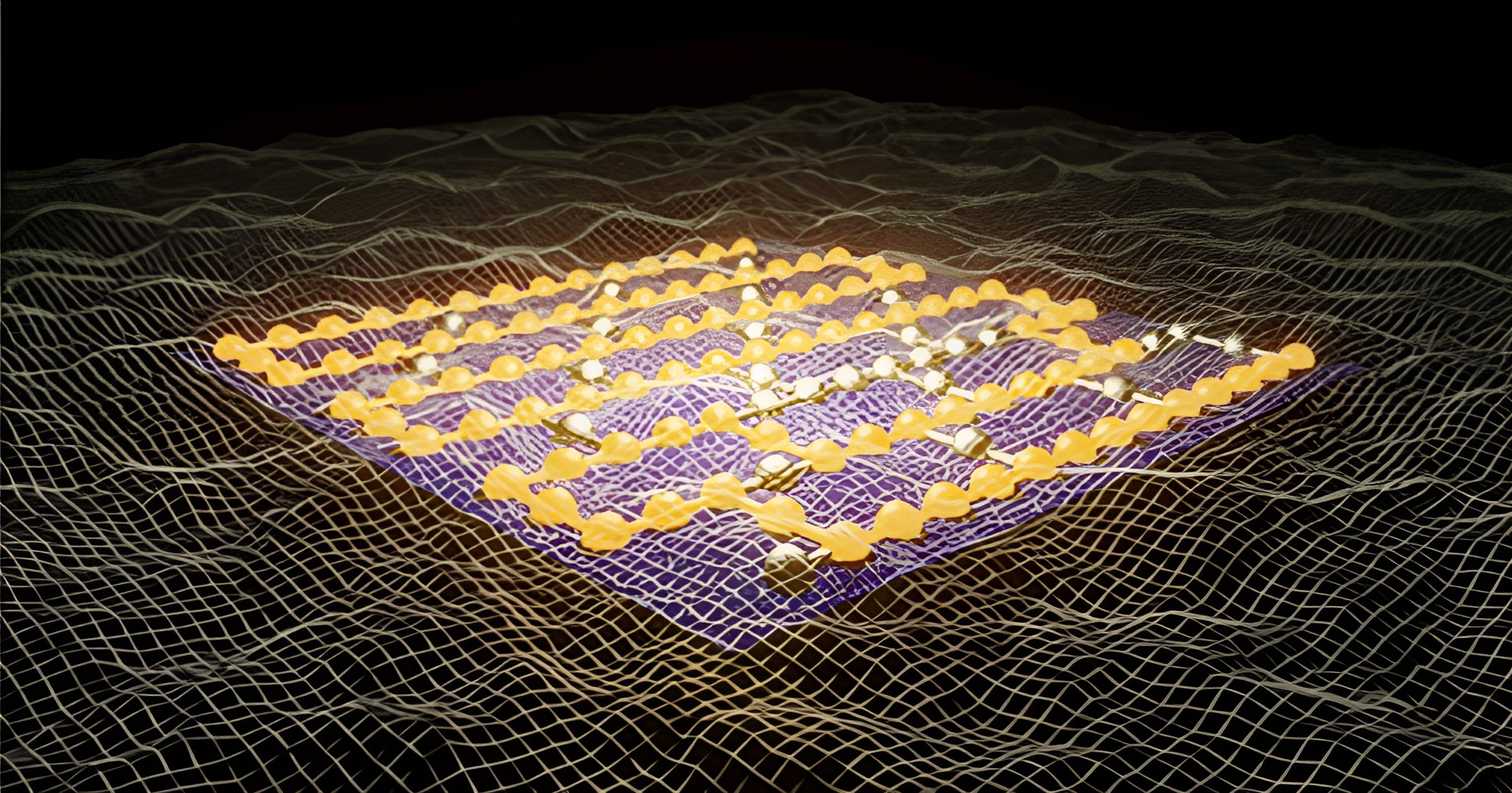
Nuclear physicists have successfully performed the largest digital quantum simulation to date using IBM quantum computers, demonstrating scalable quantum circuits for preparing initial states for simulations of fundamental physics. The research, led by scientists from the InQubator for Quantum Simulation (IQuS) at the University of Washington, addresses a critical challenge in using quantum computing to solve complex problems in the Standard Model of particle physics.
The method leverages symmetries and hierarchies in length scales to create scalable quantum circuits for preparing states with localized correlations, such as the quantum vacuum and hadrons, in one spatial dimension within quantum electrodynamics. Researchers first determined the necessary circuits for small systems using classical computers, then scaled these circuits to systems of more than 100 qubits on IBM’s quantum computers.
This achievement provides a promising way to eventually perform dynamical simulations of matter in extreme conditions that are beyond the capabilities of classical computing alone. Expected applications include simulating the vacuum before a particle collision, systems at very high densities, and providing insights into questions of matter-antimatter imbalance and how supernovae produce heavy elements.
The research was supported by the Department of Energy (DOE) Office of Science, the Quantum Science Center (QSC) (a DOE National Quantum Information Science Research Center), and leveraged IBM Quantum services. The results were published across two papers in PRX Quantum and Physical Review D.
Read the full announcement from the DOE Office of Science here.
In GQI Portal
The players behind the news
The team that writes QCR tracks every company, deal and technology in the GQI Factory, GQI's verified database of the quantum industry. Next up: every story linked to its players, coming to QCR's paid plans.
- Players Companies and institutions across the quantum industry, by segment.
- Scorecards How the players compare on hardware, software, funding and more.
Newsletter
QCR Alerts in your inbox
The latest reporting and analysis from Quantum Computing Report. Free, unsubscribe any time.