Category: Uncategorized
-
-
NSF Awards $600,000 to Stony Brook and University of Hawaiʻi to Advance Distributed Quantum Intelligent Sensor Networks
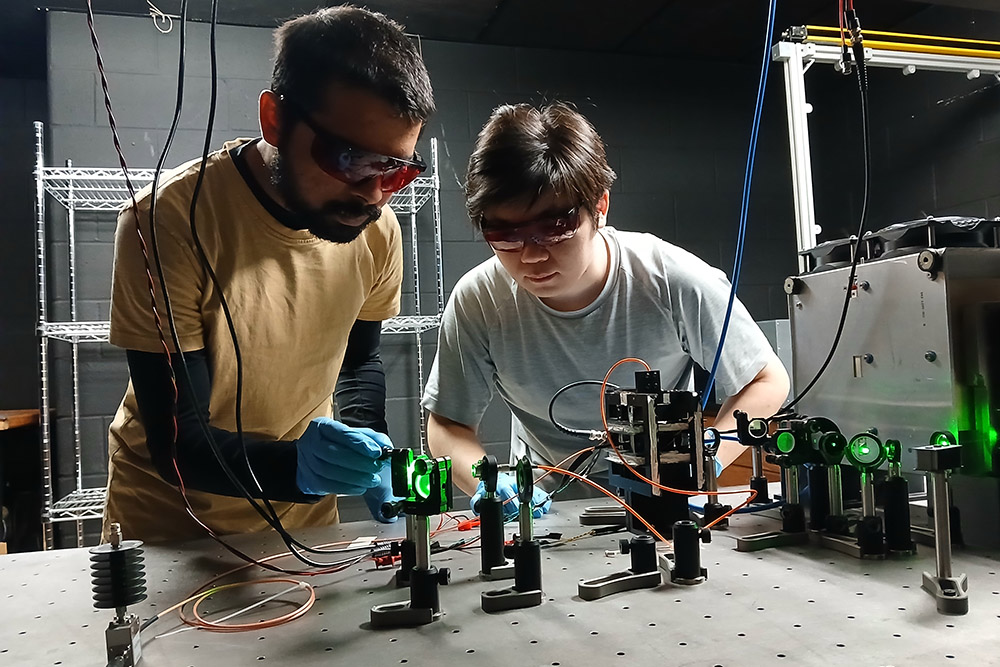
Researchers at Stony Brook University and the University of Hawaiʻi at Mānoa have been awarded a $600,000 NSF grant to develop Quantum Intelligent Sensor Networks (QISNs). This project aims to advance quantum metrology by engineering distributed, entangled sensor nodes that work together as a coordinated system, rather than optimizing single isolated sensors. The research will focus on using distributed quantum resources to extract weak, spatially varying signals beyond classical sensing limits, with applications in environmental monitoring, disaster preparedness, magnetic field imaging, and resilient communications.
-
UC Santa Barbara Researchers Join Three NSF Quantum Leap Challenge Institutes Under $290 Million Portfolio Renewal
UCSB faculty will participate in three NSF Quantum Leap Challenge Institutes (QLCI), sharing $290 million in renewed and new funding. This initiative, under the National Quantum Initiative Act, focuses on accelerating quantum research into manufacturing by integrating academic researchers with national laboratories and private industry. The QLCI program also aims to develop a quantum engineering talent pipeline through various educational and internship programs.
-
Diraq Expands U.S. Footprint with New Mexico Quantum R&D Laboratory to Advance DARPA QBI Milestones
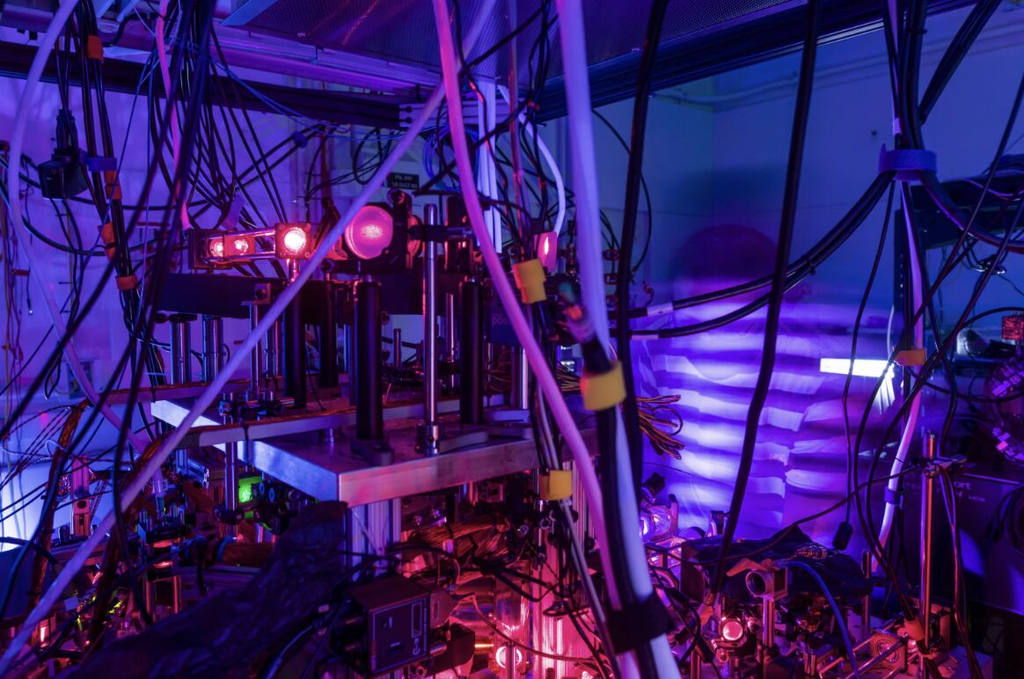
Diraq is expanding its U.S. operations by opening a new quantum R&D lab in Albuquerque, New Mexico, in collaboration with the New Mexico Technology and Innovation Office and Roadrunner Venture Studios. This expansion, supported by New Mexico's quantum technology allocation, will focus on characterizing high-density silicon spin-qubit chips for the DARPA Quantum Benchmarking Initiative. The lab, operational by late 2026, aims to advance utility-scale fault-tolerant quantum computing by leveraging CMOS fabrication for high-density qubit packing.
-
Roadrunner Quantum Lab Opens 35,000-Square-Foot Albuquerque Facility with Initial Cohort of Quantum Startups, National Labs, and Ecosystem Partners
The Roadrunner Quantum Lab (RQL) has opened a 35,000-square-foot facility in Albuquerque, New Mexico, serving as a hub for quantum technology testing and commercialization. Supported by $25 million in state funding, it houses 15 quantum hardware, software, sensing, and capital partners, facilitating the transition of quantum physics research into commercial hardware. The RQL integrates various quantum technologies and provides access to national lab scientists, aiming to be a key launchpad for utility-scale quantum hardware commercialization.
-
Cloudflare Launches Public Certificate Authority to Secure the Web Against Quantum Threats
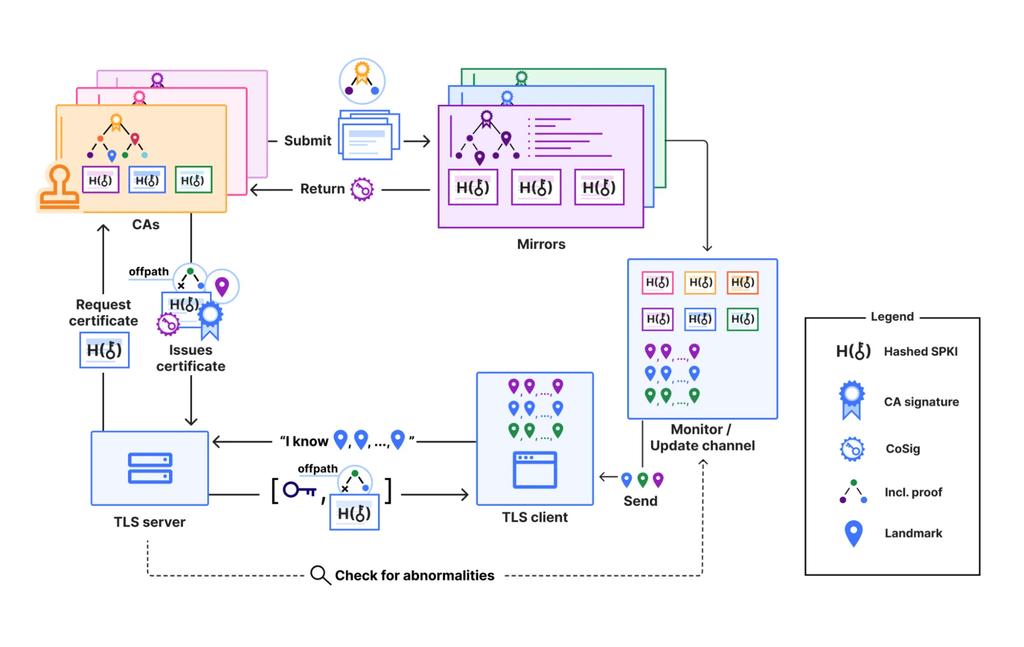
Cloudflare is becoming a public Certificate Authority (CA) to secure the web against quantum threats by introducing an open, automated, and high-scale issuance service. This initiative will provide both classical TLS certificates and next-generation Merkle Tree Certificates (MTCs) to prevent widespread web outages and combat "harvest now, decrypt later" adversary campaigns. By acquiring GlobalSign's Root CA key material and applying for inclusion in major root programs, Cloudflare aims to establish immediate backward compatibility and build standing under emerging browser policies.
-
Xanadu and Bluefors Form Multi-Million Dollar Strategic Partnership to Develop Modular Cryogenic Infrastructure for Utility-Scale Quantum Data Centers
Xanadu and Bluefors have formed a multi-million dollar partnership to develop a modular cryogenic infrastructure for utility-scale quantum data centers. Their joint effort focuses on replacing large, centralized cryoplants with compact, mass-manufacturable cryogenic modules designed for high-density detector arrays operating near 2 Kelvin. This collaboration aims to address cooling bottlenecks and provide a scalable, standardized cryogenic solution for fault-tolerant photonic quantum processors.
-
Project Eleven Acquires Riva Labs to Scale Post-Quantum Cryptography and Blockchain Infrastructure Stack
Project Eleven has acquired Riva Labs to create a comprehensive post-quantum cryptography and blockchain infrastructure. This merger addresses vulnerabilities in current public-key cryptography by integrating quantum-resistant solutions directly into the technology stack. The combined entity will focus on developing agile post-quantum migration frameworks, utilizing AI-driven research to adapt to evolving cryptographic standards and ensure practical, scalable solutions for decentralized networks.
-
Infleqtion and Riverlane Execute Strategic MOU to Integrate Neutral-Atom Hardware with Real-Time QEC Decoders
Infleqtion and Riverlane have partnered to integrate real-time quantum error correction with neutral-atom hardware. This collaboration aims to close the latency gap in qubit error detection and processing, enabling scalable logical qubits. They will combine Infleqtion's neutral-atom QPU and qLDPC software with Riverlane's Deltaflow decoding platform to run dynamic error correction cycles without interrupting execution.
-
Royal Bank of Canada Launches Enterprise Quantum Strategy and Academic Workforce Pipelines
Royal Bank of Canada (RBC) has launched a multi-year enterprise quantum strategy focusing on internal R&D, post-quantum cybersecurity, academic partnerships, and hardware investments. This initiative includes collaborations with Xanadu, the University of Waterloo, and the University of Toronto to develop quantum applications for financial modeling, optimize portfolios, analyze risk, and enhance cryptographic security. RBC is also migrating to Post-Quantum Cryptography (PQC) standards and Quantum Key Distribution (QKD) and has invested in Photonic Inc.
-
-
-
Quandela Establishes South Korea as Asian Hub for Photonic QPU Manufacturing and Hardware R&D
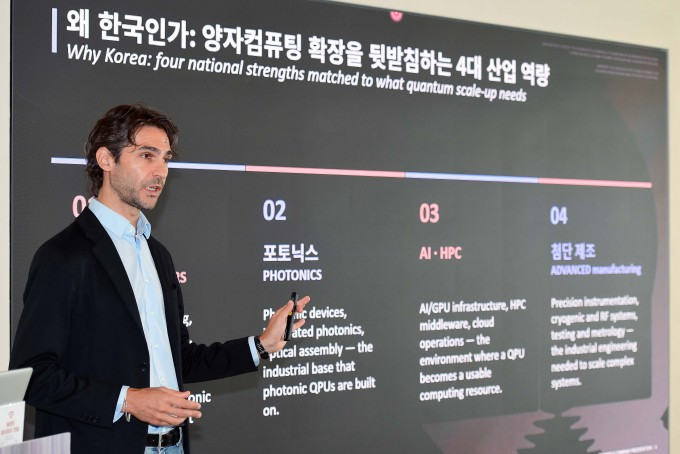
Quandela is establishing South Korea as its Asian hub for photonic QPU manufacturing and R&D, aiming to partner with South Korean semiconductor foundries and optoelectronic integrators. This initiative will focus on scaling mass production of photonic control chips and optical component packaging, with collaborations including KAIST for electronic control units, KRIBB for molecular simulation, and NVIDIA for reduced GPU-to-QPU communication latency. The expansion includes growing Quandela Korea and deploying Korean-fabricated components into Quandela's QPUs.
-