
Category: Uncategorized
-
Yesterday
-
Qilimanjaro Secures €19.6 Million ($21.9 Million USD) Series A First Close to Industrialize Multimodal Fluxonium Systems
Qilimanjaro Quantum Tech secured €19.6 million in Series A funding from Indra Group and SETT to industrialize multimodal fluxonium quantum systems. This investment will accelerate manufacturing, chip fabrication, and commercial deployment of their quantum platforms, which utilize fluxonium superconducting qubits for improved performance. The funding also highlights growing European defense interest in quantum-accelerated AI and secure communications.
-
-
-
Swinburne University and IQM Partner to Advance Quantum Ecosystem in Australia and Europe
Swinburne University of Technology and IQM Quantum Computers have partnered to advance quantum science and technology across Australia, Europe, and the Indo-Pacific. This collaboration will focus on workforce development through joint training and internships, technology translation via co-development of quantum applications, and international exchange programs for researchers and students. The partnership aims to bridge Swinburne's research with IQM's commercial expertise in superconducting quantum systems.
-
Google Quantum AI Introduces Virtual Error Cancellation for Universal Logical Circuits
Google Quantum AI has developed Virtual Error Cancellation (VEC), a classical post-processing technique that significantly reduces logical errors in fault-tolerant quantum circuits. VEC uses a dual-decoder approach, combining a fast real-time decoder with a high-accuracy offline decoder, to reweight experimental outcomes and suppress logical error rates by over 1,600-fold. This method offers a more efficient alternative to previous error mitigation techniques, with a significantly lower sampling overhead.
-
University of Pennsylvania Team Demonstrates On-Chip Photonic Quantum Skyrmion Transfer in Nature Physics
A University of Pennsylvania-led team has successfully demonstrated the on-chip transfer of photonic quantum skyrmions, topological light structures, from single photons to entangled states. This was achieved using integrated nanophotonic chips and established a noise-resilient quantum state transfer mechanism. The research, published in Nature Physics, shows that the skyrmion number, a robust quantum observable, remains intact even when entanglement vanishes, offering a new approach for noise-tolerant quantum optical interconnects.
-
Podcast
Podcast with Walter Raquet, Chairman and CEO of Symmatrics
Yuval Boger speaks with Walter Raquet, Chairman and CEO of Symmatrics, a company that has revived the one-time pad symmetric key encryption concept — once used exclusively by US intelligence agencies — and brought it to the internet age using quantum random number generators.
-
IonQ Demonstrates Scheduled qLDPC Error Correction to Accelerate Fault-Tolerant Gate Execution by up to 74x
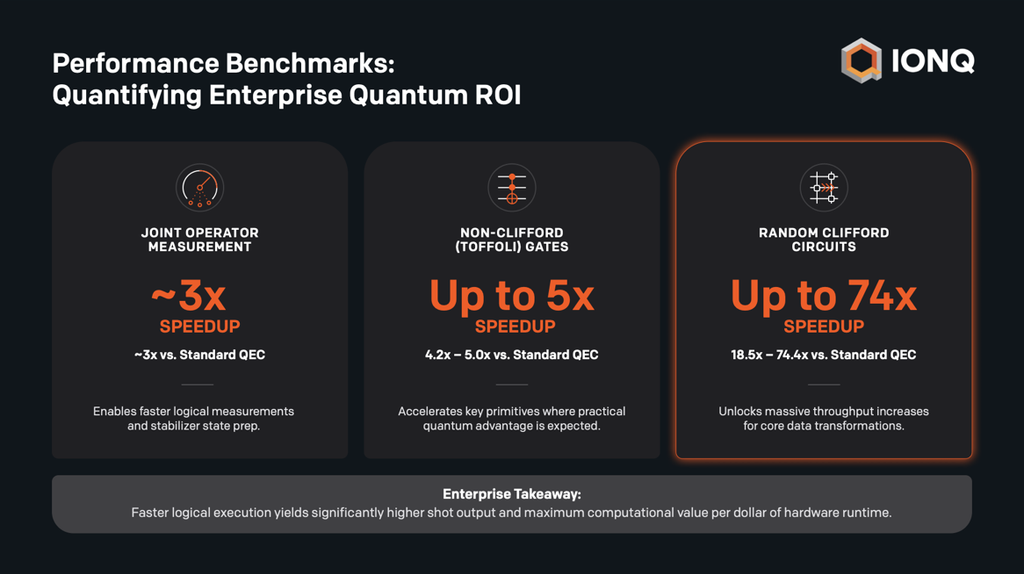
IonQ researchers have developed a new hybrid physical/logical execution strategy for quantum error correction, significantly accelerating fault-tolerant quantum computing. This approach, detailed in a recent arXiv paper, utilizes scheduled qLDPC error correction and an adapted Logical Clifford Noise Reduction (CliNR) scheme. The innovation has achieved speedups of up to 74-fold for logical Clifford operations and up to 5-fold for logical Toffoli gates, addressing the operational latency bottleneck in quantum computing.
-
IonQ to Acquire Elisity for Up to $1.3 Billion to Integrate Zero Trust with Post-Quantum Cybersecurity
IonQ is set to acquire Elisity for up to $1.3 billion in an all-stock deal, integrating Elisity's Zero Trust cybersecurity with IonQ's post-quantum cryptography. This acquisition, expected to close in Q4 2026, aims to enhance IonQ's security offerings, addressing "harvest now, decrypt later" vulnerabilities and federal PQC mandates. Elisity will operate as a subsidiary, retaining its brand and management.
-
-
-
IBM Launches Directed Execution Model and Executor Primitive to Give Researchers Client-Side Control Over QEC Workflows
IBM Quantum has launched a new directed execution model with the Executor primitive in qiskit-ibm-runtime v0.50.0. This framework shifts error mitigation to the client side, giving researchers greater control over quantum error correction (QEC) workflows. It allows for custom control over circuit transformations and error-correction pipelines, improving efficiency and transparency for quantum algorithm developers and QEC researchers.
-
IBM Expands Qiskit Beyond Python with Native C API Bindings for Fortran, C++, and Julia
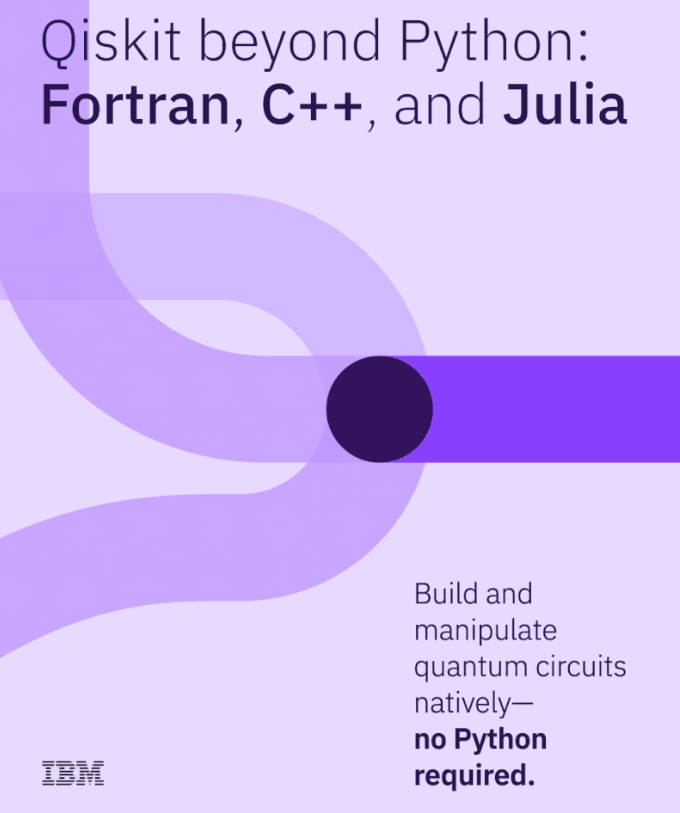
IBM Quantum has expanded its Qiskit open-source software to include native C API bindings for Fortran, C++, and Julia. This allows researchers to integrate quantum circuits directly into high-performance computing (HPC) applications without Python, improving performance and interoperability. The new bindings support complex quantum-centric supercomputing workflows and hybrid algorithms.
-
QuIC Whitepaper Calls for Industrial Scale-Up Infrastructure in EU Chips Act 2.0
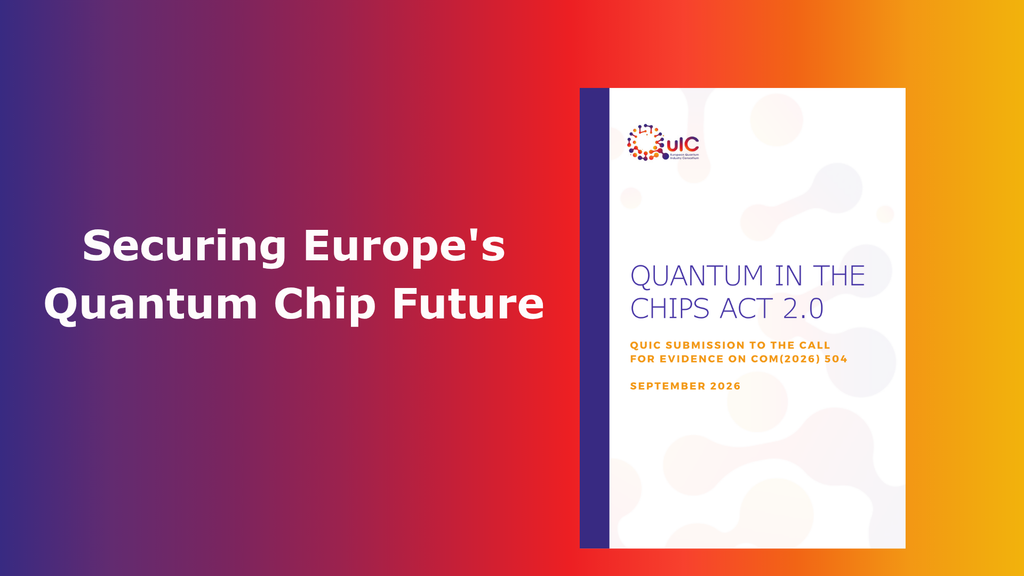
The European Quantum Industry Consortium (QuIC) has released a whitepaper responding to the EU Chips Act 2.0 proposal, advocating for dedicated industrialization pathways to bridge the gap between quantum chip prototyping and production. QuIC highlights the lack of mechanisms for industrial-scale manufacturing in current proposals and warns about international transactions that threaten European supply-chain resilience. They recommend extending strategic project status to quantum foundries, establishing a subsidized Multi-Project Wafer program, funding cryogenic and packaging infrastructure, expanding photonics objectives to include visible and deep-UV, and providing accessible designations for small-scale fabrication facilities.
-