

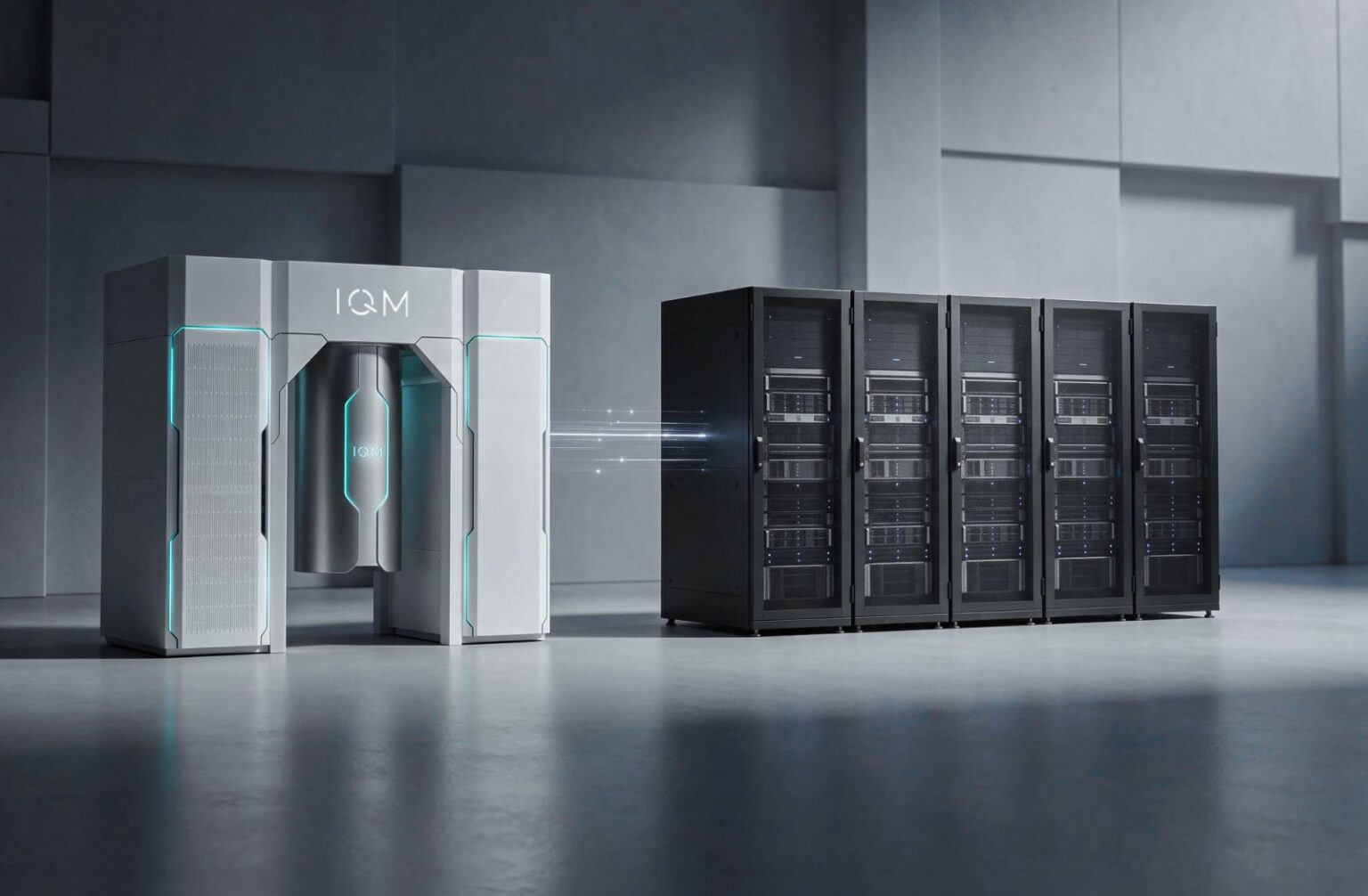
IQM Quantum Computers (Nasdaq: IQMX) announced at SC26 in Chicago its support for NVIDIA’s open-source Slurm 26.11 release, highlighting a joint integration with Munich Quantum Software Company (MQSC) that schedules IQM superconducting processors as native supercomputing resources. Built on Slurm 26.11’s Hierarchical Resources (HRES) plugin framework and the Quantum Device Management Interface (QDMI), the open-source MQSC Orchestrator connects cluster-level HPC job queues directly to systems such as IQM Emerald.
Previously, integrating quantum processing units into supercomputing facilities required bespoke site-specific scheduler plugins because QPUs operate as shared multi-node accelerators rather than node-local devices. By pairing Slurm 26.11 HRES with the vendor-neutral QDMI specification, supercomputing centers can allocate, reserve, and account for QPU access within standard classical submission workflows.
According to IQM Chief Technology Officer Craig Ciesla, IQM hardware already operates alongside classical clusters at Oak Ridge National Laboratory (ORNL), VTT Technical Research Centre of Finland, the Leibniz Supercomputing Centre (LRZ), and CINECA. Following MQSC’s demonstration, IQM engineers are evaluating how HRES maps onto the company’s hybrid installations and plan to validate the integration in staging environments as host centers upgrade to Slurm 26.11.
Read the official IQM press release here. Related QCR SC26 coverage of NVIDIA’s Slurm 26.11 release, the IBM-Fermilab-NVIDIA modular co-design platform, and CUDA-Q QEC 0.9.0 is available here.
In GQI Portal
The players behind the news
The team that writes QCR tracks every company, deal and technology in the GQI Factory, GQI's verified database of the quantum industry. Next up: every story linked to its players, coming to QCR's paid plans.
- Players Companies and institutions across the quantum industry, by segment.
- Scorecards How the players compare on hardware, software, funding and more.
Newsletter
QCR Alerts in your inbox
The latest reporting and analysis from Quantum Computing Report. Free, unsubscribe any time.