

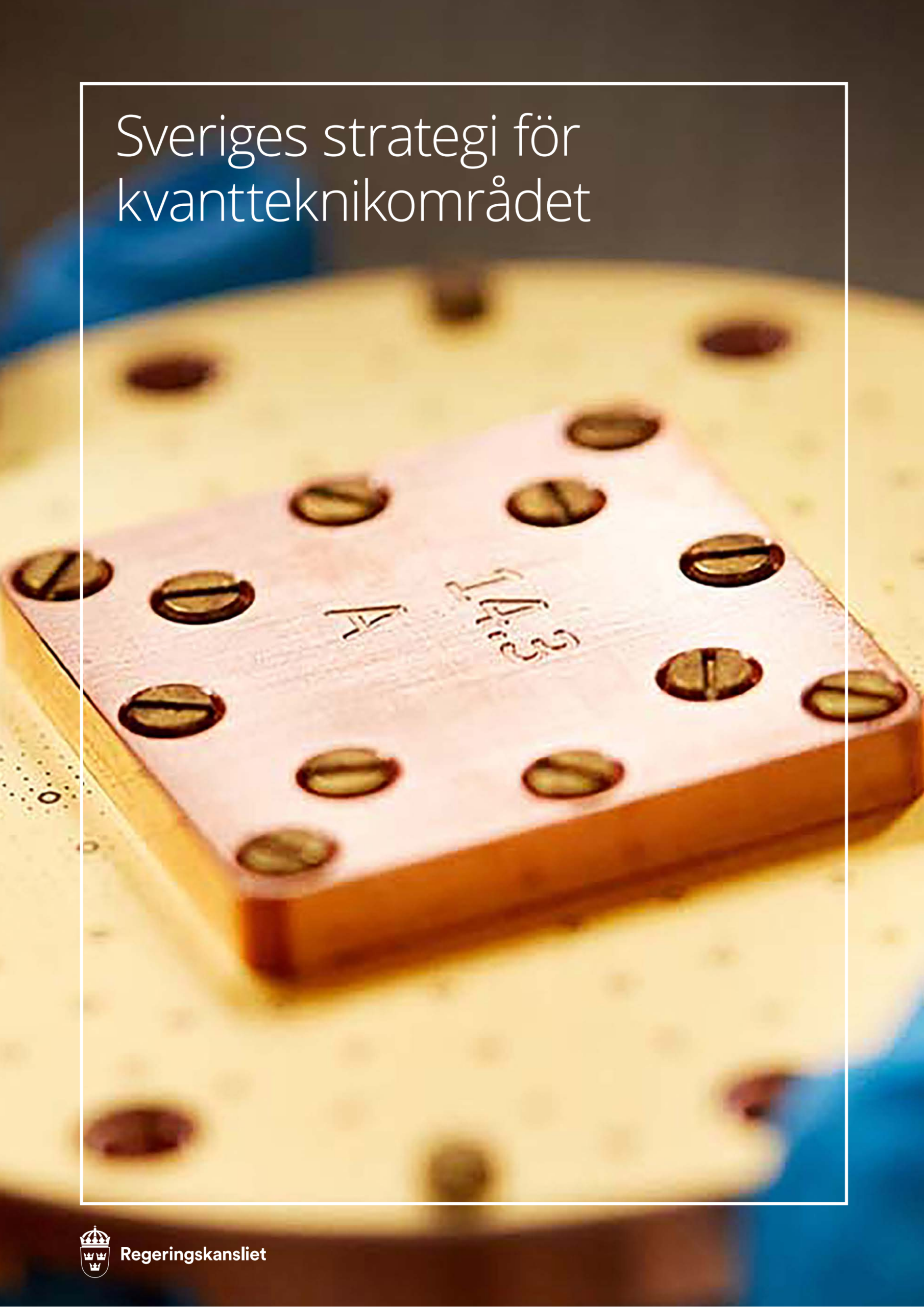
The Swedish Ministry of Education and Research (Regeringskansliet) has officially published Sweden’s National Quantum Strategy (Sveriges strategi för kvantteknikområdet). Setting a unified policy, infrastructure, and commercial roadmap extending to 2036, the strategy establishes a national framework to translate Sweden’s academic research into commercially viable deep-tech enterprises, secure sovereign communications, and align national efforts with broad European and Nordic defense initiatives.
| [ Sweden National Quantum Strategy Framework (2026–2036) ] | ||
|---|---|---|
| Strategic Pillars | National Infrastructure & Ecosystem | Security & Alliances |
| • Research & Industrial Leadership | • Wallenberg Centre (WACQT / Chalmers) | • PQC & Quantum-Safe Migration Mandates |
| • Deep-Tech Commercialization & VC | • Swedish Centre for Quantum Technology | • Nordic Council Quantum Working Group |
| • STEM Workforce & Talent Attraction | • MAX IV, ESS & Cleanroom Testbeds | • U.S.-Sweden Technology Prosperity Deal |
Bridging Academic Excellence and Commercial Deployment
While Sweden maintains high-impact academic environments—anchored by the Wallenberg Centre for Quantum Technology (WACQT) at Chalmers University of Technology and the recently established Swedish Centre for Quantum Technology joining six major universities—the strategy explicitly addresses the commercialization gap facing early-stage deep-tech spin-offs:
- Commercialization & Testbed Infrastructure: The strategy expands physical testbeds and cleanroom access (leveraging national materials research facilities including MAX IV and the European Spallation Source) to help startups scale hardware across cryogenic electronics, photonics, quantum processors, and algorithms.
- Venture Capital & Industrial Adoption: Coordinated through the Quantum Sweden Innovation Platform (QSIP) and state innovation agency Vinnova, the framework stimulates private risk capital mobilization to support long-term R&D cycles across domestic industrial leaders in defense, telecommunications, automotive, and life sciences.
- Talent Pipelines: Integrates with Sweden’s national STEM strategy to expand graduate research schools, industrial PhD programs, and international talent attraction initiatives to address specialized engineering bottlenecks.
Post-Quantum Cryptography Mandates and Sovereign Security
Highlighting growing geopolitical risks and “harvest now, decrypt later” threats, the national strategy mandates proactive cryptographic transition:
- PQC Migration Directives: Aligned with the National Cybersecurity Centre (NCSC) and European Union transition roadmaps, public institutions and critical infrastructure operators are directed to replace vulnerable public-key algorithms with standardized Post-Quantum Cryptography (PQC) and hybrid key exchange protocols ahead of EU 2026–2030 deadlines.
- Research Security & Export Controls: Establishes enhanced risk management frameworks, investment screening, and export control monitoring to protect sovereign IP and dual-use technologies against industrial espionage.
Nordic Integration and Global Alliances
Recognizing the limitations of a standalone national market, Sweden’s strategy anchors its goals inside broader regional and transatlantic coalitions:
- Nordic & European Alliances: Deepens cooperation across the Nordic Council of Ministers quantum working group (established May 2026), EuroQCI, and the forthcoming European Quantum Act.
- Transatlantic Alliances: Leverages bilateral agreements, including the U.S.-Sweden Technology Prosperity Deal and NATO’s Transatlantic Quantum Community, to ensure supply chain resilience, open standards development, and joint defense technology integration.
Review official policy documentation via the Swedish Government (Regeringskansliet) here, explore ecosystem updates on the Quantum Sweden Innovation Platform (QSIP) here.
In GQI Portal
The players behind the news
The team that writes QCR tracks every company, deal and technology in the GQI Factory, GQI's verified database of the quantum industry. Next up: every story linked to its players, coming to QCR's paid plans.
- Players Companies and institutions across the quantum industry, by segment.
- Scorecards How the players compare on hardware, software, funding and more.
Newsletter
QCR Alerts in your inbox
The latest reporting and analysis from Quantum Computing Report. Free, unsubscribe any time.