The Office of Naval Research (ONR), a branch of the U.S. Department of Defense (DoD), has awarded a $9 million Multidisciplinary University Research Initiative (MURI) grant to a consortium led by Prof. Zheshen Zhang at the University of Michigan. The five-year project, titled “DISCO-DEQS,” aims to develop a holistic framework for distributed entangled quantum sensing. The research focuses on utilizing quantum entanglement to connect sensor networks, theoretically allowing them to surpass the Standard Quantum Limit (SQL) in measurement sensitivity and bandwidth through quadratic scaling or higher.
The technical objective centers on integrating quantum computing and networking resources—including error correction and stabilization methods—to enhance multi-sensor data fusion. Researchers will investigate both discrete and continuous-variable quantum platforms to measure physical parameters with higher resolution and signal-to-noise ratios than conventional networks. Prof. Peter Seiler will apply control theory and feedback loops to optimize sensing methodologies, treating the quantum sensor array as a dynamic system where real-time analysis improves the accuracy of subsequent measurements.
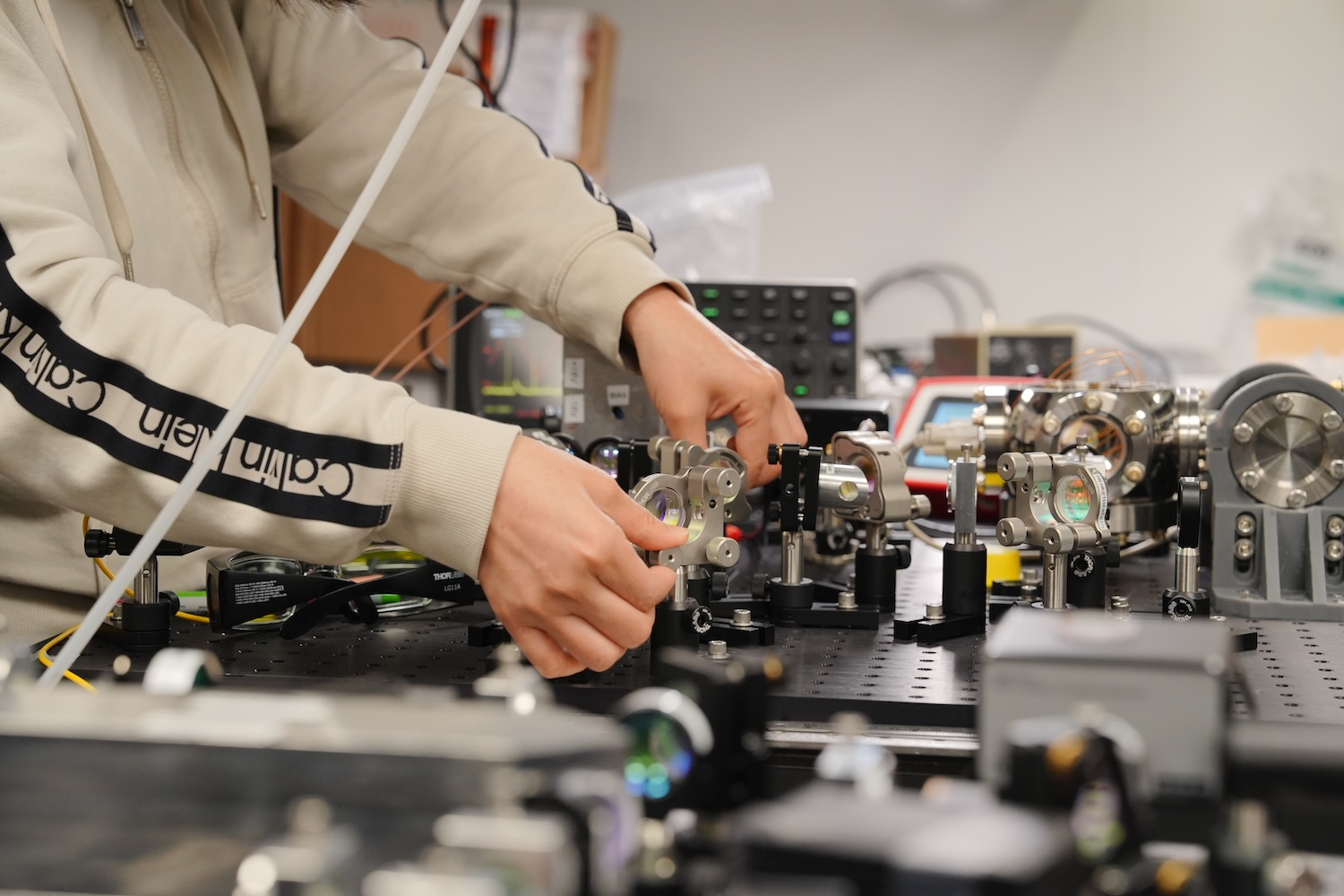
The project utilizes experimental testbeds at the University of Michigan and Princeton University, involving co-PIs from the University of Maryland, University of Chicago, University of Arizona, and USC. Anticipated applications for this fundamental research include inertial sensors for GPS-denied navigation, high-precision seismological monitoring, and secure telecommunications infrastructure within a “quantum internet” framework. The MURI award follows several years of preliminary research into the performance benefits of entangled connectivity in sensor nodes, transitioning high-risk basic research into potential naval applications.
Read the full announcement here.
January 2, 2025
