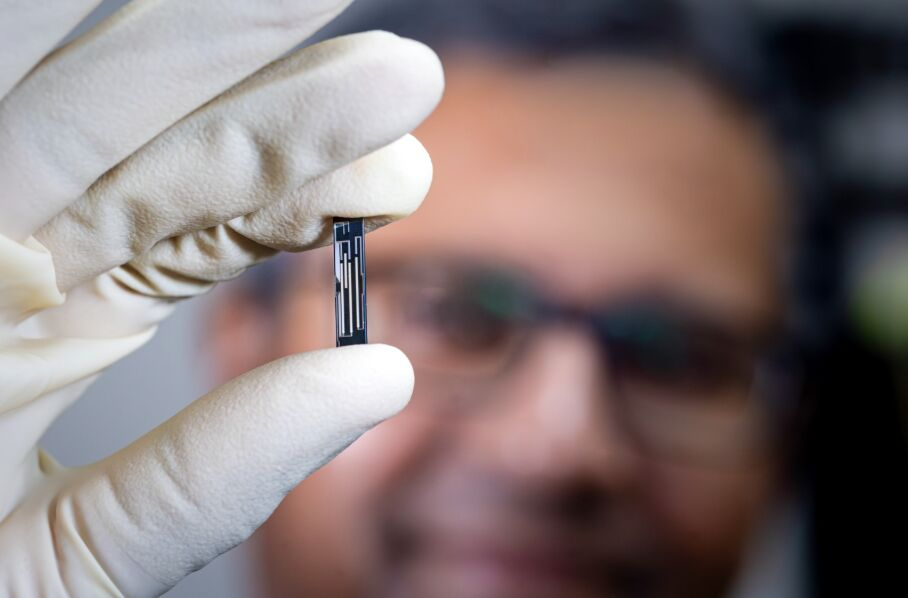
Cisco has announced a research prototype of the Cisco Universal Quantum Switch, a device designed to route and translate quantum information between systems using different encoding modalities. While existing quantum networking components are typically restricted to a single type of encoding, this switch utilizes a patented conversion engine to translate between all major modalities—including polarization, time-bin, frequency-bin, and path—enabling interoperability between hardware from different vendors.
The prototype operates at room temperature and is compatible with standard telecommunications fiber-optic infrastructure. In proof-of-concept experiments conducted at Cisco’s Santa Monica labs, the switch demonstrated sub-nanosecond electro-optic switching (as low as 1 nanosecond) while maintaining high fidelity. Results indicated less than 4% degradation in quantum state and entanglement fidelity during the conversion and routing process. Additionally, the device is characterized by low power consumption, requiring less than 1 milliwatt.
This development is part of Cisco’s broader “full-stack” quantum networking strategy, which includes a dedicated entanglement chip for photon generation and a network-aware quantum compiler for distributed algorithm orchestration. By providing a “network layer” that allows heterogeneous quantum processors to communicate, Cisco aims to support the scaling of quantum systems from current hundreds of qubits to the millions required for industrial applications. The company plans to publish the complete findings of its experimental validation on ArXiv.
For the official press release, visit the Cisco Newsroom here. Technical commentary from Vijoy Pandey, SVP of Outshift by Cisco, on the strategic role of the universal switch can be found in the Cisco Blog here.
April 23, 2026
