Quantum research center QuTech—a joint collaboration between the Delft University of Technology (TU Delft) and the Netherlands Organisation for Applied Scientific Research (TNO)—has announced the deployment of its latest superconducting quantum computer, Tuna-17. Accessible globally through the Quantum Inspire public cloud platform, the processor provides researchers, engineers, and educators with open, un-capped access to live physical quantum hardware. The launch represents the third system release within a 12-month development cycle, succeeding the earlier Tuna-5 and Tuna-9 processors, and establishes a highly standardized operational baseline before the upcoming deployment of the larger 28-qubit variant (Tuna-28).
                         [ Tuna-17 System Architecture ]
  QPU Modality        ──► 17 superconducting qubits integrated with 24 tunable couplers.
  Value Chain Node    ──► 100% European open-architecture consortium anchored in Delft.
  Software Interface  ──► Direct open-source SDK compilation via Qiskit and PennyLane libraries.
  Cloud Access Model  ──► Free public access via Quantum Inspire; up to 100,000 shots per batch.
The Architecture of the Tuna-17 Processor
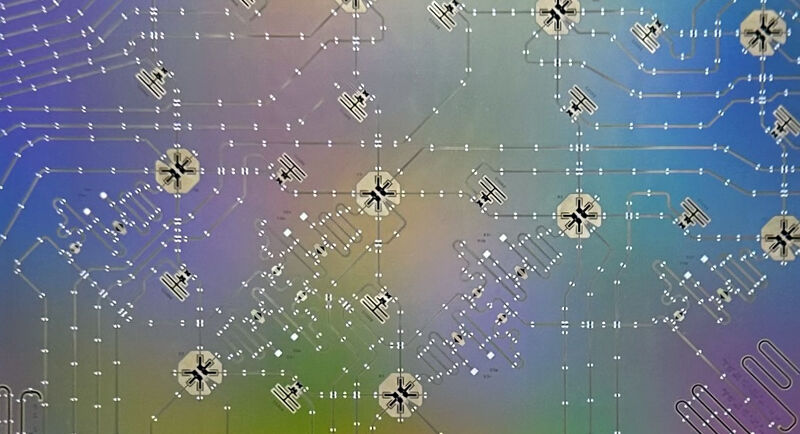
The underlying hardware design, developed by the DiCarlo Lab at QuTech, features a planar layout of 17 superconducting qubits cross-connected by 24 tunable couplers. This physical architecture is engineered specifically to execute multi-qubit Quantum Error Correction (QEC) protocols and surface-code logic gates. By integrating tunable couplers, the system can dynamically adjust inter-qubit coupling frequencies, suppressing parasitic spectator effects and residual crosstalk during parallel gate operations. This specific hardware optimization strategy was detailed in the team’s peer-reviewed paper, “Optimizing the Frequency Positioning of Tunable Couplers in a Circuit QED Processor to Mitigate Spectator Effects on Quantum Operations,” published in Physical Review Letters.
Unlike closed, vertically integrated commercial quantum computing stacks, the Tuna platform enforces a strict open-architecture standard across its entire European value chain. The processing unit supports a universal gate set, automated self-calibration subroutines, real-time performance logging, and mid-circuit measurements—a critical hardware feature necessary for active error mitigation, conditional logic routing, and low-depth factorization algorithms. The cloud interface is fully integrated with popular open-source software packages, including Qiskit and PennyLane, enabling users to deploy hybrid Noisy Intermediate-Scale Quantum (NISQ) algorithms without modifying their existing codebase.
The Delft Quantum Ecosystem Contribution
The assembly and continuous operation of Tuna-17 are supported by a specialized industrial and academic consortium based out of the Delft quantum technology cluster. The system integration is partitioned into the following technical layers:
- QuTech / TU Delft: Responsible for foundational quantum processing unit (QPU) architectural design, cleanroom lithographic fabrication, and public cloud SDK management.
- TNO: Delivers the micro-compilation infrastructure and co-designs the baseline QPU geometry.
- Orange Quantum Systems: Furnishes the specialized Quantum Operating System (OS) and automated automated calibration software.
- Qblox: Manufactures the high-density microwave control electronics and pulse-generation hardware.
- Delft Circuits: Installs the low-thermal-load, high-density cryogenic RF cabling arrays.
- QuantWare: Supplies the specialized traveling-wave parametric amplifiers and sub-Kelvin cryogenic packaging blocks.
Financed in part through the HectoQubit consortium (under the Quantum Delta NL Phase 2 CAT-1 framework), the Tuna-17 installation serves as an operational hardware demonstrator for the broader European Union OpenSuperQPlus Flagship project. By establishing a dedicated open-architecture system integration division in Delft, the consortium aims to transition laboratory prototypes into industry-standard, multi-vendor components. This approach ensures European technological sovereignty in semiconductor-adjacent manufacturing while simultaneously training a skilled quantum workforce via active deployment across TU Delft’s Quantum Information Science & Technology graduate curriculum.
The official hardware release profiles, European cloud integration criteria, and structural ecosystem partnership roadmaps can be reviewed here. The underlying optomechanical simulations, frequency-tuning methodologies, and peer-reviewed physical proofs can be audited directly within the Physical Review Letters here.
July 9, 2026

Leave A Comment