

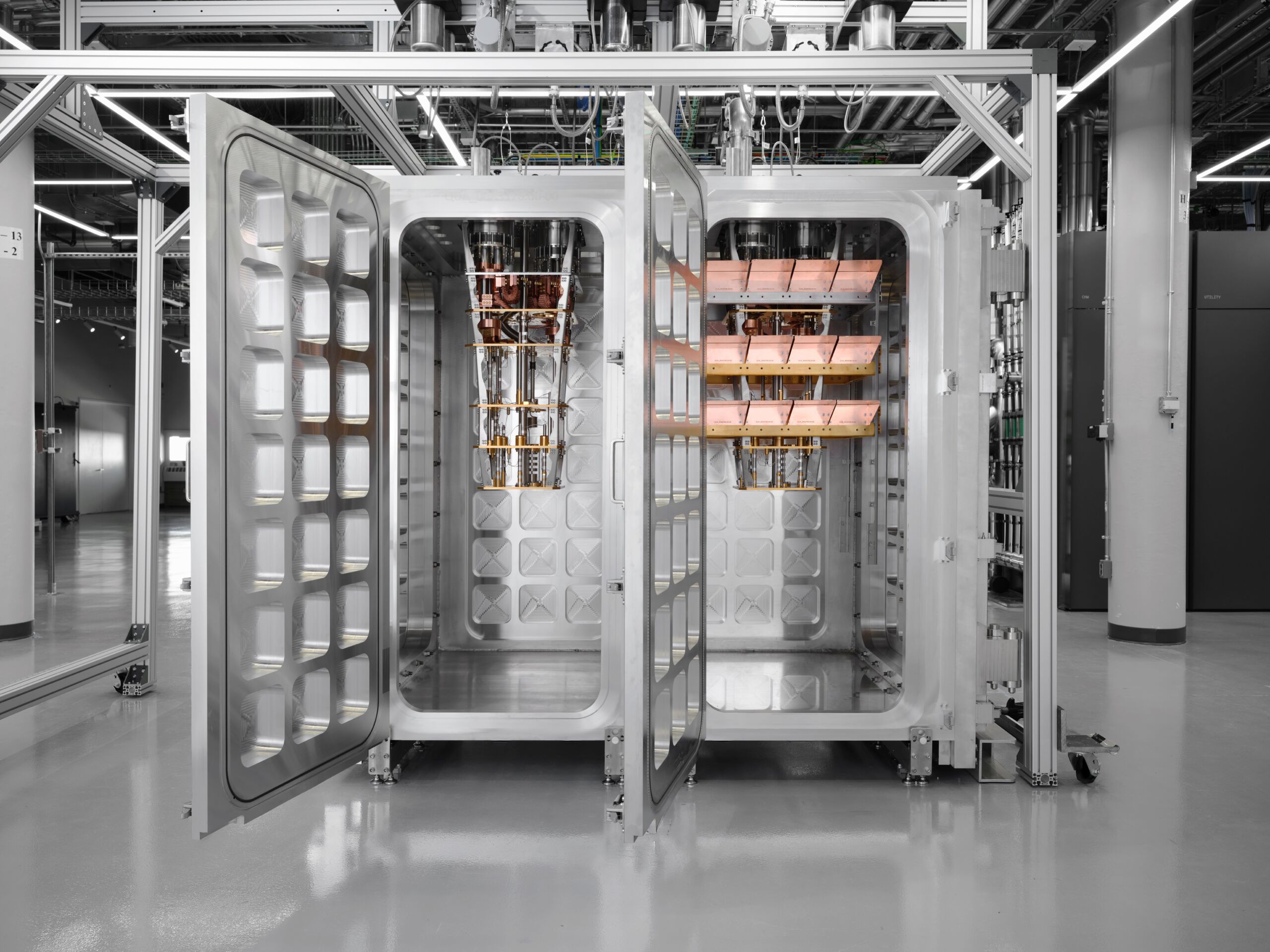
IBM (NYSE: IBM) has announced the successful linking and cooldown of its first modular cryogenic cells, completing a key hardware milestone toward its planned fault-tolerant quantum computer, IBM Quantum Starling, scheduled for delivery in 2029. Operating at its Poughkeepsie, New York quantum facility, IBM joined two box-shaped cryogenic modules into a single thermal environment, achieving an operating temperature below 15 millikelvin (-273.135∘C).
                 [ IBM Modular Cryogenic Infrastructure Stack ]
                                       │
     ┌─────────────────────────────────┼─────────────────────────────────┐
     ▼                                 ▼                                 ▼
  Modular Cryogenic Cells           "L-Coupler" Interconnects          Multi-Chip Processor Roadmap
  • Rectangular Aluminum Shells.    • Direct Chip-to-Chip Quantum     • Nighthawk Processors Installed (2026).
  • 2.75 m³ Vacuum Chamber Vol.       Links.                         • 1,000+ Programmable Qubits (2027).
  • 12x More Wiring Space vs. QSo.  • Short Meter-Scale Interconnects. • Starling Fault-Tolerant System (2029).
Re-Engineering Cryogenic Architecture for Modular Scaling
Traditional superconducting quantum processing units (QPUs) reside in isolated, cylindrical “chandelier” cryostats. These single-chip enclosures impose spatial constraints, generate heat bottlenecks, and induce qubit crosstalk when routing thousands of coaxial cables. IBM’s modular cell architecture replaces cylindrical fridges with rectangular, aluminum-framed cryogenic units that sit tightly side-by-side:
- Inter-Cell Thermal Shielding: When cells join, quantum cables route through a shared opening, protected by multi-layered thermal shielding tunnels that preserve dilution refrigeration temperatures below 15 millikelvin without increasing cooldown times.
- Expanded Physical Capacity: Each cell provides 2.75 cubic meters of internal vacuum volume and 0.53 square meters of wiring surface area—yielding up to 12 times more wiring space than IBM Quantum System One fridges. Each modular cell is engineered to house and cool at least 2,000 physical qubits.
- Rapid Cooldown Dynamics: Initial operational tests demonstrated that the dual-module assembly cools from room temperature to 4 Kelvin (liquid helium range) in under five days before reaching sub-15 millikelvin base temperatures.
Chip-to-Chip Integration via L-Couplers
The box-shaped architecture enables short interconnect paths between adjacent QPUs using IBM’s proprietary L-coupler technology. First demonstrated in 2024, L-couplers are meter-scale quantum cables designed to operate at cryogenic temperatures, enabling direct quantum state transfer and entangling gates between separate physical chips.
IBM indicated that the design of the new cryostat will provide several improvements over the one they are currently using. The extra space for the wiring is needed to support their qLDPC code which will require using more control lines. The design also contains improvements in flexibility, modularity, and maintainability, that will allow them to make iterations more quickly.
Later this year, IBM will install IBM Quantum Nighthawk processors into the modular cells to begin system-level operational testing. Under the IBM Quantum Roadmap, the company will use L-couplers to link multiple processors into a unified system with at least 1,000 programmable qubits by 2027, serving as the hardware foundation for the fault-tolerant Starling system in 2029.
Review official media announcements on the IBM Newsroom here, and explore technical system diagrams via the IBM Quantum Blog here.
In GQI Portal
The players behind the news
The team that writes QCR tracks every company, deal and technology in the GQI Factory, GQI's verified database of the quantum industry. Next up: every story linked to its players, coming to QCR's paid plans.
- Players Companies and institutions across the quantum industry, by segment.
- Scorecards How the players compare on hardware, software, funding and more.
Newsletter
QCR Alerts in your inbox
The latest reporting and analysis from Quantum Computing Report. Free, unsubscribe any time.