Author: Mohamed Abdel-Kareem
-
-
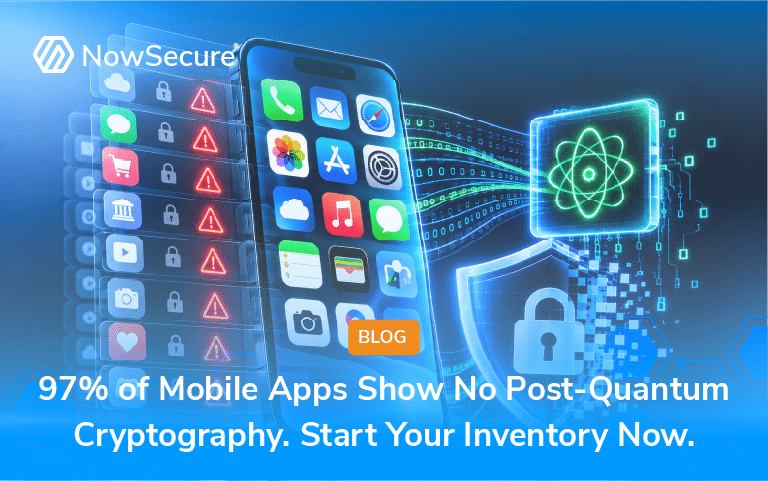
NowSecure Benchmark Finds 97% of Mobile Applications Lack Post-Quantum Cryptography Ahead of Mandated Timelines
A recent study by NowSecure, evaluating over 136,000 mobile apps, reveals that 97% lack Post-Quantum Cryptography (PQC), leaving them vulnerable to future quantum attacks. This "mobile gap" is largely due to reliance on third-party SDKs and compiled libraries that traditional security scans miss. With regulatory deadlines approaching (e.g., US federal agencies by 2030-2031), organizations urgently need to prioritize PQC migration for mobile applications.
-
Arqit Invests in Sirius to Scale Tactical Edge Quantum-Safe Networking Following NATO Contract Selection
Arqit, a quantum-safe encryption provider, has invested in Sirius Computer, a tactical communications developer, to enhance post-quantum security for defense and intelligence. This partnership follows Arqit's selection for a NATO contract and aims to provide quantum-safe encryption for military communications without hardware overhauls. The collaboration addresses limitations of existing quantum-safe technologies in tactical environments and will fund Sirius's engineering expansion.
-
Monarch Quantum Supplies Integrated Photonics for Next Phase of NASA and Infleqtion’s Space-Based Gravity Gradiometer
Monarch Quantum is providing integrated photonics hardware to Infleqtion for NASA's Quantum Gravity Gradiometer Pathfinder (QGGPf) mission. This mission aims to deploy the world's first space-based Earth quantum gravity gradient sensor in low-Earth orbit by 2030, measuring gravitational variations using ultracold rubidium atoms to track environmental changes. Monarch Quantum's role involves supplying compact photonics subsystems crucial for the sensor's operation in space.
-
Project Eleven and Relm Insurance Partner to Introduce Post-Quantum Security Metrics into Digital Asset Underwriting
Project Eleven and Relm Insurance are partnering to integrate post-quantum security metrics into digital asset insurance underwriting. This collaboration aims to assess how an institution's post-quantum cryptographic controls can influence insurance policy pricing. The goal is to incentivize early migration to quantum-resilient security by offering tailored terms and preferential risk assessments to institutions that implement audited post-quantum defenses.
-
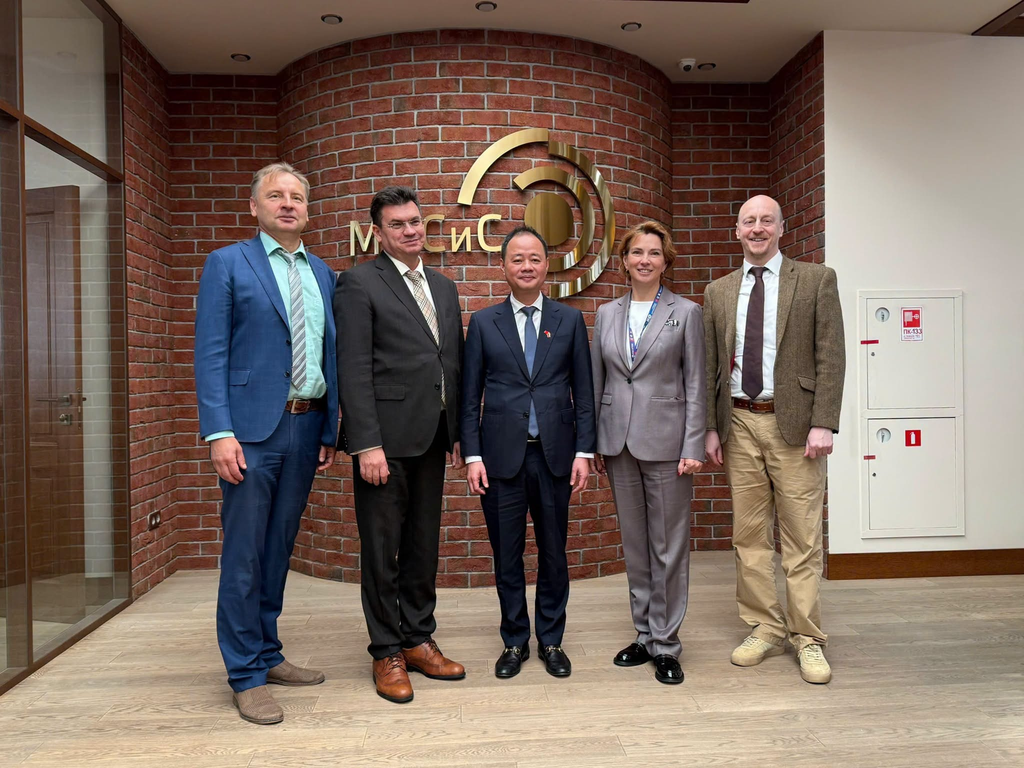
Vietnam and Rosatom Finalize Quantum Cooperation Roadmap as Hanoi Shapes 2045 Strategy
Vietnam and Russia's Rosatom have established a quantum cooperation roadmap, accelerating Vietnam's quantum information science capabilities. This agreement allows Vietnam to access Russian quantum processors remotely, bypassing significant hardware costs, and includes plans for a joint quantum technology laboratory in Vietnam. Concurrently, Vietnam is exploring integration with European quantum standards and prioritizing post-quantum cryptography for national security.
-
Toshiba Launches Modular QSN Platform to Scale Hybrid QKD and PQC Across Lit Fiber Networks
Toshiba has launched its new Quantum-Safe Networking (QSN) Platform, a modular hardware and software architecture designed to scale quantum-secured communications across various networks. This platform overcomes the limitations of traditional quantum key deployment by enabling quantum channels to coexist with classical data traffic on standard optical fiber, eliminating the need for dedicated dark fiber. The QSN Platform integrates Quantum Key Distribution (QKD) and Post-Quantum Cryptography (PQC) to mitigate cyber risks and has been successfully demonstrated in securing enterprise IPsec VPNs.
-
-
-
All Nine Award Winners in Japan’s NEDO Quantum Challenge Leverage IBM Hardware; Four Dedicated Industry Sponsor Prizes Awarded
In October 2026, Japan's NEDO Quantum Challenge announced the winners of its first season, recognizing nine projects for their advancements in quantum computing, all of which utilized IBM Quantum hardware. The competition aimed to bridge the gap between theoretical quantum algorithms and practical industrial applications. NEDO also outlined future plans, including case study releases and the launch of Season 2, to further support the commercialization of quantum technologies.
-
QCentroid Unveils “Missions” on NVIDIA CUDA-Q to Benchmark Classical, Quantum-Inspired, and QPU Workloads
QCentroid launched "Missions," a new platform integrated with NVIDIA CUDA-Q, to evaluate the best solutions for enterprise computational challenges. It uses autonomous AI to determine if classical, quantum-inspired, or QPU algorithms are most effective, based on business objectives and operational constraints. The platform also includes a validation step to ensure performance claims are accurate and recommends retaining classical architectures if they are more cost-effective.
-
South Korea Launches Nationwide Open Quantum Testbed Expansion Led by KT and SK Broadband
South Korea is expanding its Open Quantum Testbed nationwide from 2026-2028, with a 7.4 billion won initial investment. KT Corporation and SK Broadband are leading the project, focusing on terrestrial, cross-border, and future quantum communication technologies. This initiative aims to establish a robust quantum communications infrastructure across the country and internationally.
-
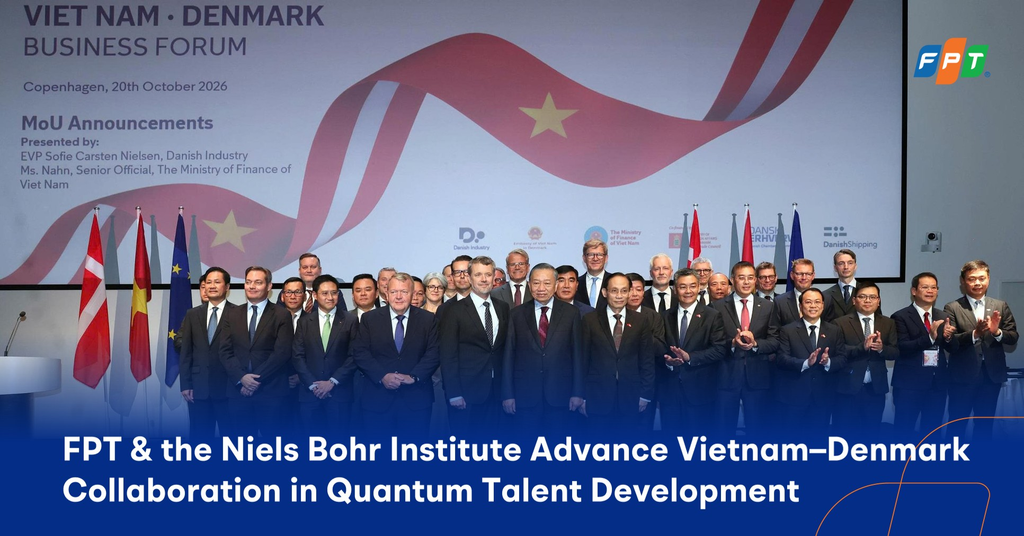
FPT Corporation and Niels Bohr Institute Partner to Advance Quantum Research and Talent Development in Vietnam and Denmark
FPT Corporation and the Niels Bohr Institute have partnered to advance quantum research and talent development in Vietnam and Denmark. The collaboration, formalized during the Vietnam–Denmark Business Forum, will focus on joint research programs, academic exchanges, and workshops. This initiative aims to accelerate Vietnam’s quantum computing roadmap and strengthen Denmark's research ties with Southeast Asia.
-