
Mohamed Abdel-Kareem

About Mohamed Abdel-Kareem

Mohamed Abdel-Kareem is Director of Data Operations & Strategic Content at Global Quantum Intelligence (GQI), where he leads the data and content operations supporting the Quantum Computing Report and GQI's broader quantum intelligence activities. Over the past three years, Mohamed has worked at the intersection of quantum technology, data, research, and strategic analysis, helping build and continuously expand GQI's structured intelligence on the global quantum ecosystem. His work spans quantum hardware, investments, deployments, partnerships, national strategies, applications, and emerging market developments. In his current role, Mohamed oversees the development, organization, and quality of GQI's proprietary quantum datasets, while contributing to the research and editorial processes that turn complex industry developments into clear, evidence-based intelligence. He also contributes to QCR's analysis and strategic content, with a particular focus on identifying meaningful developments behind the daily flow of announcements and understanding how individual developments fit into broader industry and market trends. His approach is grounded in technical accuracy, structured data, and vendor-neutral analysis—helping investors, companies, researchers, and other stakeholders distinguish meaningful signals from the noise surrounding the rapidly developing quantum industry.

Mountain West Regional Quantum Alliances Form Unified Innovation & Test Facilities Network

2026-08-14T11:18:35-07:00

Regional innovation engine Innosphere (representing the NSF ASCEND Engine), the Montana Photonics and Quantum Alliance (MPQA), and the Headwaters Tech Hub (HTH) have signed a Memorandum of Understanding (MOU) to establish a unified Mountain West technology and testing network. The agreement formally bridges federally funded regional initiatives across Colorado, Wyoming, and Montana to accelerate commercialization pathways for advanced sensing, quantum optics, and photonics technologies. The tripartite alliance links two major federal regional innovation hubs: NSF ASCEND Engine: Led by Innosphere across Colorado and Wyoming, this U.S. National Science Foundation (NSF) Regional Innovation Engine focuses on advanced sensing, quantum technologies, and digital-twin [...]

Mountain West Regional Quantum Alliances Form Unified Innovation & Test Facilities Network2026-08-14T11:18:35-07:00

Florida State University Launches Florida’s First Graduate Certificate in Quantum Information Science & Technology

2026-08-14T11:02:29-07:00

Florida State University (FSU) has announced the launch of Florida’s first formal graduate credential in quantum information science and engineering: the Graduate Certificate in Quantum Information Science & Technology (QIST). Administered by the FSU Quantum Initiative, the 14-credit-hour interdisciplinary program is accepting applications through October 1, 2026, for its inaugural Spring 2027 enrollment cohort. The program bridges departments across the FSU College of Arts and Sciences and the FAMU-FSU College of Engineering—including Physics, Chemistry & Biochemistry, Computer Science, Mathematics, Materials Science & Engineering, Electrical & Computer Engineering, and Mechanical & Aerospace Engineering—to train graduate students and industry professionals across quantum materials, [...]

Florida State University Launches Florida’s First Graduate Certificate in Quantum Information Science & Technology2026-08-14T11:02:29-07:00

Mitsui & Co. and Mitsubishi Electric Benchmark Approximate and Logical QFT on Quantinuum Helios

2026-08-14T05:24:08-07:00

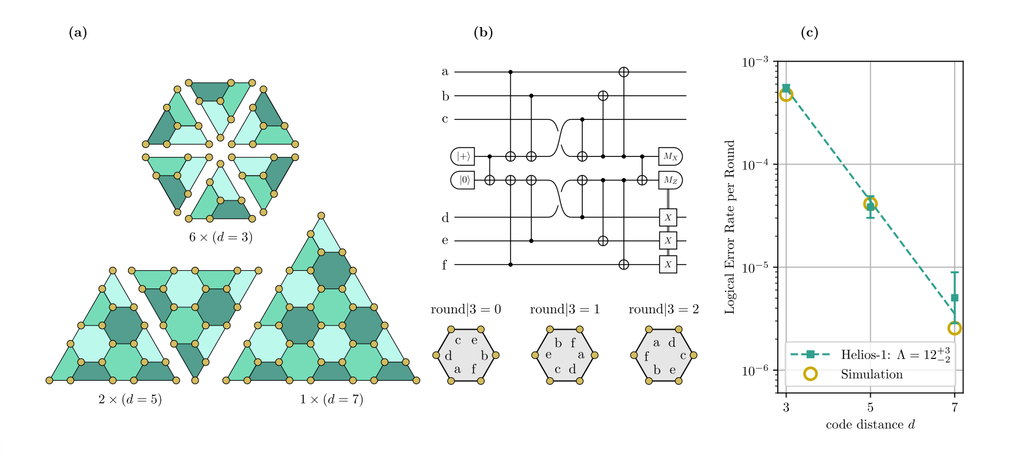
Japanese industrial conglomerates Mitsui & Co. and Mitsubishi Electric have published joint experimental benchmarks evaluating the Quantum Fourier Transform (QFT) on Quantinuum’s 98-qubit Helios trapped-ion quantum computer. Detailed in a co-authored white paper ("Experimental Evaluation of the Quantum Fourier Transform on a Trapped-Ion Quantum Computer"), the team executed both physical-qubit approximate QFT and Steane-encoded logical QFT circuits. The experiment evaluates hardware scaling and algorithmic utility across two computational regimes: Physical Qubit Approximate QFT (Up to 98 Qubits): The researchers executed approximate QFT circuits up to the processor's full 98 physical qubit capacity. By setting the small-angle phase rotation truncation parameter (degs=5), [...]

Mitsui & Co. and Mitsubishi Electric Benchmark Approximate and Logical QFT on Quantinuum Helios2026-08-14T05:24:08-07:00

Quantinuum, NVIDIA, and Pfizer Validate Generative Quantum AI (GenQAI) Framework for Pharmaceutical R&D

2026-08-14T05:11:13-07:00

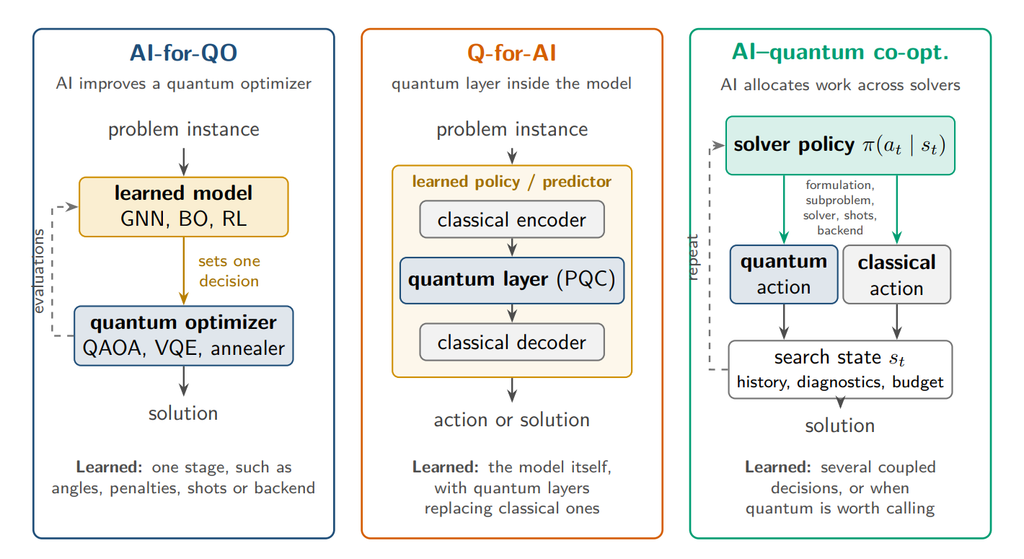
Researchers from Quantinuum, NVIDIA, and Pfizer Inc. have validated a Generative Quantum AI (GenQAI) framework designed to automate and accelerate quantum circuit synthesis for pharmaceutical research and electronic structure modeling. In their paper, "Learning to Prepare Molecular Ground States with Transformer Models", the hybrid architecture combines classical High-Performance Computing (HPC), generative transformer models, and quantum processing units (QPUs) to compute ground-state preparation circuits for complex active pharmaceutical ingredients (APIs). The multi-institutional team introduced ADAPT-GQE, a generative AI model trained on quantum chemistry datasets generated via GPU-accelerated classical supercomputing. The model predicts complete ground-state quantum circuits for imipramine—a tricyclic antidepressant used as [...]

Quantinuum, NVIDIA, and Pfizer Validate Generative Quantum AI (GenQAI) Framework for Pharmaceutical R&D2026-08-14T05:11:13-07:00

EPFL Integrates Quantinuum Trapped-Ion Cloud Access into SCITAS HPC Platform

2026-08-14T04:28:52-07:00

The EPFL Center for Quantum Science and Engineering (QSE), in collaboration with EPFL’s SCITAS high-performance computing (HPC) platform, has partnered with Quantinuum to provide cloud-based access to Quantinuum’s trapped-ion quantum computers. The agreement establishes EPFL as the first Swiss academic institution to natively integrate commercial QPU access directly into its institutional supercomputing infrastructure. [ EPFL SCITAS Hybrid Quantum-HPC Platform ] │ ┌─────────────────────────────────┴─────────────────────────────────┐ ▼ ▼ SCITAS HPC Infrastructure Interface Quantinuum Cloud QPU Hardware • Unified Academic Queue & Auth Workflow. • High-Fidelity Trapped-Ion Processors. • Integrated Digital Quantum Simulations. • Low Decoherence & High Gate Fidelity. • Native Integration for EPFL Researchers. [...]

EPFL Integrates Quantinuum Trapped-Ion Cloud Access into SCITAS HPC Platform2026-08-14T04:28:52-07:00

Quanta Computer and Quantinuum Partner to Industrialize Fault-Tolerant Trapped-Ion Hardware Manufacturing

2026-08-14T04:09:24-07:00

Trapped-ion quantum computing developer Quantinuum (NASDAQ: QNT) and Fortune Global 500 electronics manufacturer Quanta Computer have signed a collaborative development agreement to industrialize the hardware infrastructure, systems engineering, and mass-manufacturing supply chains for future generations of Quantinuum’s quantum computers. The partnership bridges Quantinuum’s trapped-ion Quantum Charge-Coupled Device (QCCD) architecture with Quanta’s global electronics manufacturing and cloud-server infrastructure expertise. Joint engineering teams are actively designing modular, manufacturable hardware subsystems intended to transition quantum hardware from custom-built, laboratory-assembled systems to standardized, mass-producible enterprise IT hardware. [ Quantinuum & Quanta Hardware Industrialization Pipeline ] │ ┌────────────────────────────────────────┴────────────────────────────────────────┐ ▼ ▼ Quantinuum Trapped-Ion Architecture Quanta Global Industrial [...]

Quanta Computer and Quantinuum Partner to Industrialize Fault-Tolerant Trapped-Ion Hardware Manufacturing2026-08-14T04:09:24-07:00

DARPA Awards Contract to Qunnect to Advance Real-Time Polarization Compensation for Quantum Networks

2026-08-13T11:19:39-07:00

The Defense Advanced Research Projects Agency (DARPA) has awarded a research contract to quantum networking hardware startup Qunnect to enhance the signal stability and resilience of entanglement-based telecom fiber networks. Associated with DARPA's Quantum Augmented Networks (QuANET) program and Small Business Innovation Research (SBIR) initiatives, the contract provides funding to advance the next generation of Qunnect's automated polarization compensation module, a core component within its flagship Carina™ entanglement distribution system. [ Qunnect Carina™ Polarization Stabilization Pipeline ] │ ┌──────────────────────────────────────┴──────────────────────────────────────┐ ▼ ▼ Field Telecom Fiber Network Environment Carina Active Noise Cancellation • Environmental Temp & Phase Fluctuations. • Real-Time Polarization Drift Analysis. [...]

DARPA Awards Contract to Qunnect to Advance Real-Time Polarization Compensation for Quantum Networks2026-08-13T11:19:39-07:00

T-SQUARED Begins Construction on Infleqtion’s Quantum Innovation Centre in Oxford

2026-08-13T10:27:21-07:00

Specialized engineering firm T-SQUARED has commenced construction on a new Quantum Innovation Centre at Oxford Technology Park for neutral-atom quantum technology company Infleqtion (NYSE: INFQ). The facility will triple the capacity of Infleqtion’s UK operations, expanding its research, manufacturing, and systems integration infrastructure for neutral-atom quantum computing, quantum sensing, and precision timing platforms. Following the completion of the facility design phase, T-SQUARED deployed autonomous construction layout robotics—printing millimetric architectural schematics directly onto the site floor—to accelerate physical buildout. The new infrastructure will support Infleqtion UK’s commercial scaling, system manufacturing, and talent recruitment across quantum physics, photonics, and software engineering. [ Infleqtion [...]

T-SQUARED Begins Construction on Infleqtion’s Quantum Innovation Centre in Oxford2026-08-13T10:27:21-07:00

University of Guelph and Xanadu Sign MOU to Advance Quantum Education and Talent Development

2026-08-13T06:47:29-07:00

The University of Guelph (U of G) and photonic quantum computing developer Xanadu Quantum Technologies (NASDAQ/TSX: XNDU) have signed a Memorandum of Understanding (MOU) to collaborate on quantum computing education, curriculum integration, and workforce development. Extending through 2028, the partnership aligns U of G’s College of Computational, Mathematical, and Physical Sciences (CCMPS) with Xanadu’s technical stack to train the next generation of quantum software developers and researchers. The agreement addresses a key objective of Canada's National Quantum Strategy: bridging the gap between academic physics/computer science programs and commercial quantum engineering requirements. As part of the collaboration, U of G will integrate [...]

University of Guelph and Xanadu Sign MOU to Advance Quantum Education and Talent Development2026-08-13T06:47:29-07:00

Xanadu and University of Alberta Partner to Accelerate Photodynamic Cancer Drug Discovery

2026-08-13T06:41:59-07:00

Photonic quantum computing developer Xanadu Quantum Technologies Limited (NASDAQ/TSX: XNDU) has announced a strategic research partnership with the University of Alberta to engineer novel quantum algorithms for oncology and pharmaceutical drug design. Led by Xanadu's algorithms team and Professor Alex Brown, Chair of the Department of Chemistry at the University of Alberta, the project focuses on modeling complex light-matter interactions in photosensitizers—light-activated chemical compounds utilized in targeted photodynamic cancer therapy (PDT). Photodynamic therapy uses light-activated compounds to selectively destroy localized tumor cells while minimizing systemic damage associated with traditional chemotherapy. However, designing photosensitizer molecules classically presents a severe computational bottleneck: predicting [...]

Xanadu and University of Alberta Partner to Accelerate Photodynamic Cancer Drug Discovery2026-08-13T06:41:59-07:00
Go to Top