
Author: Mohamed Abdel-Kareem
-
-
MIT Physicists Use First-Principles AI to Resolve Non-Abelian Anyon Order at Strong Landau Level Mixing
MIT researchers used a specialized self-attention neural network to solve complex equations related to quantum particles, confirming the existence of anti-Pfaffian topological states. This breakthrough provides a roadmap for building noise-resistant topological qubits in materials like monolayer WSe2 and semiconductor quantum wells.
-
D-Wave Demonstrates 3D Analog-Digital Quantum Simulation of Higher-Order Topological Insulators Using 728 Qubits
D-Wave has successfully demonstrated 3D analog-digital quantum simulation of higher-order topological insulators using up to 728 qubits on an Advantage2 superconducting quantum annealing processor. This achievement, detailed in a research study on arXiv, involved new analog-digital quantum control protocols to measure localized boundary modes and extract 3D bulk topological invariants. This breakthrough confirms the utility of analog-digital quantum annealing hardware as a programmable simulator for condensed matter physics and topological materials.
-
Open Quantum Launches Native Qrisp Integration for High-Level QPU Execution Across IonQ, Rigetti, IQM, and AQT Hardware
Open Quantum has launched a native Qrisp integration, enabling high-level QPU execution across IonQ, Rigetti, IQM, and AQT hardware. This allows developers to compile and execute Qrisp programs directly on physical QPUs without writing vendor-specific gate-level code. The integration simplifies quantum programming by providing software-engineering abstractions, automated qubit allocation, and memory management.
-
Chalmers Next Labs, ConScience, and NQFF Validate Superconducting Qubit Chip Stability Across International Testbeds
A joint study by Chalmers Next Labs AB, ConScience AB, and Singapore’s National Quantum Federated Foundry (NQFF) validated the stability of a superconducting quantum processor (QiB1) when transported between international research facilities. The study, conducted under the WACQT–NQFF Twin Testbed initiative, confirmed that environmental changes between Gothenburg and Singapore did not degrade the processor’s performance. This collaboration is now being commercialized as a standardized cross-facility measurement service.
-
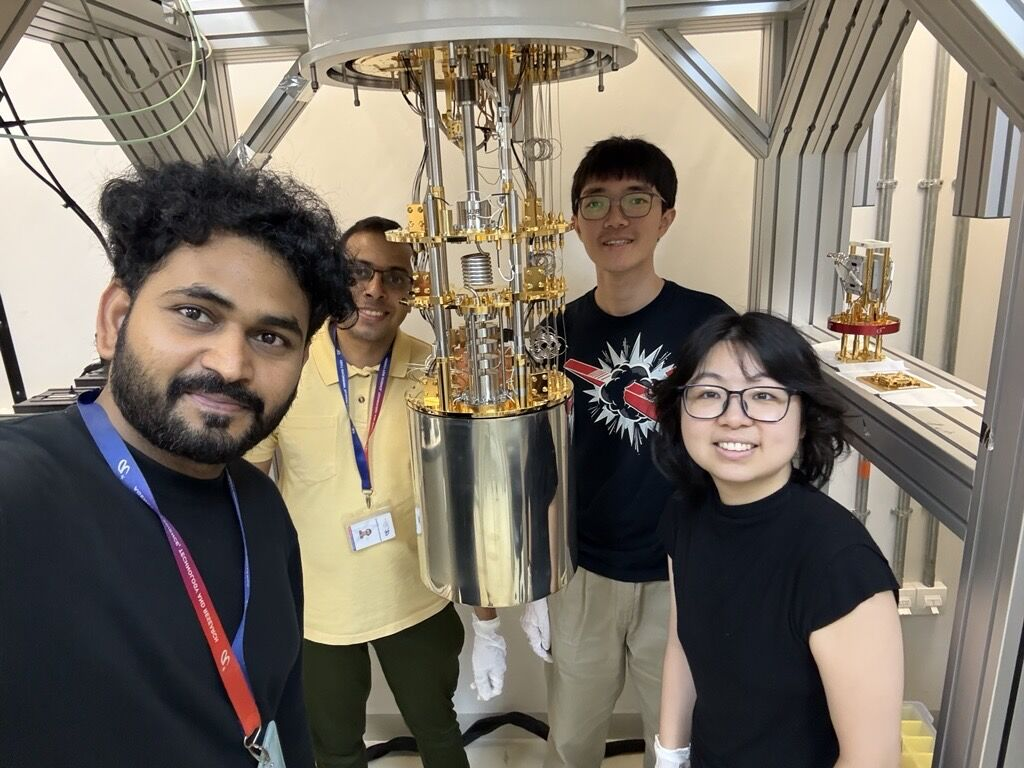
MIT Bengaluru Inaugurates Q-HUB@MAHE and Deploys QuantrolOx’s Open-Architecture VIDYAQAR Quantum System
Manipal Institute of Technology (MIT Bengaluru) has inaugurated the Manipal House of Quantum (Q-HUB@MAHE) in Bengaluru, India, on October 13, 2026. This facility features QuantrolOx’s VIDYAQAR open-architecture quantum system, a 25-qubit-capable dilution refrigeration platform that is part of a national roadmap to scale to over 1,000 qubits. The initiative aims to train 100 quantum engineers by December 2026 and allows researchers to test and benchmark quantum components using custom Python workflows.
-
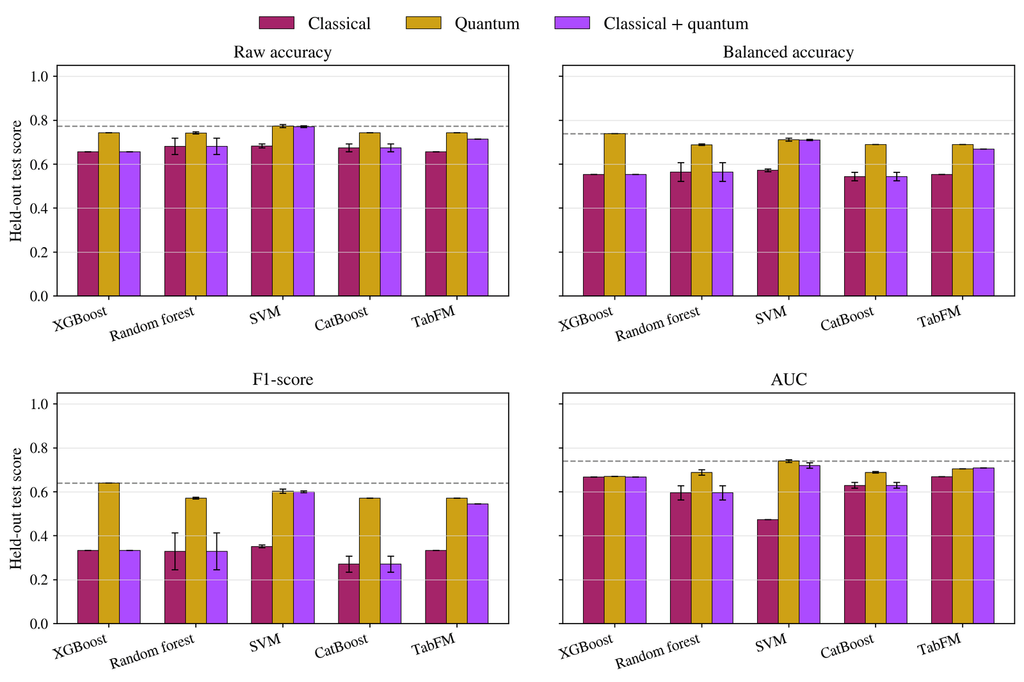
Kipu Quantum Demonstrates Neutral-Atom Quantum Feature Extraction for Molecular Toxicity Classification on QuEra Hardware
Kipu Quantum demonstrated a novel method for molecular toxicity classification using analog quantum feature extraction on QuEra's 256-qubit Aquila neutral-atom quantum processor. This approach, detailed in their technical report, utilizes 200-qubit neutral-atom arrays to generate high-dimensional quantum features. These quantum features significantly improved performance over classical methods, particularly on imbalanced datasets, doubling the F1-score and raising balanced accuracy for drug discovery and chemical safety.
-
-
-
Kipu Quantum and NTT DATA Partner to Scale Enterprise Quantum Computing and QML Applications
Kipu Quantum and NTT DATA have partnered to advance enterprise quantum computing and QML solutions. The collaboration will integrate quantum algorithms into existing enterprise technology, leveraging Kipu Quantum's expertise in hardware-specific compression techniques. This partnership, which began with a pilot program at Komatsu Peru, aims to develop and deploy commercial algorithms for various applications, including supply chain logistics and financial risk modeling, initially in Latin America and then globally.
-
University of Oxford Entangles Multi-Species Atom Network and Extends Memory Storage Beyond 10 Seconds
Physicists at the University of Oxford have developed a quantum network using different atomic elements, strontium and calcium, to create entangled states. They successfully generated up to 4-qubit Greenberger-Horne-Zeilinger (GHZ) states and stored this entanglement in calcium memory qubits for over 10 seconds. This significantly extends entanglement lifetimes, marking a major step forward for distributed quantum computing and sensing.
-
QuIC Publishes Position Paper Calling for Harmonized EU Dual-Use Controls on Quantum Technologies
The European Quantum Industry Consortium (QuIC) has published a position paper urging the European Commission to harmonize EU dual-use controls on quantum technologies. They warn that fragmented national implementations of export controls on quantum technologies are causing administrative difficulties, shipment delays, and revenue loss for European quantum companies. QuIC proposes reforms focusing on single market harmonization, expanded allied trade, clearer rules for intangible transfers and cloud access, and differentiated scrutiny for supply chain components to ensure European competitiveness.
-
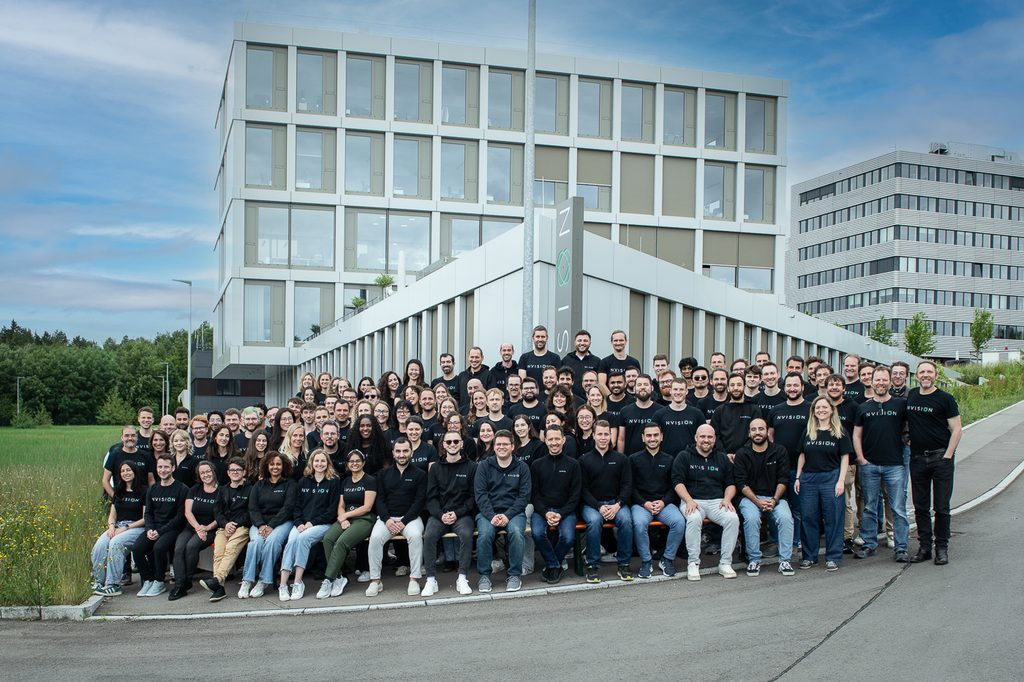
NVision Quantum Technologies Expands into Molecular Quantum Computing with Photonic Integrated Architecture
NVision Quantum Technologies is expanding from its commercial hyperpolarized MRI platform into quantum computing hardware with its new PIQC (Photonic Integrated Quantum Chip) molecular architecture. This strategy utilizes synthetic organic molecules with optically addressable spin states deposited on silicon photonic chips, aiming for a scalable, photonically-entangled gate architecture for fault-tolerant quantum computing. This expansion builds on their commercial success with their Polaris MRI systems and recent significant financing and project involvement.
-