
Author: Mohamed Abdel-Kareem
-
-
Giesecke+Devrient Joins European uPQComing Consortium to Develop Quantum-Safe eID Operating Systems
Giesecke+Devrient (G+D) has joined the European uPQComing consortium, co-funded by the EU’s Chips Joint Undertaking, to develop quantum-safe eID operating systems. The project focuses on migrating critical public digital infrastructure and resource-constrained embedded secure elements to Post-Quantum Cryptography (PQC). G+D’s role involves integrating PQC algorithms into Java Card chip operating systems, designing crypto-agile architectures, and implementing hybrid key exchange and authentication schemes, building upon their previous work with Germany’s Bundesdruckerei to establish quantum-resistant digital identity architectures across the EU.
-
SEEQC Signs MoU with Taiwan Quantum Industry Technology Promotion Office to Build Cryo-Chip Supply Chain
SEEQC has signed an MoU with Taiwan’s QITPO to create a cross-border quantum technology and supply-chain partnership. This agreement, signed at SEMICON Taiwan 2026, focuses on leveraging Taiwan’s semiconductor infrastructure for the development, testing, and commercialization of quantum computing components, including cryo-CMOS and SFQ manufacturing, and advanced packaging for superconducting QPUs. This collaboration aims to integrate SEEQC’s IP with Taiwan’s foundry capabilities to establish a robust supply chain for commercial multi-qubit systems.
-
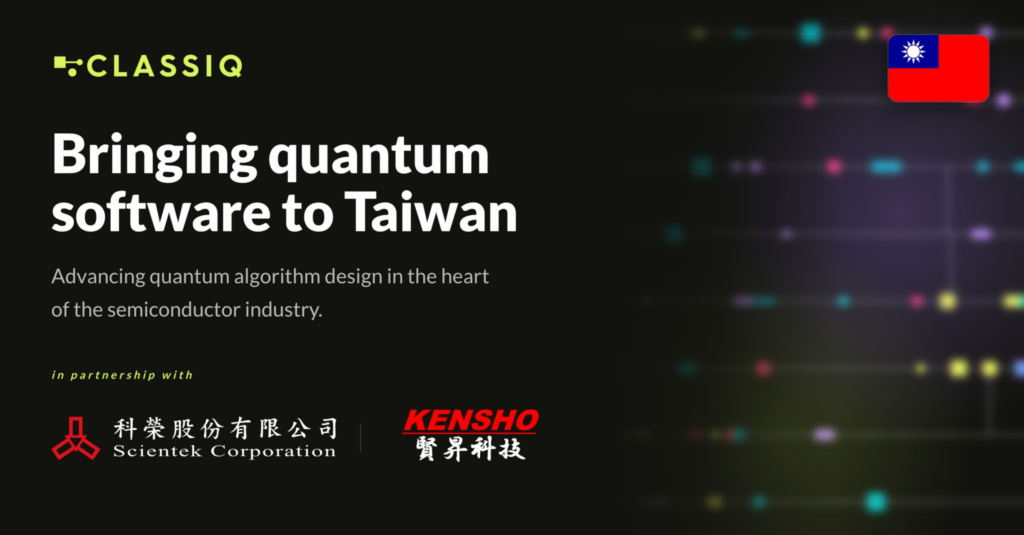
Classiq Expands in Taiwan via Go-to-Market Partnerships with Scientek and Kensho
Classiq Technologies has expanded into Taiwan through partnerships with Scientek Corporation and Kensho, strategically timed with SEMICON Taiwan 2026. These collaborations aim to integrate Classiq’s quantum software engineering platform into Taiwan’s semiconductor manufacturing, defense, material science, and academic research sectors. The partnerships will facilitate local distribution, customer enablement, and joint R&D, bridging quantum hardware infrastructure with Classiq’s AI synthesis engine and Qmod programming language.
-
SEALSQ Integrates wolfTPM Support into Post-Quantum Silicon Semiconductor Platform (QVault TPM)
SEALSQ and wolfSSL have integrated wolfTPM software support into SEALSQ’s QVault TPM, a post-quantum silicon semiconductor platform. This integration provides an open-source software layer for executing hardware-isolated post-quantum cryptography operations across embedded systems. The QVault TPM, featuring an 80 MHz 32-bit RISC-V secure core, ensures private keys for ML-DSA and ML-KEM are generated, stored, and executed within the hardware boundary, enhancing security. Sampling and general hardware availability for the QVault TPM are scheduled for November 2026.
-
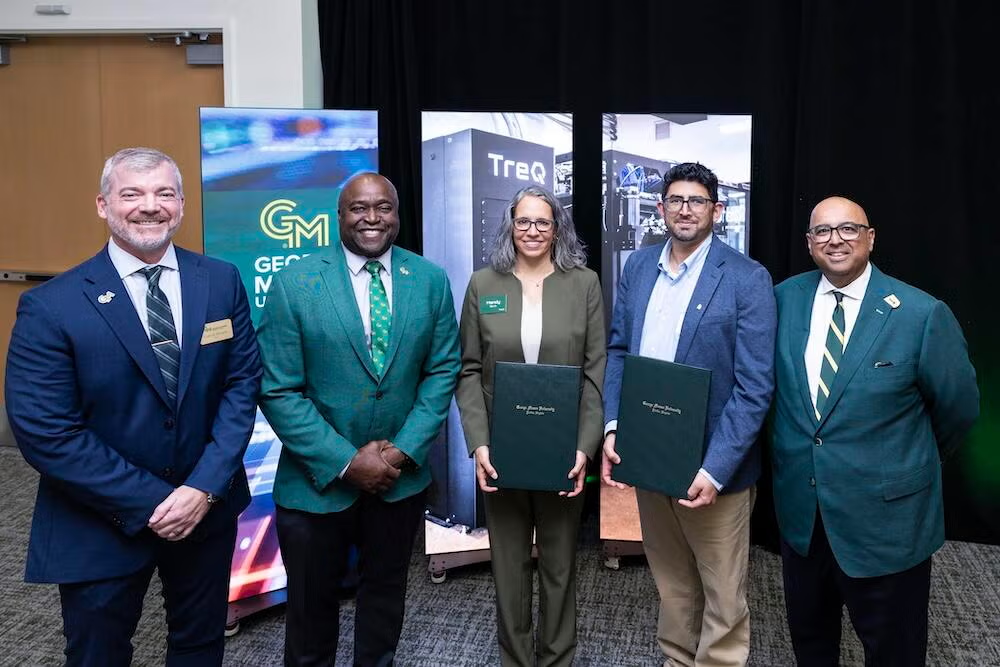
George Mason University Partners with TreQ to Install $7.7M Open-Architecture Quantum QPU in Virginia
George Mason University is partnering with TreQ to install a $7.7 million open-architecture quantum computer at its Northern Virginia campus, supported by funding from the Virginia Innovation Partnership Corporation and GMU. This system, featuring TreQ’s Open Architecture Quantum (OAQ) framework, will be the first U.S. deployment of its kind, offering a modular and “built-to-evolve” platform for quantum research and development, and is expected to be operational by late summer 2027. The initiative, led by GMU President Gregory Washington and TreQ CEO Mandy Birch, aims to establish Northern Virginia as a key hub for quantum technology and workforce development.
-
-
-
Rigetti and Purdue University Demonstrate Quantum Preconditioning Framework for Constrained Optimization
Rigetti Computing and Purdue University have developed a quantum preconditioning framework that accelerates classical solvers for constrained optimization problems. By using shallow QAOA circuits to generate a correlation matrix that modifies the objective function, their method allows classical Mixed-Integer Programming solvers to find near-optimal solutions up to 100 times faster. This approach integrates quantum feature extraction with classical solvers, significantly improving performance on NP-hard problems like graph partitioning.
-
Pasqal and True Nexus Encode Protein Gelation Structures on Neutral-Atom QPUs
Pasqal and True Nexus have achieved a significant milestone in structural biology by encoding protein structures related to molecular gelation onto Pasqal’s neutral-atom quantum processors. This collaboration, supported by Saudi Arabia’s MCIT, aims to computationally design protein functionality, bypassing traditional trial-and-error methods in protein engineering. The project, aligned with Saudi Vision 2030, leverages quantum simulations to understand and design alternative proteins, with potential applications in plant-based and novel protein development.
-
Quobly Signs Dual Agreements with TNO and OrangeQS to Industrialize Silicon Spin Qubit Manufacturing
Quobly, a French silicon quantum computing developer, has signed agreements with TNO and OrangeQS in the Netherlands to advance silicon spin qubit manufacturing. These partnerships, formed during a Franco-Dutch state visit, focus on device characterization, metrology, and high-throughput screening of qubits on 300 mm FD-SOI CMOS wafers, integrating with Quobly’s existing manufacturing pipeline and aiming for cloud-based HPC deployment by late 2026.
-
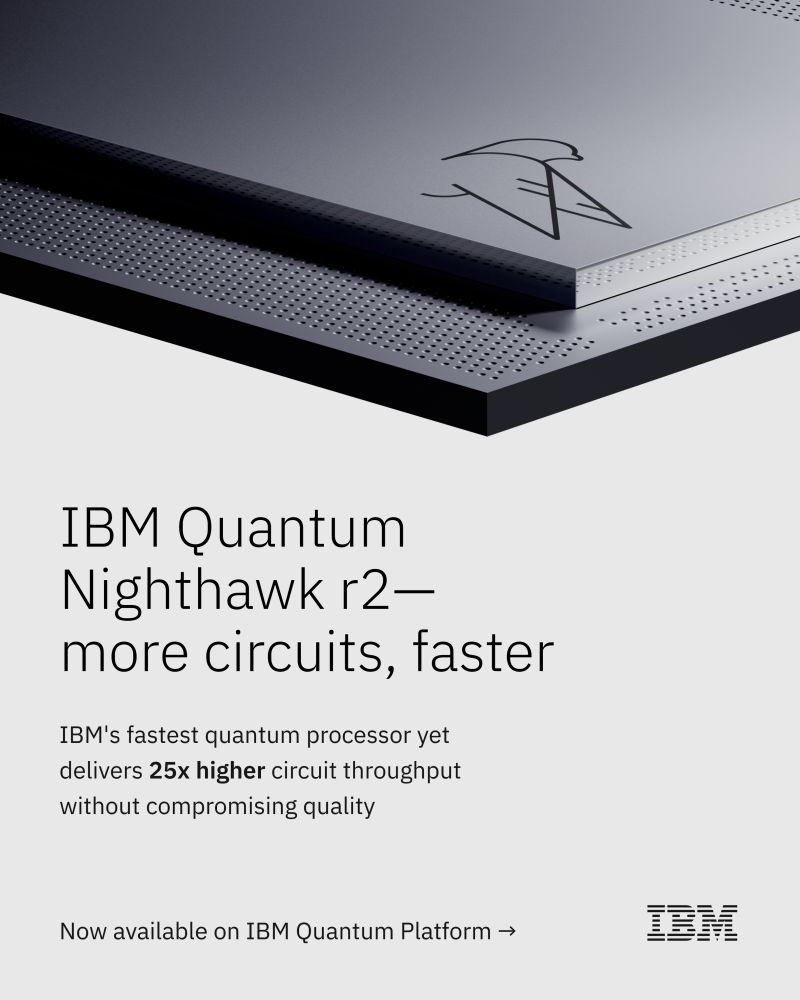
IBM Releases Nighthawk r2 QPU Featuring Active Dissipative Qubit Reset and 25x Circuit Throughput
IBM Quantum has released Nighthawk r2, their fastest QPU to date, featuring a 120-qubit processor with a dissipative qubit reset framework that significantly reduces inter-circuit idle periods. This innovation allows for a maximum circuit throughput of over 100,000 circuits per second, a 25x speedup compared to the Heron QPU fleet. Nighthawk r2 has demonstrated accurate observable estimation on circuits with over 7,500 gates and achieved a 12x speedup for neutron-scattering simulations.
-
QuSecure Achieves TRL-7 at U.S. Army Project Convergence Capstone 6 for QuProtect R3
QuSecure’s QuProtect R3 cybersecurity platform achieved Technical Readiness Level 7 (TRL-7) at the U.S. Army’s Project Convergence Capstone 6, demonstrating its operational readiness in real-world combat conditions. This successful deployment at Fort Irwin establishes a path for post-quantum network defense within the Department of Defense. The platform offers quantum-resistant communications, cryptographic discovery, and zero-trust enforcement, assisting federal agencies in meeting upcoming PQC migration mandates ahead of schedule.
-