Author: Mohamed Abdel-Kareem
-
-
NSF and UKRI Commit $10 Million in Joint Funding for Molecular Quantum Information Science
The NSF and UKRI have jointly committed $10 million to fund eight transatlantic research teams in molecular quantum information science. This initiative, with $5 million from NSF and £3.7 million from UKRI, focuses on foundational chemistry research to manipulate quantum states in complex molecular architectures. This second phase of funding aims to synthesize custom molecular systems, engineer molecular-scale spin qubits, and model quantum information transfer, directly supporting international research partnerships.
-
Casper College Awarded $444,000 NSF Grant to Build Statewide Quantum Workforce Pipeline
Casper College received a $444,059 NSF grant (Award #2609718) to create a statewide quantum education and workforce initiative. This "Quantum Pipeline" project will deploy 130 Quantum Trunks across Wyoming, host a summer science camp, and establish an undergraduate course to build a diverse talent pipeline for the quantum economy. This initiative, led by Dr. Andrew Young, marks the college's first NSF PI award since 1995.
-
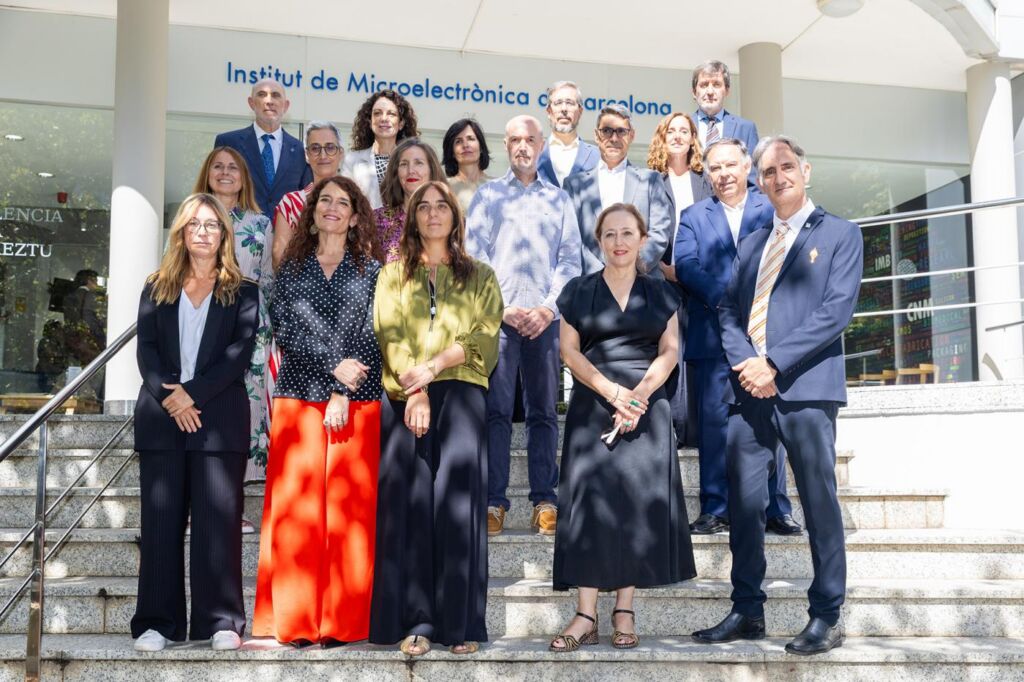
CSIC Inaugurates Spain’s Quantum Nanofabrication Area at IMB-CNM in Barcelona
Spain's CSIC has opened a Quantum Nanofabrication Area at IMB-CNM in Barcelona, a €6 million investment funded by Spain's PERTE Chip program and NextGenerationEU. This facility, equipped with advanced lithography and microscopy systems, is designed for prototyping quantum hardware like QPUs and QKD components. It's part of CSIC's QuARC-CSIC initiative, consolidating 36 research groups to advance quantum technologies across various pillars, from computing to sensing.
-
IonQ, ORNL, NVIDIA, and UT Knoxville Advance AI-Driven Generative Quantum Circuit Synthesis
A collaboration between ORNL, IonQ, NVIDIA, and UT Knoxville introduced DQAOA-GPT, a generative AI framework that synthesizes quantum optimization circuits, eliminating iterative parameter-tuning. This framework significantly reduces circuit synthesis runtime to a constant 28 seconds and doubles solution quality for higher-order unconstrained binary optimization (HUBO) problems, as presented at IEEE Quantum Week 2026. DQAOA-GPT replaces traditional trial-and-error with a transformer model trained on high-performing circuit profiles, allowing hybrid algorithms to scale subproblem sizes efficiently.
-
Oxford Quantum Circuits and Trust Base Benchmark Hybrid Quantum Workloads for Financial Risk Modeling
Oxford Quantum Circuits (OQC) and Trust Base benchmarked hybrid quantum workloads for financial risk modeling, evaluating classical, hybrid quantum-classical, and fault-tolerant quantum algorithms for tasks like derivative pricing and Value-at-Risk. The study found that while Quantum-compressed Physics-Informed Neural Networks (QPINNs) showed parameter efficiency, classical PINNs offered better runtimes and stability. Optimizations like Quantum Signal Processing (QSP) could significantly reduce resource requirements for Quantum Monte Carlo, and improved hardware error correction thresholds could drastically cut the physical qubit footprint for fault-tolerant quantum computing.
-
Quobly Demonstrates Single-Chip Readout and Gates on 300mm Industrial Silicon Process
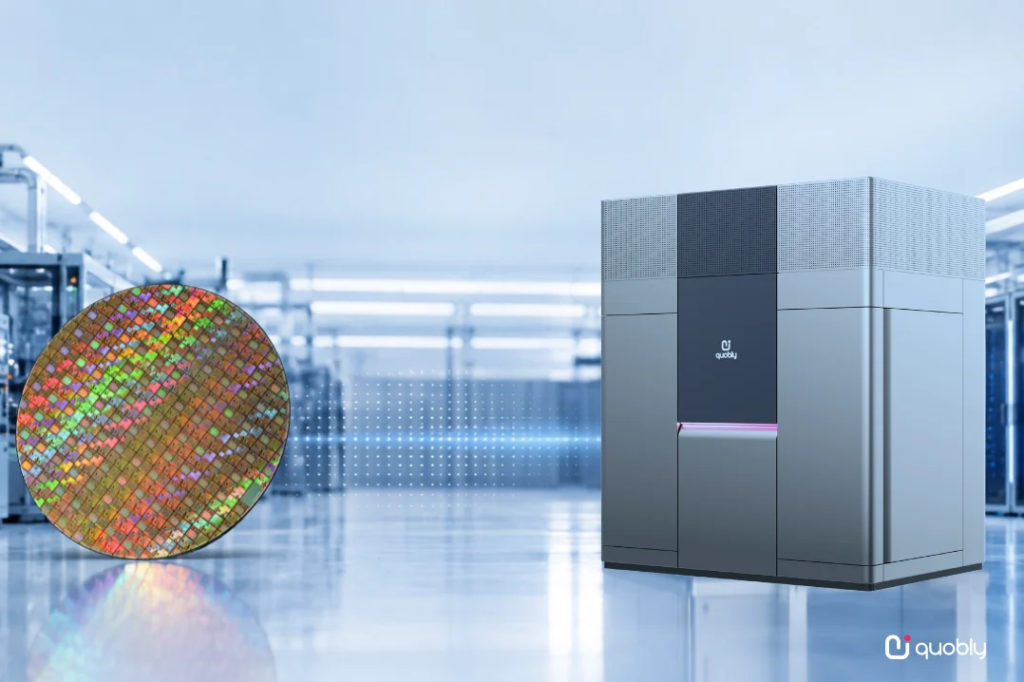
Quobly has successfully demonstrated single-chip execution of qubit readout, single-qubit gates, and two-qubit gates on its QSOI® architecture, fabricated on an industrial 300mm silicon process at STMicroelectronics. This achievement validates their technology transfer strategy, allowing co-integration of quantum and classical circuitry. With plans for cloud access to their Alloy Pioneer system by late 2026 and a long-term target of one million qubits by 2032, Quobly is advancing its commercial and scaling roadmap, supported by significant Series A funding and strategic partnerships.
-
Anderon Finalizes $1 Billion CHIPS Act Award to Scale 300mm Pure-Play Quantum Wafer Foundry
Anderon LLC, an IBM subsidiary, secured $1 billion in CHIPS Act funding, supplemented by another $1 billion from IBM, to expand its 300mm pure-play quantum wafer fabrication facility at Albany NanoTech. This investment aims to scale production of superconducting qubit arrays and other quantum components, addressing QPU scaling bottlenecks and strengthening domestic microelectronics supply chains. The facility will serve as an open commercial foundry for the global quantum hardware ecosystem.
-
-
-
Fujitsu Open-Sources OpenQARP Framework to Streamline Quantum Application Development
Fujitsu has open-sourced OpenQARP, a quantum application development framework, under the Apache License 2.0. Available on GitHub, it offers over 100 modular software components to simplify NISQ and FTQC application workflows, potentially reducing code volume by up to 70%. The library includes Fujitsu-developed algorithms for various quantum computing tasks and supports execution across Python, NVIDIA CUDA-Q, and Fujitsu's 40-qubit simulator.
-
ParityQC Launches Parity Twine Optimizer via IBM Qiskit Functions Catalog
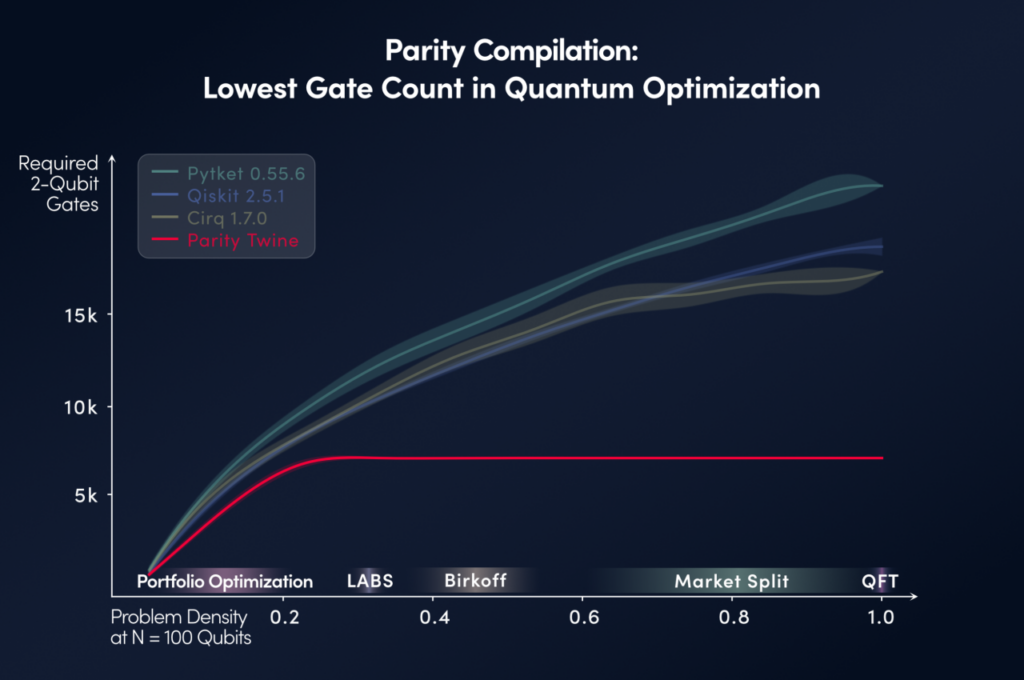
ParityQC has launched the Parity Twine Optimizer, a new compiler available through the IBM Qiskit Functions Catalog. This technology aims to improve quantum computing by natively mapping optimization problems to quantum hardware, thereby eliminating classical SWAP gate overhead and reducing circuit depth. It supports various hardware topologies and offers a 30-day free trial for IBM Quantum Network members.
-
Emergence Quantum and AirTrunk Partner to Develop Hyperscale Cryogenic Data Center Infrastructure
Emergence Quantum and AirTrunk have partnered to develop hyperscale cryogenic data center infrastructure, aiming to overcome physical scaling bottlenecks in high-density AI and HPC workloads. This collaboration will focus on engineering integrated, campus-scale cryogenic cooling infrastructure to support sub-100 Kelvin classical CMOS logic, superconducting interconnects, and fault-tolerant quantum computing. The initiative will also explore liquid air cooling and energy storage, with the goal of creating a commercial blueprint for "quantum-ready" hyperscale facilities.
-