
Category: Uncategorized
-
-
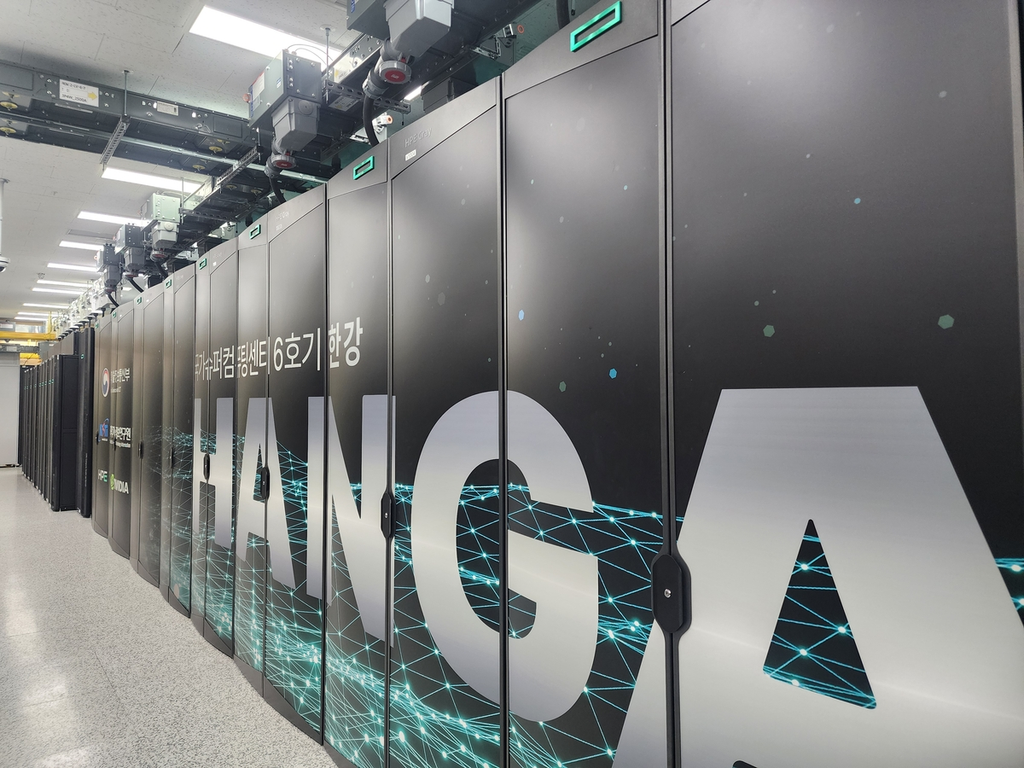
South Korea Launches 614 PFLOPS Hangang Supercomputer Ahead of May 2027 IonQ Quantum Link
South Korea has launched its sixth national supercomputer, Hangang, with a peak performance of 614 petaflops. It is designed to be the high-performance computing backbone for the country's first hybrid quantum-classical computing platform, integrating with IonQ's Tempo quantum processor by May 2027. Hangang will support general research, national strategic R&D, and small to medium enterprises, playing a key role in South Korea's K-Moonshot initiative.
-
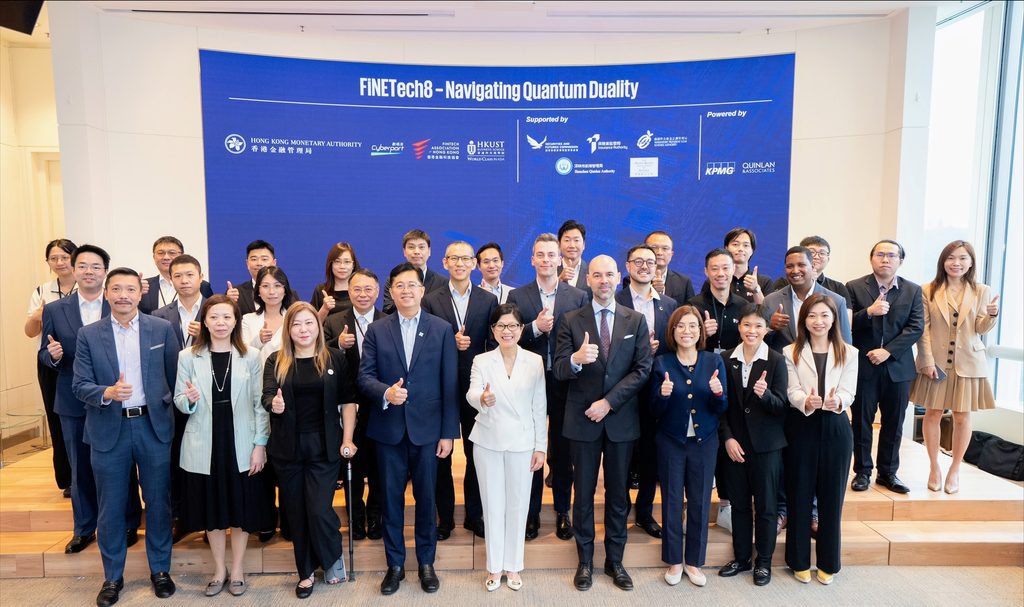
HKMA and HKUST Launch PQC Toolkit to Accelerate Banking Sector Transition by 2030
The Hong Kong Monetary Authority (HKMA) and The Hong Kong University of Science and Technology (HKUST) have jointly launched a Post-Quantum Cryptography (PQC) Toolkit. This toolkit provides a framework for Hong Kong's banking sector to transition to quantum-safe infrastructure by 2030, aiming to raise the Quantum Preparedness Index (QPI) score from 2.3 to 10.0. It addresses cryptographic inventory, risk prioritization, supply chain engagement, and governance to mitigate risks from quantum computing.
-
QNu Labs Introduces Corporate Quantum-Safe Training Supported by National Quantum Mission
QNu Labs has launched a corporate quantum-safe training program, supported by India's National Quantum Mission, to prepare security professionals for quantum threats. The program covers quantum communication, post-quantum cryptography, and includes case studies from QNu Labs' deployments. This initiative complements their commercial strategy and is offered as intensive workshops and executive briefings.
-
IBM Deploys Quantum System Two at Hyde Park Labs to Anchor Illinois Quantum Ecosystem
IBM, the University of Chicago, and the State of Illinois have deployed an on-premises IBM Quantum System Two in Chicago, powered by the 120-qubit Nighthawk processor. This system, initially at Hyde Park Labs, will anchor the National Quantum Algorithm Center (NQAC) and support research in various fields, including drug discovery and power-grid optimization. It will also contribute to workforce development through the FutureNow Chicago center, aiming to create 750 tech jobs.
-
IonQ Announces Record Q3 2026 Revenues of $173.8M and Raises FY 2026 Guidance to Over $505M as Backlog Reaches $1.2B
IonQ reported record Q3 2026 revenues of $173.83 million, a 336% increase year-over-year, driven by strong performance in both its IonQ Platform and SkyWater Foundry Services segments. The company achieved GAAP net income of $563.96 million and raised its full-year 2026 revenue guidance to over $505 million, with a backlog reaching $1.2 billion. IonQ also announced significant commercial and defense deployments, including advancements with DARPA and NVIDIA, and expanded its foundry and quantum cybersecurity capabilities with strategic partnerships and acquisitions.
-
Quantinuum Reports Q3 2026 Results: Revenue Soars 233% to $9.1M, Full-Year Outlook Raised, and Back-to-Back Logical Fidelity Records
Quantinuum reported strong Q3 2026 results with revenue soaring 233% year-over-year to $9.05 million, driven by cloud contracts and hardware access. The company raised its full-year 2026 revenue guidance to $31M-$34M and achieved a record 99.9995% logical fidelity on its Helios system. Quantinuum also expanded its commercial agreements, advanced its hardware roadmap, and grew its software platform and user community.
-
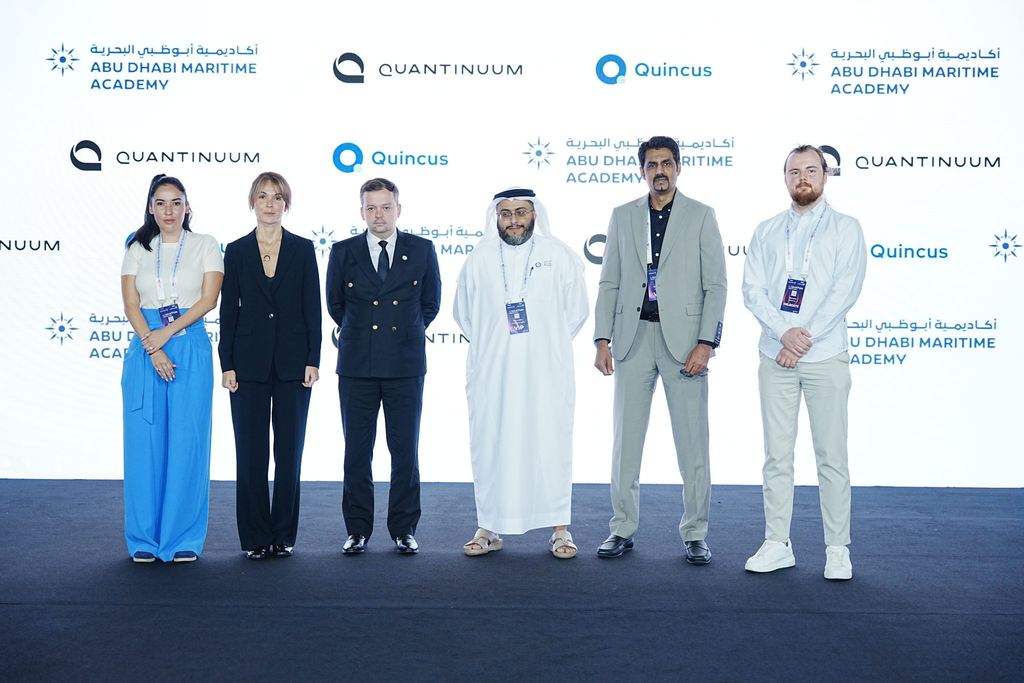
Abu Dhabi Maritime Academy, Quincus, and Quantinuum Partner on Quantum Maritime Logistics
The Abu Dhabi Maritime Academy (ADMA), Quincus, and Quantinuum have partnered in a multi-year research collaboration. They will evaluate hybrid quantum computing, high-performance computing, and AI algorithms using live operational data to address bottlenecks in maritime logistics. The goal is to improve solution quality, asset utilization, and carbon efficiency in areas like berth allocation, vessel stowage, and voyage routing.
-
UK NQCC Advances Industrial Strategy with SparQ Access Rollout, ProQure Procurement, and 13 PoC Awards
The UK's National Quantum Computing Centre (NQCC) has shifted its strategy from technology development to active procurement and industrial adoption, as detailed in its 2026 Annual Report. Key initiatives include the SparQ Access Industry Channel, providing commercial quantum processor access to nine organizations, and awarding 13 grants for enterprise-led Proof of Concept projects. The NQCC is also transitioning its Quantum Computing Testbed Initiative (QCTI) into the ProQure framework for government procurement of large-scale quantum machines.
-
NQCC Releases QCTI Phase 1 Report as Seven Quantum Testbeds Advance to Full-Scale Evaluation
The UK's National Quantum Computing Centre (NQCC) has released its Quantum Computing Testbed Initiative (QCTI) Phase 1 Report, confirming the deployment of seven commercial quantum computing testbeds at the Harwell Campus. This multi-year program, financed by a £30 million award, establishes the NQCC as an "alpha customer" to evaluate quantum hardware architectures. The program is now transitioning to Phase 2: Testbed Technical Evaluation, which will focus on independent benchmarking and assessing suitability for specific computational tasks.
-
-
-
NQCC Signs Enterprise Agreement with Phasecraft to Provide Quantum Software via SparQ Access
In November 2026, the NQCC and Phasecraft signed an agreement to provide UK organizations with access to Phasecraft's quantum software via SparQ Access. This partnership aims to lower the technical barrier for evaluating quantum advantage in various fields. An open call for proposals will be issued in late November 2026, with the first user cohort starting in Spring 2027, receiving support to deploy Magritte, Monet, and Mondrian software platforms.
-