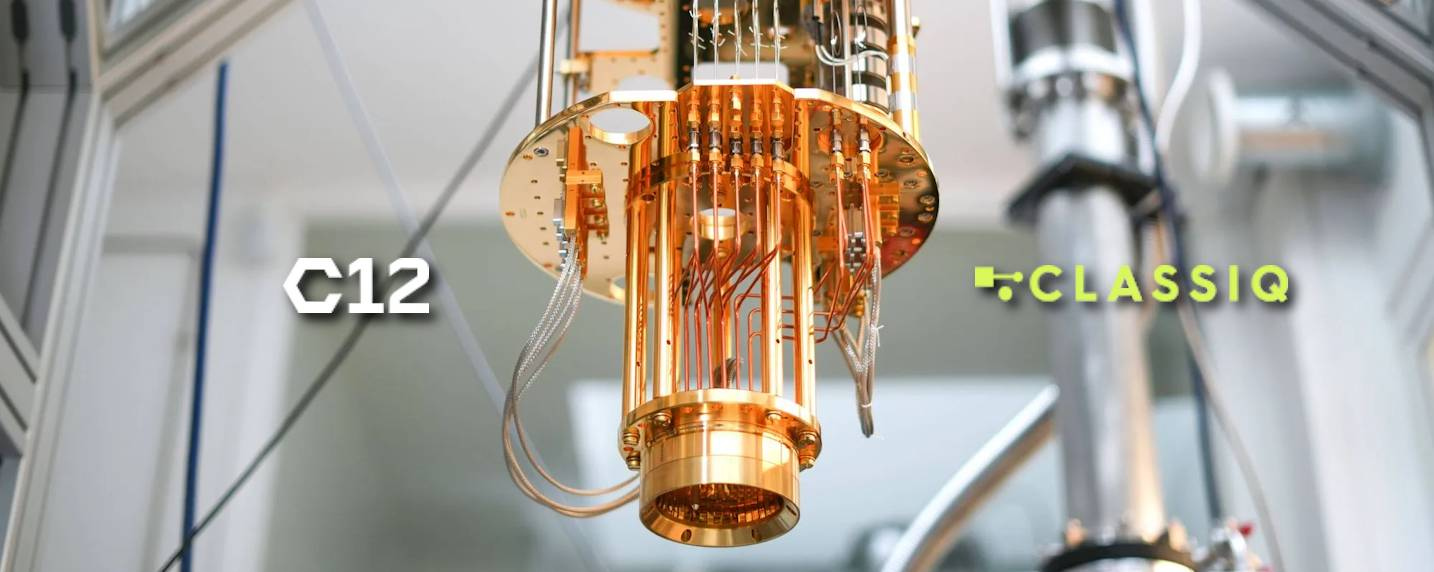
Classiq and C12 have announced a strategic partnership to integrate C12’s Callisto digital twin into the Classiq quantum software platform. This integration allows developers to utilize Classiq’s Qmod language and synthesis engine to design and optimize algorithms specifically for carbon nanotube (CNT) spin qubit architectures. The collaboration adds spin qubits as a supported modality within the Classiq ecosystem, alongside existing superconducting, trapped-ion, neutral atom, cat, and photonic QPU backends.
The technical foundation of C12’s hardware involves suspending ultra-pure carbon nanotubes over gate electrodes to host electron spin qubits. This architecture utilizes circuit quantum electrodynamics (cQED), where a superconducting microwave resonator acts as a quantum bus to facilitate long-range connectivity between qubits. By using CNTs as a near one-dimensional material, C12 aims to minimize charge and magnetic noise, achieving higher coherence times compared to traditional solid-state spin qubit implementations that rely on silicon or diamond substrates.
The Callisto Discovery Edition emulator, now accessible via Classiq, enables the simulation of up to 13 noisy qubits based on C12’s physical parameters. The digital twin incorporates realistic noise models, including phonon interaction, charge noise, and relaxation effects, and supports advanced operations such as mid-circuit measurement and noisy initialization. This allows researchers to benchmark algorithm performance and hardware-specific error mitigation strategies before the commercial deployment of C12’s physical processors.
Read the official partnership announcement from Classiq and C12 here.
January 27, 2026
