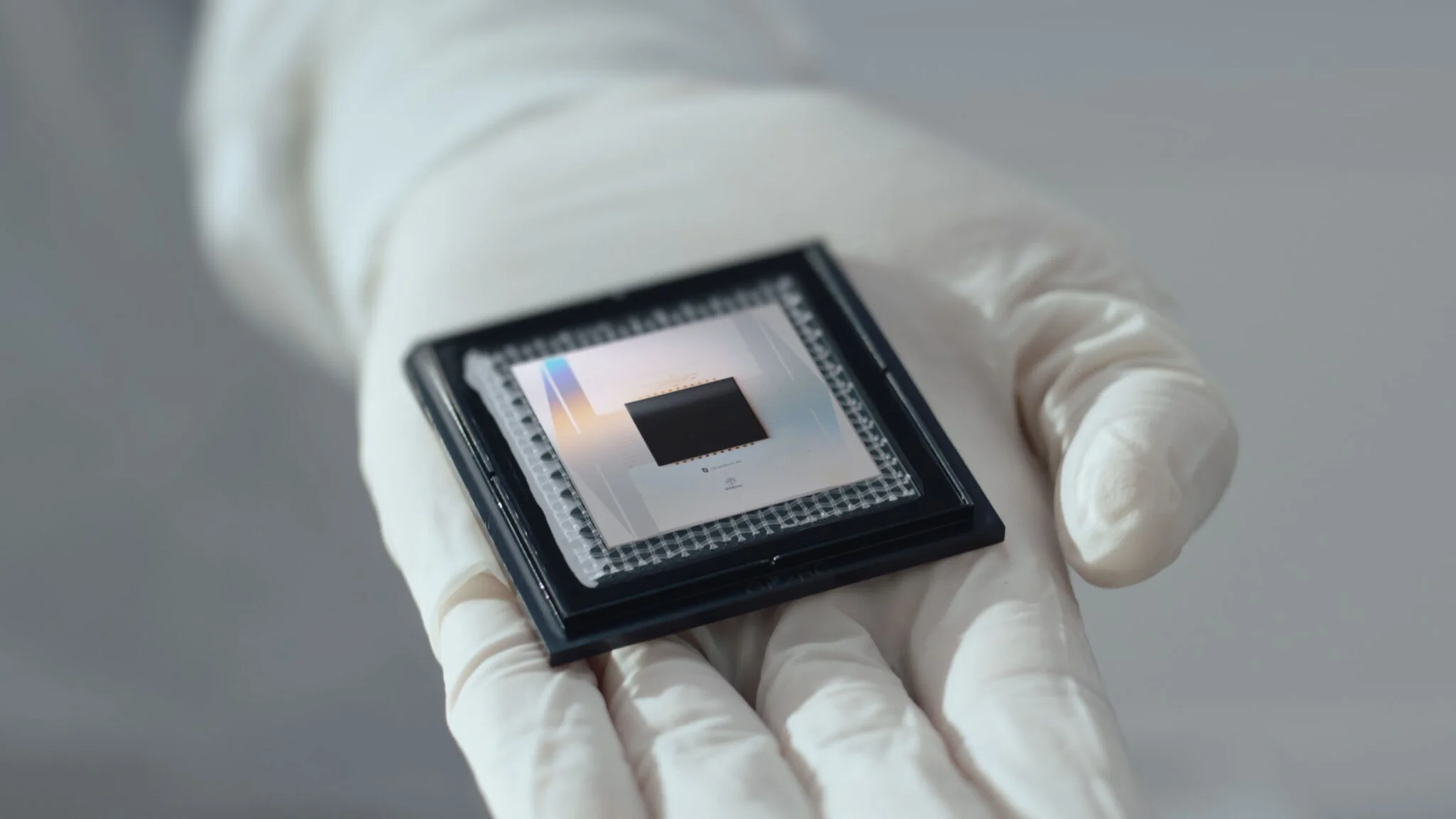
Google Quantum AI has announced a major algorithmic breakthrough, demonstrating the first-ever verifiable quantum advantage on hardware using the out-of-time-order correlator (OTOC) algorithm, which it terms Quantum Echoes. The experiment, published in Nature, ran on the Willow superconducting quantum processor and achieved a speed advantage of 13,000× over the fastest classical supercomputers for this task.
The Quantum Echoes algorithm uses a time-reversal protocol to send a signal into a quantum system, perturb one qubit, and then precisely reverse the signal’s evolution to listen for an “echo” amplified by constructive interference. This technique enables access to complex correlations that are otherwise scrambled by the system’s dynamics. The experiment is described as “quantum verifiable,” meaning the result is repeatable and can be cross-benchmarked by other quantum computers of similar quality.
In a separate proof-of-principle experiment with the University of California, Berkeley, Google applied the Quantum Echoes algorithm to study two organic molecules using Nuclear Magnetic Resonance (NMR) data. This application, which they call a “molecular ruler,” demonstrated the potential to measure longer distances than today’s methods, revealing information about chemical structure. Ashok Ajoy, Assistant Professor of Chemistry at UC Berkeley and a collaborator, noted that the approach could enhance NMR spectroscopy, a powerful tool for drug discovery and advanced materials design.
The successful measurement of the second-order OTOC on the superconducting processor, combined with its high classical simulation complexity, makes OTOC a strong candidate for realizing practical quantum advantage. The research team noted that OTOC is relevant to learning the structure of systems in nature, from molecules to black holes.M
Read the full announcement from Google Quantum AI here and the paper in Nature here. Also, an arXiv preprint describing how this technique could be used in a nuclear magnetic resonance (NMR) application can be found here.
October 22, 2025
