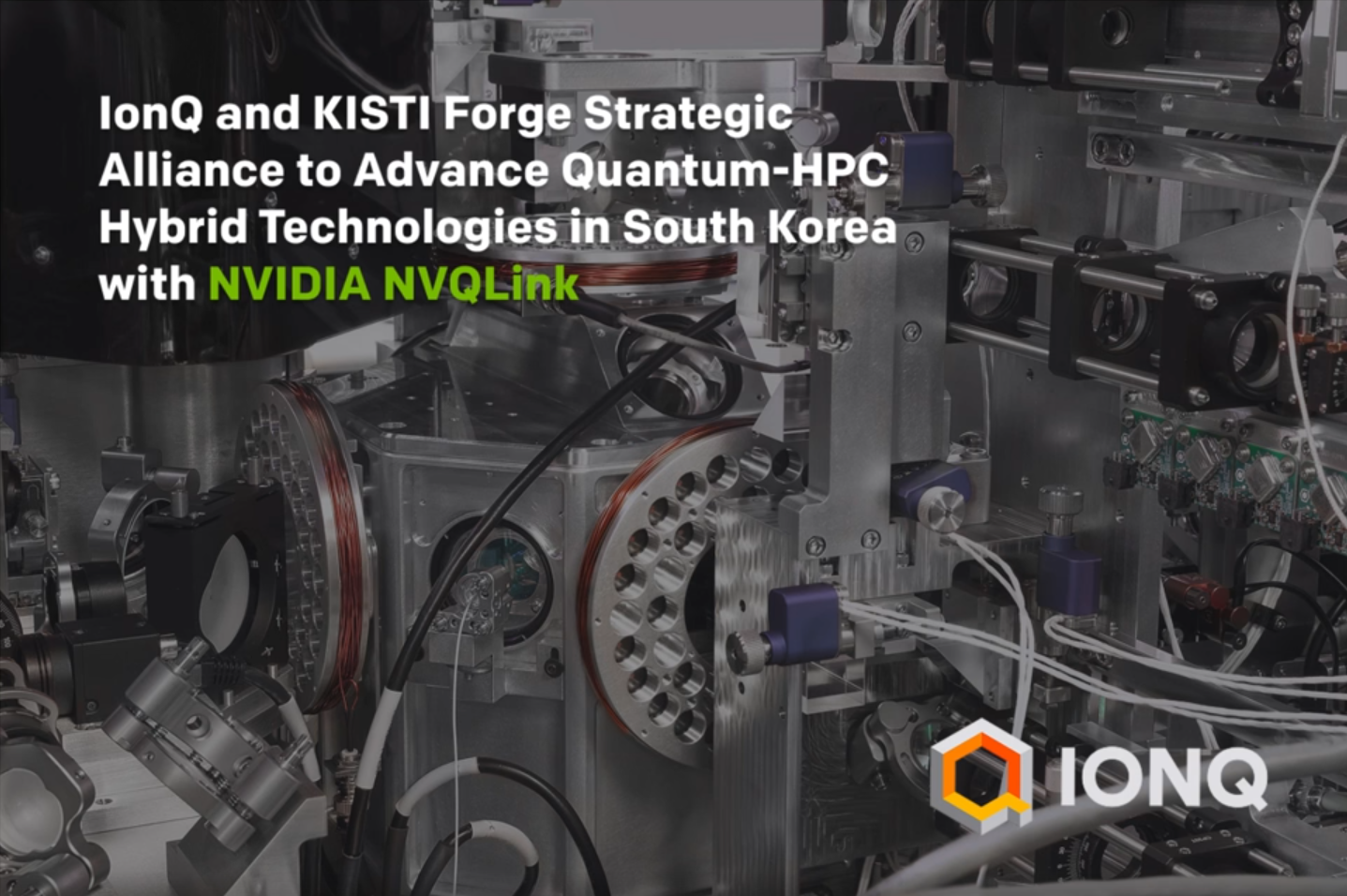
IonQ and the Korea Institute of Science and Technology Information (KISTI) have signed a Memorandum of Understanding (MOU) to develop hybrid quantum-classical computing technologies. Announced at NVIDIA GTC 2026, the strategic alliance aims to integrate IonQ’s trapped-ion quantum hardware with KISTI’s national High-Performance Computing (HPC) infrastructure. The initiative focuses on creating a sovereign quantum-HPC ecosystem in South Korea, providing local researchers and enterprises with the foundational technology and AI models required to solve complex scientific challenges in fields such as chemistry, logistics, and material science.
The technical framework for this integration relies on the NVIDIA NVQLink platform, an open architecture designed to facilitate high-bandwidth, low-latency connections between quantum processors and GPU-based supercomputers. This connectivity allows for the development of hybrid applications where trapped-ion qubits serve as specialized accelerators for classical supercomputing workloads. Key research areas include the joint simulation of quantum algorithms, the creation of AI models specifically designed to optimize quantum hardware performance, and the fine-tuning of Large Language Models (LLMs) using hybrid computing environments.
This collaboration builds upon IonQ’s established presence in South Korea, which includes partnerships with SK Telecom, Hyundai Motor Company, and Seoul National University. In 2025, IonQ achieved a record 99.99% two-qubit gate fidelity, a benchmark that reduces the error rates for complex hybrid computations. By deploying these high-fidelity systems within KISTI’s infrastructure, the partnership aims to transition quantum technology from experimental research to practical industrial use, while simultaneously fostering local talent through joint workshops and academic exchange programs.
For further details on the NVQLink integration and the national quantum roadmap for South Korea, consult the official IonQ announcement here.
March 16, 2026

Leave A Comment