

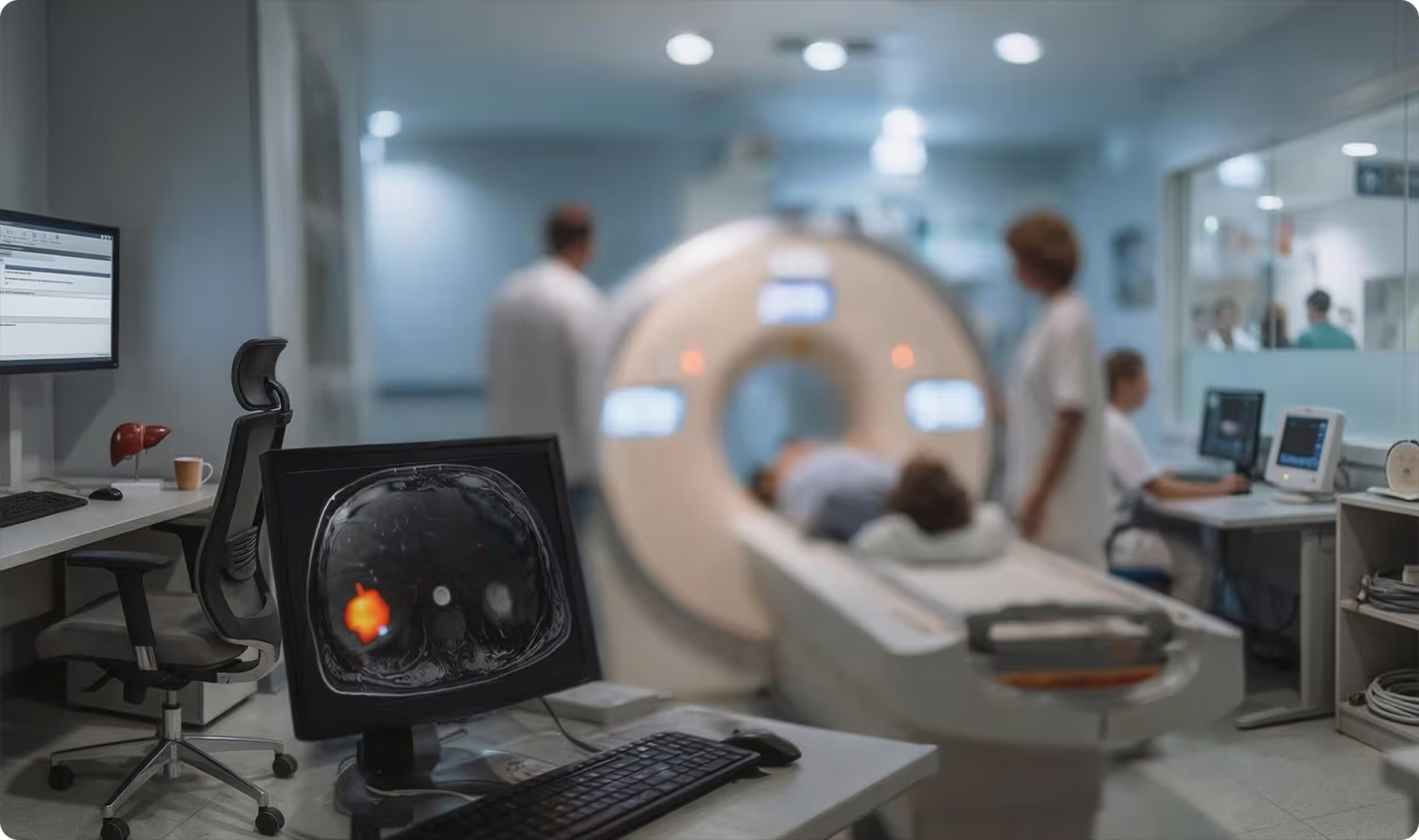
NVision Imaging Technologies and Aarhus University have been awarded a €5.4 million (40 million DKK) ($6.3 million USD) grant from Innovation Fund Denmark to advance the MIRAQLE project. Announced on March 16, 2026, the funding is part of Denmark’s Grand Solutions in Quantum Technologies program and is aimed at translating quantum-enhanced hyperpolarized MRI from laboratory research into clinical diagnostics for liver cancer.
The five-year project focuses on Hepatocellular Carcinoma (HCC), a type of liver cancer that is notoriously difficult to diagnose in its early stages due to the subtle differences between benign and malignant metabolic changes. By utilizing NVision’s proprietary POLARIS technology, the MIRAQLE platform aims to visualize cancer metabolism in real-time, providing doctors with a tool to assess not just the location of a tumor, but its aggressiveness and immediate response to therapy.
POLARIS: Quantum Physics Meets Clinical Imaging
NVision’s POLARIS technology leverages quantum physics to hyperpolarize metabolic agents, boosting the MRI signal by up to 100,000 times. This leap in sensitivity allows standard MRI scanners to detect metabolic activity at the cellular level—data typically invisible to conventional imaging. Key advantages of the POLARIS system include:
- Infrastructure Integration: Designed to be compatible with regular hospital MRI systems.
- Radiation-Free: Unlike PET scans or other metabolic imaging techniques, the process involves no radioactive tracers.
- Real-Time Metabolism: Visualizes the chemical conversions that drive tumor growth as they occur.
A Growing European Research Network
The MIRAQLE project strengthens NVision’s position within a robust portfolio of European research consortiums. Since 2022, the company has secured more than €35 million in public grant funding for initiatives such as CHARM, HYPERCELL, MAGSENSE, and AURORA. The collaboration with Aarhus University’s MR Research Centre, led by Professor Christoffer Laustsen, will span laboratory research through to preclinical and clinical studies, building on NVision’s existing partnerships with Memorial Sloan Kettering Cancer Center and the University of Cambridge.
Strategic Impact on Diagnostics
Prof. Myriam Chaumeil, Head of Research at NVision, highlighted that liver cancer is a “compelling application” for quantum hyperpolarization because it allows for earlier disease stratification. By reducing the feedback cycle for treatment assessment from months to days, the MIRAQLE project aims to significantly improve patient outcomes through faster therapy decisions and more precise risk profiling.
You can find the official announcement regarding the MIRAQLE project grant here and the official project facts from Innovation Fund Denmark here. More information on the Innovation Fund Denmark Grand Solutions program can be found here.
In GQI Portal
The players behind the news
The team that writes QCR tracks every company, deal and technology in the GQI Factory, GQI's verified database of the quantum industry. Next up: every story linked to its players, coming to QCR's paid plans.
- Players Companies and institutions across the quantum industry, by segment.
- Scorecards How the players compare on hardware, software, funding and more.
Newsletter
QCR Alerts in your inbox
The latest reporting and analysis from Quantum Computing Report. Free, unsubscribe any time.