
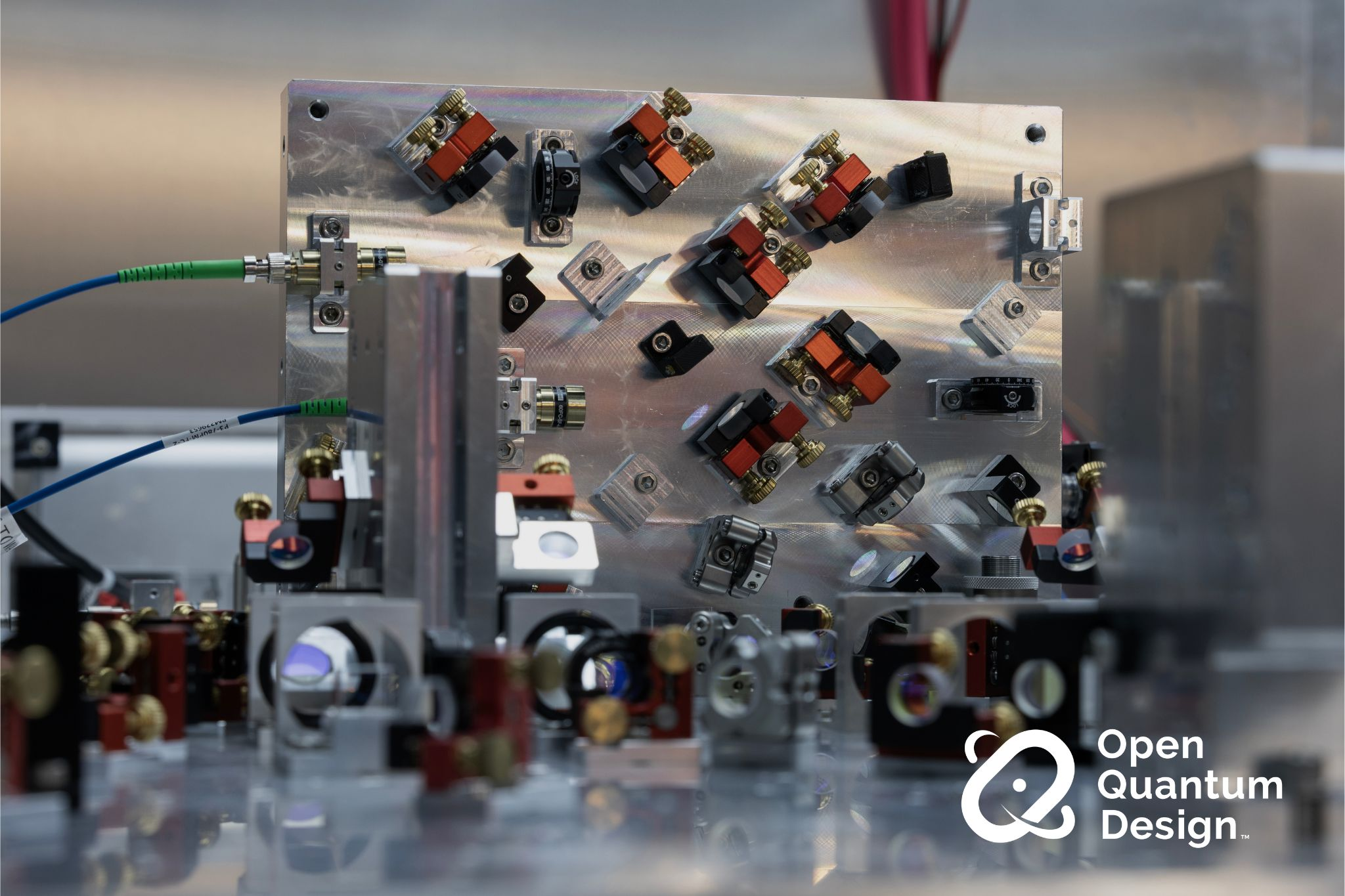
Open Quantum Design (OQD) has launched a public repository for its trapped-ion quantum computer hardware, marking a shift from open-source software into “bare metal” hardware documentation. This release includes the detailed designs for the Blade Trap Assembly and Optical Circuit Boards (OCBs), the foundational components of OQD’s full-stack system. By hosting these design files on GitHub, the non-profit organization aims to eliminate the “trial and error” phase for global researchers, providing a tested, advanced starting point for building quantum processors that are stable in structure, material, and temperature.
The technical core of this release focuses on high-precision photonic and mechanical systems. The Blade Trap Assembly provides the physical environment for isolating ions, while the Optical Circuit Boards manage the complex task of optical routing, laser delivery, and signal control. These OCBs utilize LightFlow technology—developed by OQD’s first spinout company—to act as modular interfaces that connect laser light sources directly to the ion trap. This modular approach allows for scalable signal management, which is a critical hurdle in moving from laboratory prototypes to multi-qubit quantum processors.
This hardware release completes OQD’s mission to provide a truly open-source, full-stack quantum ecosystem. By integrating these hardware blueprints with their previously released software code and technical documentation, OQD is creating a “global sandbox” for industry and academic collaboration. CEO Greg Dick noted that the initiative is designed to accelerate the development of quantum technologies by making the entire stack—from the user interface down to the physical electrodes—accessible and reproducible, fostering a transparent environment for rapid iteration and community-driven innovation.
For the complete technical design files and documentation for the blade trap and optical circuit boards, visit the official Open Quantum Design hardware repository here.
March 26, 2026

Leave A Comment