

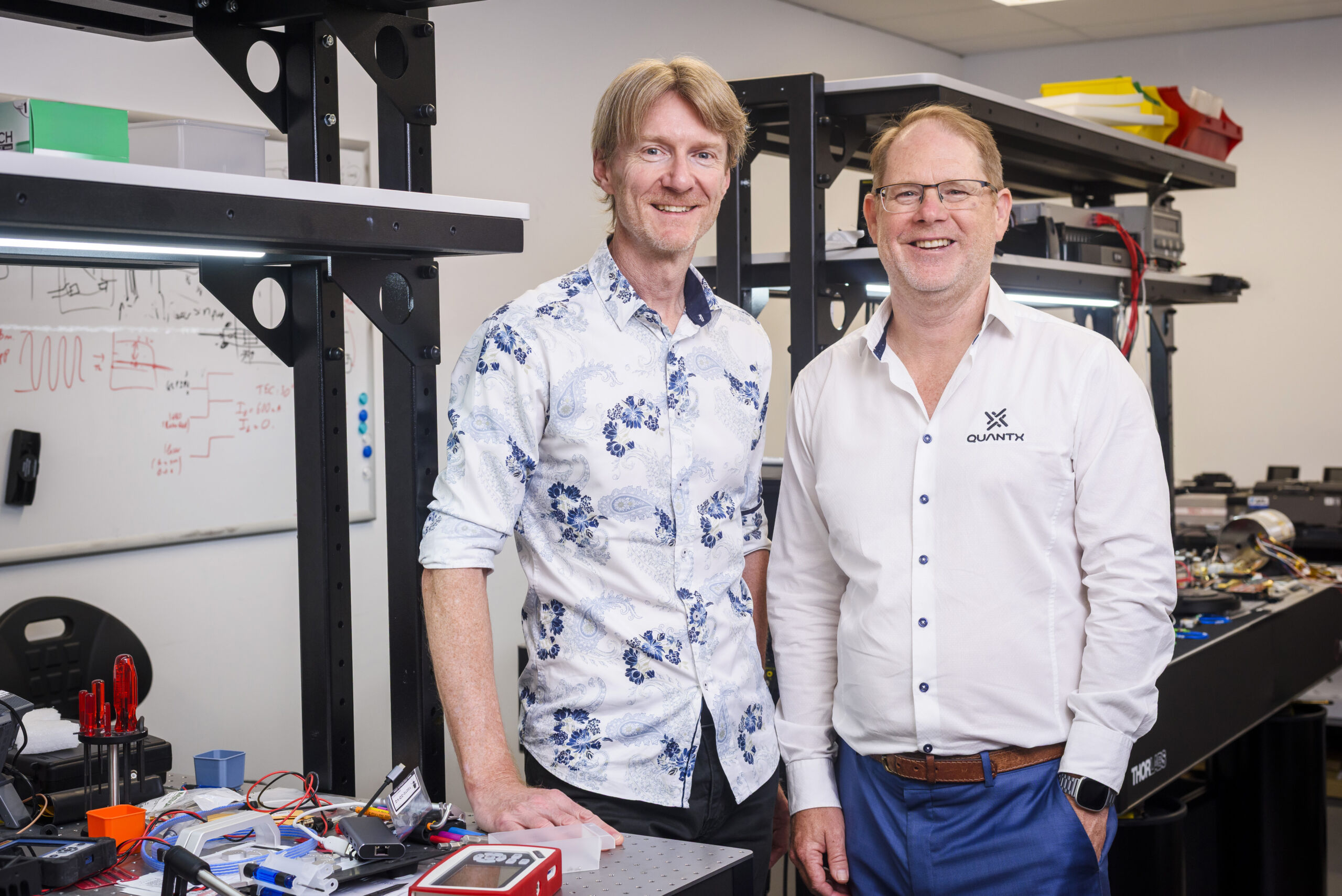
QuantX Labs has announced that a subsystem payload of TEMPO, its compact optical atomic clock, is now in orbit following a successful launch on March 30, 2026, via the SpaceX Transporter-16 mission. Developed in partnership with the Institute for Photonics and Advanced Sensing (IPAS) at Adelaide University, TEMPO is designed to provide timing performance up to ten times superior to current GNSS-based systems. The deployment serves as a functional demonstration of Australian-built quantum infrastructure capable of maintaining resilient communications and navigation in GPS-denied or electronic warfare environments.
The orbital milestone coincides with the release of the Australian Government’s 2026 National Defence Strategy and Integrated Investment Program, which commits $425 billion over the next decade. The strategy identifies undersea warfare and resilient multi-orbit satellite communications as its first and seventh priorities, respectively. QuantX Labs’ technology roadmap aligns directly with these goals; in addition to the TEMPO clock, the company is developing SENTIO, a high-sensitivity quantum magnetometer for detecting submerged objects, and the CRYO clock, slated for the $1.2 billion upgrade of the Jindalee Operational Radar Network (JORN).
The launch and defense strategy update set the stage for the Quantum Australia Conference 2026 in Adelaide, where industry leaders are gathering to discuss “Quantum for Impact.” According to the latest State of Australian Quantum report, the sector has attracted over $1 billion in research and commercialization investment. By maturing deep research into space-ready hardware, QuantX Labs is positioning South Australia as a central hub for sovereign quantum timing and sensing capabilities, supporting the transition from laboratory prototypes to active defense assets.
You can find the official announcement regarding the TEMPO orbital deployment here. Additional technical context on the Australian government’s 2026 National Defence Strategy is available here.
In GQI Portal
The players behind the news
The team that writes QCR tracks every company, deal and technology in the GQI Factory, GQI's verified database of the quantum industry. Next up: every story linked to its players, coming to QCR's paid plans.
- Players Companies and institutions across the quantum industry, by segment.
- Scorecards How the players compare on hardware, software, funding and more.
Newsletter
QCR Alerts in your inbox
The latest reporting and analysis from Quantum Computing Report. Free, unsubscribe any time.