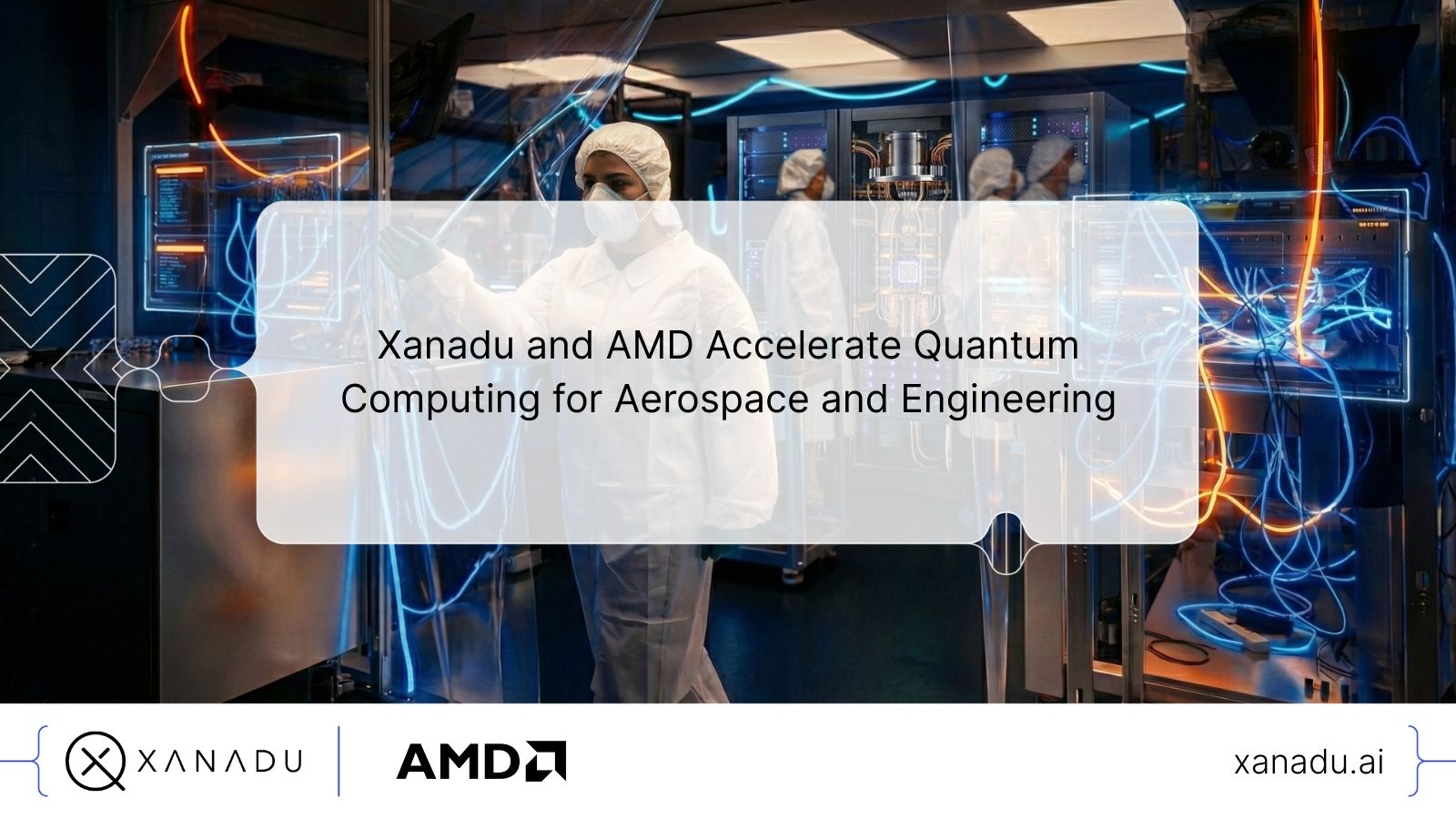
Xanadu Quantum Technologies and AMD have integrated the PennyLane quantum software library with the AMD DevCloud to execute Computational Fluid Dynamics (CFD) simulations in a hybrid quantum-classical environment. This technical framework utilizes AMD’s high-performance computing (HPC) and AI infrastructure to manage the classical processing required for complex quantum workflows. The collaboration focuses on optimizing the execution of quantum algorithms for industrial applications within the aerospace and engineering sectors, specifically targeting the computational bottlenecks in aircraft design.
The team demonstrated the execution of a CFD model containing 256 × 256 matrix elements. The hybrid program utilized 20 qubits and approximately 35 million quantum gates to process the fluid dynamics calculations. Benchmarking results showed that migrating the Quantum Singular Value Transformation (QSVT) algorithm—a core primitive for linear algebra in quantum computing—from a traditional CPU to an AMD GPU reduced simulation time by 25×. These metrics characterize the efficacy of GPU-accelerated classical hardware in increasing the throughput and feasibility of large-scale quantum simulations.
Using the Catalyst compiler, Xanadu translated a 68-qubit quantum circuit into more than 15 million hardware-optimized gates. This optimization process is designed to prepare large-scale engineering programs for deployment on future fault-tolerant photonic quantum hardware. The partnership aims to provide a scalable software and hardware infrastructure that allows aerospace organizations to compile and simulate high-fidelity models. Xanadu is proceeding with these developments in parallel with its proposed business combination with Crane Harbor Acquisition Corp. (Nasdaq: CHAC).
For further details on the CFD simulation parameters and GPU benchmarking, consult the official Xanadu announcement here.
March 10, 2026
