By Dr. Joe Spencer
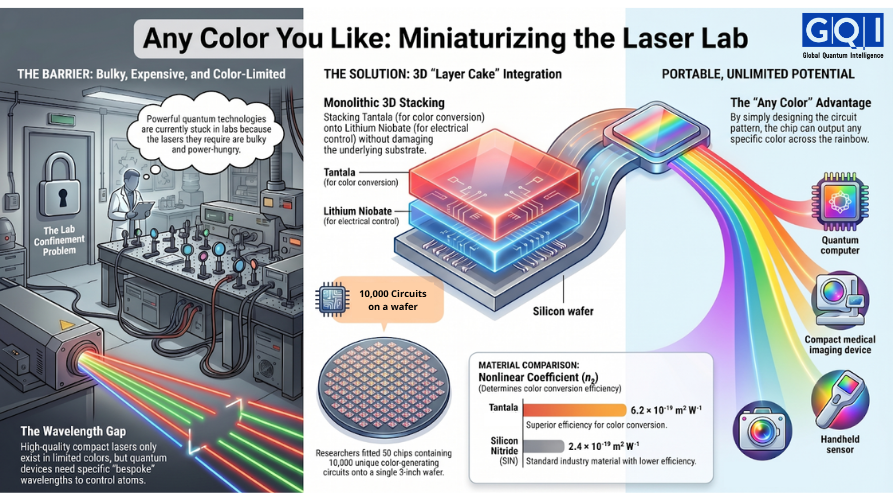
The National Institute of Standards and Technology (NIST) recently demonstrated a significant advance in integrated photonics, effectively compressing what has traditionally been a laboratory-scale laser system into a chip-scale platform. By leveraging monolithic 3D integration, the team stacked tantalum pentoxide (tantala, Ta₂O₅) onto patterned onto thin-film lithium niobate (TFLN) substrates, enabling compact, tunable nonlinear optical devices capable of generating a broad range of wavelengths on-chip.
The full press release from NIST is available:
Any Color You Like: NIST Scientists Create ‘Any Wavelength’ Lasers in Tiny Circuits for Light | NIST
And the Nature paper by Brodnik et al. is also available:
Monolithic 3D integration of tantalum pentoxide nonlinear photonics | Nature
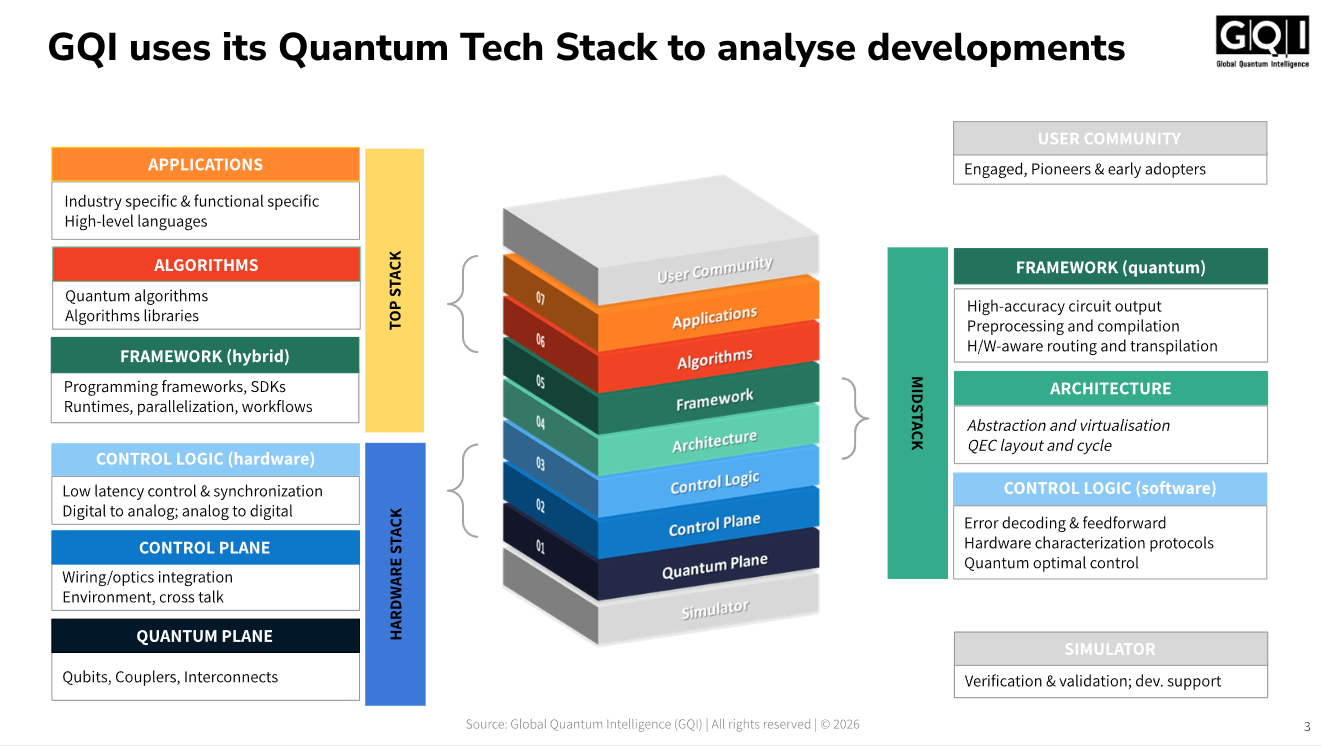
For the quantum technology sector, this is clearly a desirable development. Quantum devices require precise, bespoke wavelengths to control atoms, and until now, providing those wavelengths required bulky, power-hungry equipment. This is evident from our GQI tech assessment tool, where we categorise cross-cutting and enabling tech and highlight how important lasers are in the hardware stack and control layer.
The NIST architecture demonstrates the potential for high-density integration of nonlinear photonic elements, with thousands of wavelength-conversion circuits fabricated on a single wafer-scale platform. Rather than a super continuum source in a strict sense, the system enables broadband frequency conversion, spanning visible to near-infrared regimes depending on pump configuration. This chip-scale, integrated photonics approach allows for 10,000 unique color-generating circuits to fit on a single 3-inch wafer, moving powerful quantum tech out of the basement lab and into the real world.
Implications for Quantum
For engineers developing Neutral Atom Quantum Computing or Ion Trap Quantum Computing systems, this development is potentially transformative. Today, both platforms rely on complex laser stacks to provide multiple precisely stabilised wavelengths for cooling, trapping, state preparation, and gate operations. These systems are often rack-scale, expensive, and operationally fragile, forming a significant portion of both the physical footprint and cost of a quantum machine.
Critically, there are also potential performance benefits. Reduced optical path length and tighter integration can improve phase stability, which is directly linked to gate fidelity. Faster, electronically controlled wavelength tuning could support more agile qubit addressing and potentially higher gate speeds. In neutral atom arrays, where scaling is often constrained by optical complexity and beam delivery, this could enable higher qubit densities per module. In ion traps, it may simplify multi-zone architectures and reduce cross-talk in laser delivery.
Beyond Quantum
The implications extend well beyond quantum computing. Compact, tunable photonic sources are enabling components across multiple high-growth sectors:
- Medical imaging, where size and precision are critical
- Sensing, particularly portable and field-deployable systems
- Telecommunications, where integrated photonics continues to drive bandwidth and efficiency gains
The key point is not any single application, but the emergence of a scalable, manufacturable photonics platform.
This is obviously a good thing, scalable components that have multiple market entry points can be of benefit to a sector to drive demand and then cost down. However, it’s important to consider that beyond this engineering brilliance as it rests on a fragile foundation. The USP of these chips relies heavily on tantalum, a metal whose complex supply chain is increasingly a point of strategic concern.
Supply Chain Considerations
Supply chain has been the phrase of the moment in quantum for a number of years, and quite rightly so. Quantum systems, like semiconductors before them, depend on high-purity materials, specialised fabrication processes, and globally distributed supply networks.
As these systems move toward commercialisation and strategic deployment, access, concentration, and resilience of these supply chains become relevant considerations alongside technical performance.
Why Tantalum?
It is important to distinguish between tantalum metal (Ta) and tantalum pentoxide (Ta₂O₅, tantala), as they play very different roles.
In the context of the NIST work, it is tantala that is critical. As a nonlinear optical material, Ta₂O₅ offers:
- High refractive index
- Low optical loss
- Compatibility with thin-film deposition processes
- Strong nonlinear coefficients for frequency conversion
These properties make it well-suited for integrated photonics and wavelength conversion.
Tantalum metal, by contrast, is widely used across electronics (e.g. capacitors), aerospace alloys, and chemical processing, meaning that the upstream supply chain is driven primarily by large-scale industrial demand, not quantum technologies.
While tantalum has also been explored in superconducting qubit research, its role there is distinct from its use in photonics, and the relevant performance advantages are highly context-dependent.
Its ability to form a thin, stable oxide layer makes it an excellent dielectric, enabling high capacitance in a very small volume. This makes tantalum capacitors essential for compact devices such as mobile phones, laptops, cameras, and automotive electronics, where reliability and power density are critical.
Beyond electronics, tantalum’s high melting point and thermal stability make it valuable in aerospace and defence. It is used in superalloys for components like jet engine turbine blades and rocket nozzles. Tantalum carbide, one of the hardest known materials, is also used in high-performance cutting tools.
In the medical field, tantalum’s biocompatibility makes it ideal for surgical implants, including bone fixation devices and joint replacements, as well as components in pacemakers and hearing aids.
Its strong resistance to corrosion also makes it useful in chemical processing, where it is used in equipment such as heat exchangers, reactor linings, and piping to handle highly aggressive acids.
For the purposes of this discussion, the more important point is that photonic use cases depend specifically on Ta₂O₅ thin films, which represent a relatively small but specialised segment of the broader tantalum materials ecosystem.
GQI’s recent supply chain analysis highlights tantalum as a cross-cutting material with relevance across multiple quantum modalities, though its criticality varies by application.
The key takeaway is not absolute dependence, but shared exposure to upstream supply dynamics.
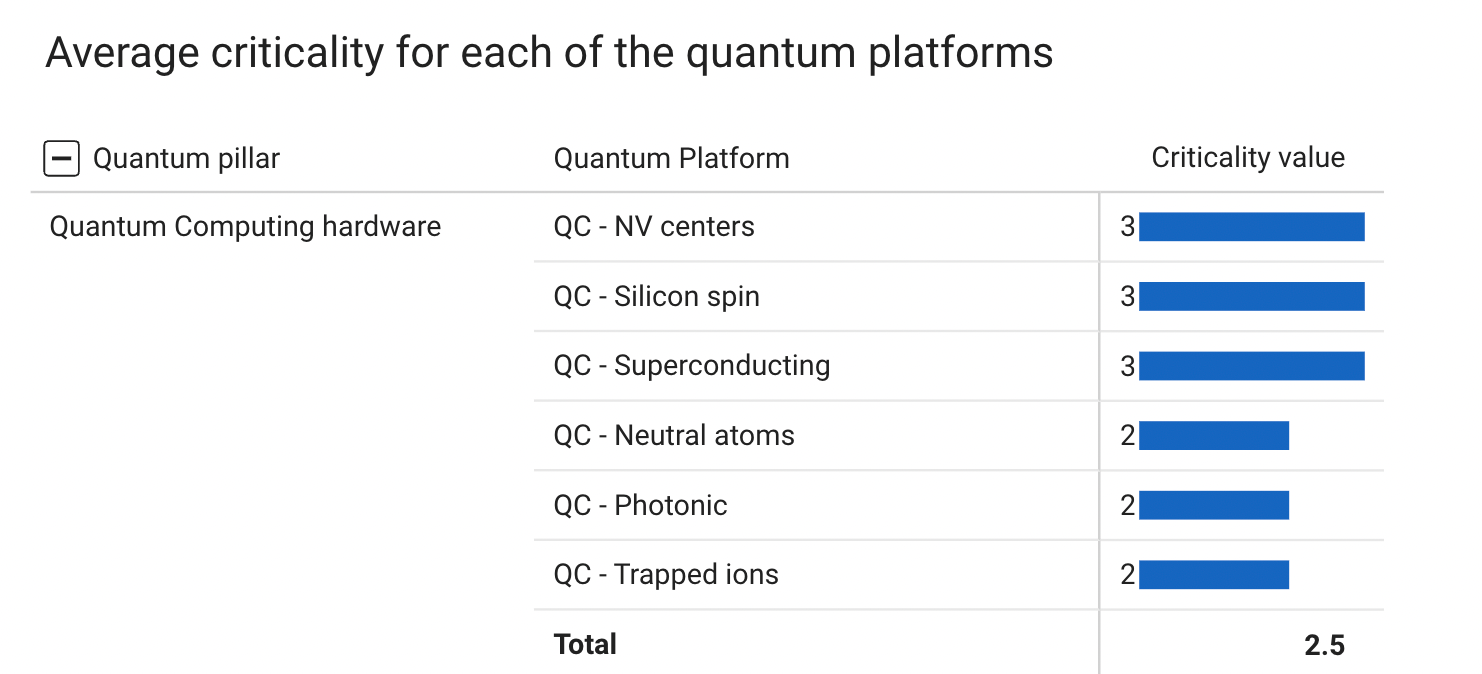
The detailed report also highlights criticality scoring of other elements such as Niobium, and across multiple quantum tech sectors.
Now we can see supply chain becoming more relevant across many sectors, and in putting this thought piece together,GQI has referenced the UK CMIC – Critical Materials Intelligence organisation who in 2024 released a report highlighting the criticality of materials like tantalum to the UK. Which can be used as a proxy for global demand. In 2024 UK Report from UK Critical Materials Intelligence Centre suggests that Tantalum is a critical material to the UK, and whilst other sources suggest that DRC and Brazil are large producers of the element, this report suggests that Thailand owns 58.6% of the global trade.
What GQI believes is even more interested is that the data suggests that people are more and more interested in supply chain
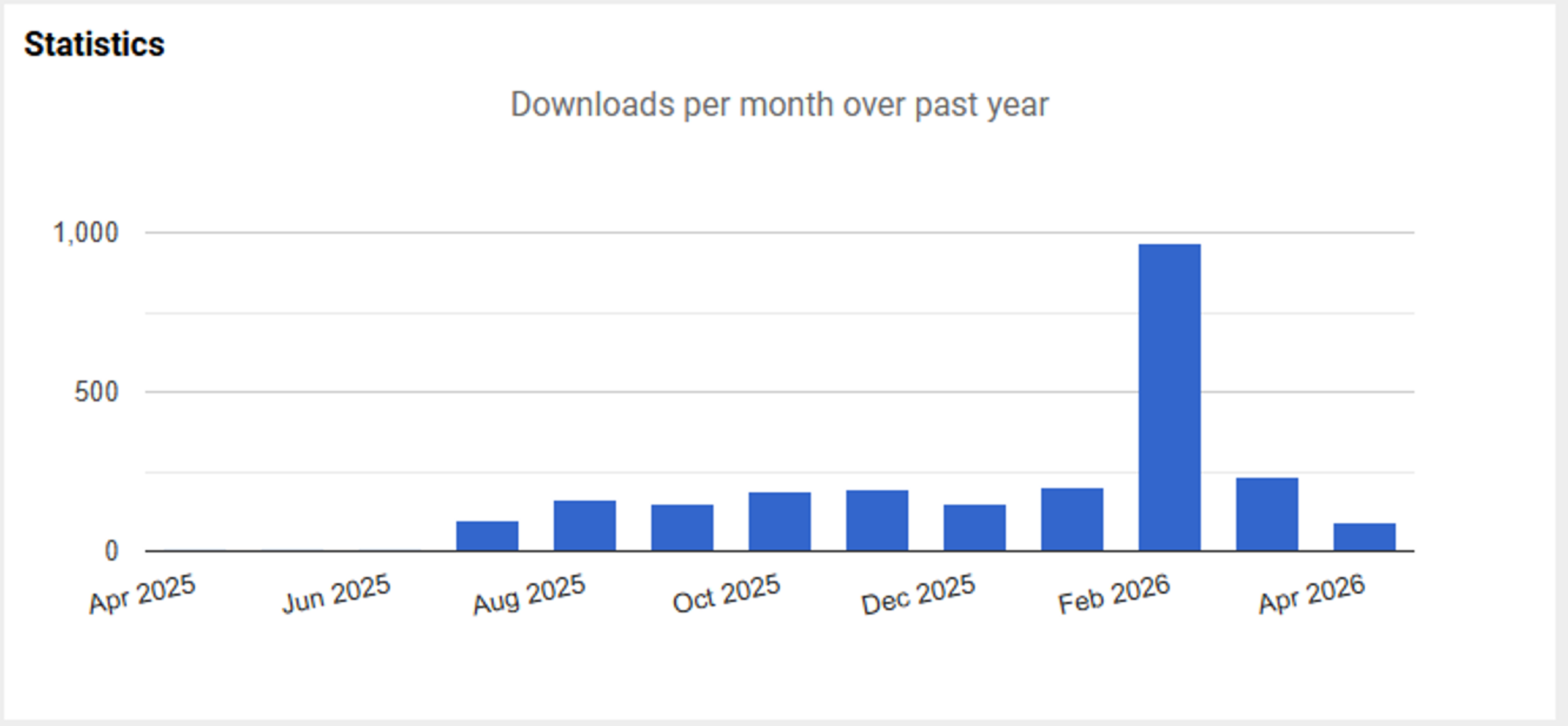
And a clear spike in interest in downloads of this paper appeared in February 2026, in fact, February had 965 downloads, whereas the cumulative number of downloads since publication was slightly higher at 1139. There are multiple geopolitical factors that could spark this, and GQI is not in a position to speculate.
Supply Chain Mapping: A Strategic Bottleneck
Our supply chain mapping reveals a market characterized by high concentration and rapid growth. The tantalum market, $521.47 million in 2022 and is expected to grow to USD $798.65, with a CAGR of 5.88%.
Mining and Production: The global supply is dominated by a few key regions, primarily in Africa:
- DRC (Congo): Produced ~980 metric tons in 2023 (~41% of global supply).
- Nigeria & Rwanda: Follow closely as major producers.
- Brazil: Produced ~350 tons and holds significant future potential with reserves estimated at 40,000 tons.
- Australia: A key producer (400 tons) holding the world’s largest identified reserves at ~110,000 metric tons.
Our own GQI data from our intelligence portal paints a similar picture
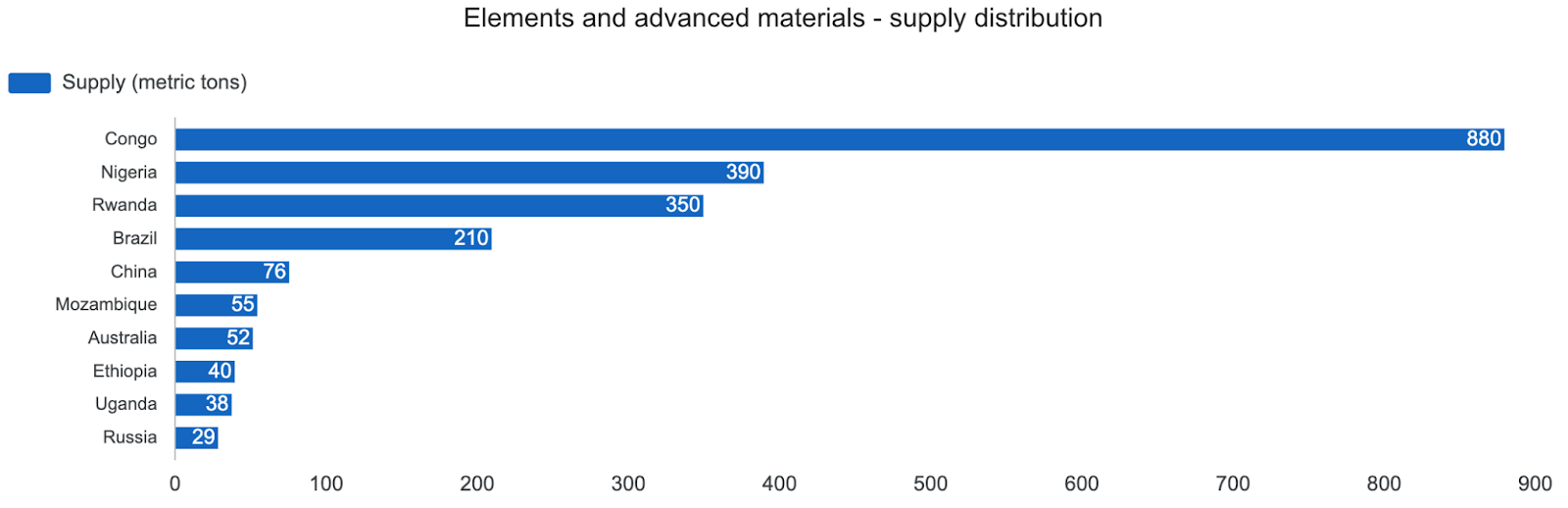
However it is also clear that China has skin-in-the-game in this market as well.
While mining is concentrated in Central Africa, Thailand strangely dominates the global trade flow, owning 58.6% of global trade according to the UK Critical Minerals Intelligence Centre. Meanwhile, high-tech refining remains the purview of China, Germany, and Kazakhstan. (UK 2024 criticality assessment – NERC Open Research Archive )
Conclusion
The NIST demonstration highlights a broader trend: advanced photonic systems are becoming scalable, integrated, and manufacturable.
However, as these technologies mature, their dependencies shift from laboratory components to industrial materials and supply chains. In the case of integrated photonics, this includes specialised materials such as tantalum pentoxide, a small but critical layer within a much larger system.
The key insight is not that quantum technologies will run out of tantalum, but that they will increasingly compete within existing industrial supply chains, inheriting their constraints, risks, and geopolitical dynamics.
For decision-makers, the implication is clear, technical breakthroughs and supply chain strategy must evolve together.
References
- https://www.marketreportsworld.com/market-reports/tantalum-market-14721427
- Tantalum Market Size, Growth | Report [2033]
- UK 2024 Criticality Assessment published – British Geological Survey
- Reports | UK Critical Minerals Intelligence Centre
April 21, 2026
