
Author: Mohamed Abdel-Kareem
-
-
Leiden University and Riverlane Research Reveals Distance-Losing Flaw in Correlated Decoding Below Threshold
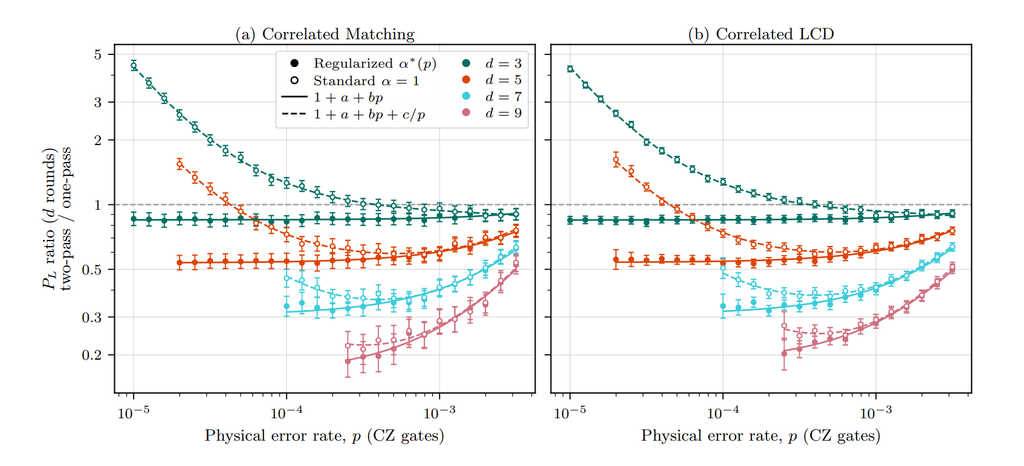
Leiden University and Riverlane research uncovered a flaw in correlated decoding, causing a loss of effective code distance and higher logical failure rates in quantum error correction. They introduced a new regularization parameter to fix this, restoring nominal distance scaling and improving accuracy without adding computational overhead. This discovery offers a crucial design principle for future quantum decoding architectures.
-
NVIDIA Takes Strategic Stake in Riverlane to Accelerate Real-Time Quantum Error Correction and GPU Decoder Calibration
NVIDIA has invested in Riverlane to advance real-time quantum error correction (QEC) and GPU decoder calibration. This collaboration utilizes NVIDIA H100 GPUs to accelerate Riverlane's Local Clustering Decoder (LCD), significantly reducing the time for surface code training cycles and enabling dynamic recalibration of QEC decoders. This advancement helps mitigate qubit drift and hardware defects, paving the way for more stable and reliable fault-tolerant quantum computing systems.
-
IQM and NVIDIA Automate 20-Qubit Chip Calibration via NVIDIA Ising Vision-Language Models and QCalEval Benchmark
IQM Quantum Computers and NVIDIA have successfully automated the calibration of a 20-qubit quantum processor using NVIDIA Ising Vision-Language Models (VLMs). This agentic AI system analyzes experimental data, autonomously adjusts parameters, and generates diagnostic logs for human review. They also released QCalEval, an open benchmark for AI-driven quantum processor bring-up, where NVIDIA Ising Calibration models outperformed general-purpose VLMs.
-
IBM Releases Qiskit SDK v2.6 with C API Pass-Manager Framework, Native QPY Serialization, and Custom Operations
IBM Quantum has released Qiskit SDK v2.6, significantly enhancing its C API layer with a new pass-manager framework and native QPY serialization. This update allows for custom compiler passes and hardware-native quantum operations in C, C++, and Julia without a Python runtime, moving towards Python-optional execution in high-performance computing. The release also updates the Qiskit GitHub Roadmap, outlining future versions that will focus on C ABI/API stability, fault-tolerant compilation, and a Rust-native execution interface.
-
Chalmers University Demonstrates TRIO Pulses for Control-Error-Robust Single-Qubit Gates in Superconducting Processors
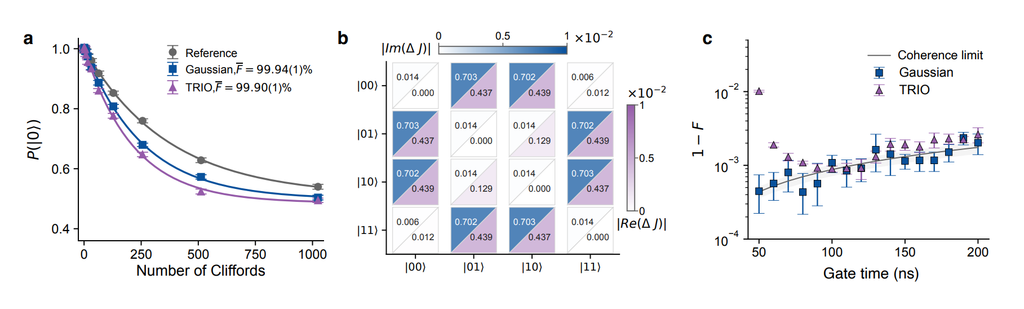
Chalmers University of Technology has developed TRIO pulses, a new quantum control framework for superconducting processors. These pulses enable single-qubit gates to maintain high fidelity even with significant control-amplitude miscalibrations and frequency detuning errors. This breakthrough offers a way to reduce recalibration overheads in large-scale quantum processors and has been demonstrated with an X-gate achieving 99.90% fidelity.
-
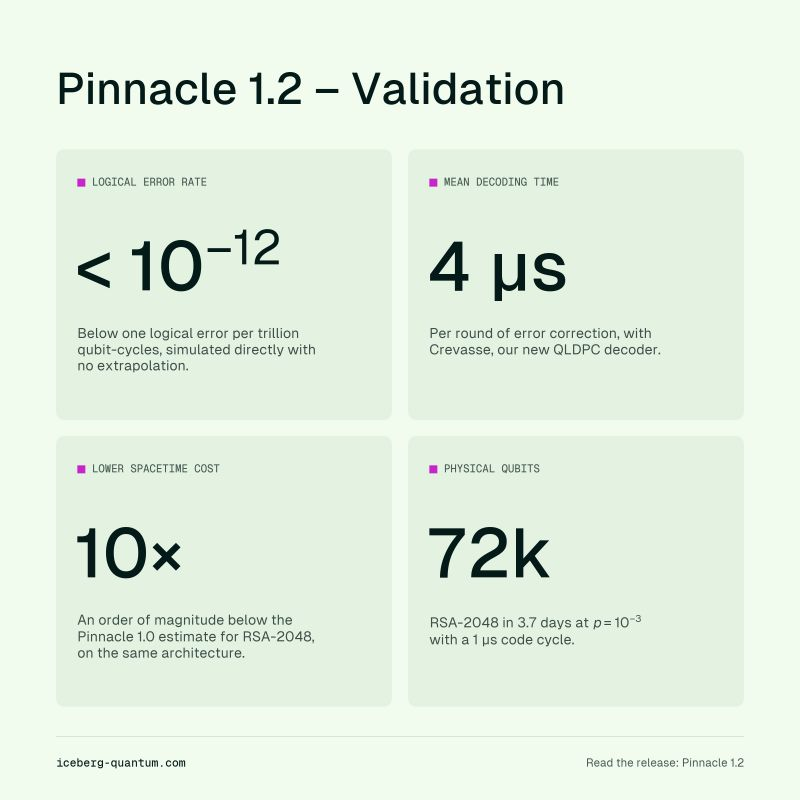
Iceberg Quantum Validates Pinnacle 1.2 Architecture with Crevasse QLDPC Decoder to Reduce RSA-2048 Factoring Resources
Iceberg Quantum's Pinnacle 1.2 architecture, featuring the Crevasse QLDPC decoder, significantly reduces the resources needed to factor RSA-2048. They achieved logical error rates below 10^-12 per logical qubit-cycle, a critical threshold for this task, through direct circuit-level simulations. This breakthrough could factor RSA-2048 in as little as 0.98 days with 48,000 physical qubits.
-
Quantinuum and Oracle Launch OCI Quantum AI Compute Beta Program for Early Access to Helios
Quantinuum and Oracle have launched the OCI Quantum AI Compute Beta Program, offering early cloud-based access to Quantinuum's Helios quantum processor for hybrid quantum-AI workflows. This program integrates Helios within Oracle Cloud Infrastructure (OCI) AI data centers, providing a browser-based Python development environment for various applications. The initiative will be further detailed at Oracle AI World 2026.
-
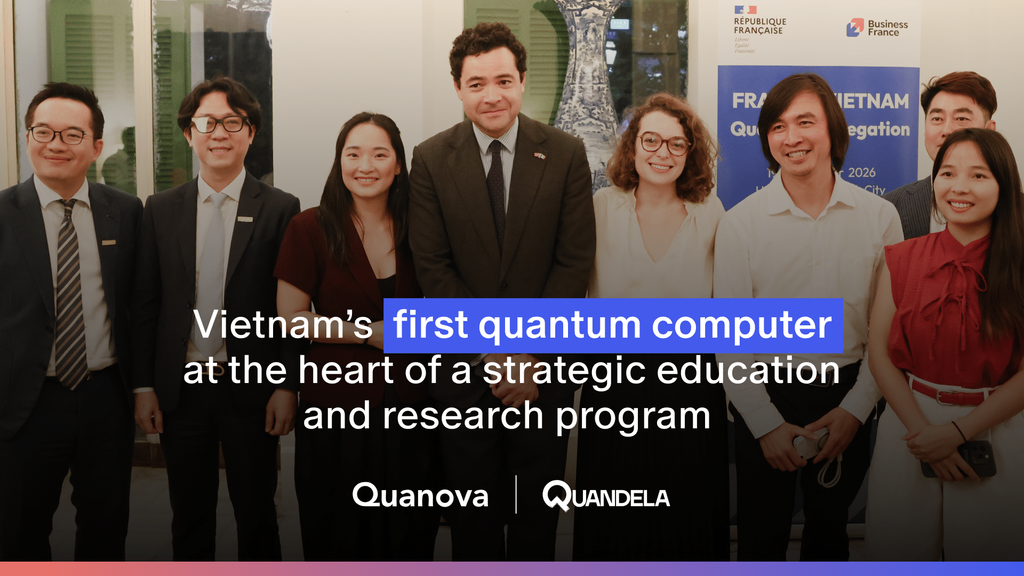
Quandela and Quanova Partner to Deploy Vietnam’s First Quantum Computer at Quang Trung University
Quandela and Quanova are partnering to install Vietnam's first quantum computer, a Quandela MosaiQ photonic system, at Quang Trung University. This collaboration, supported by Nam A Bank, will establish a Quantum Research, Innovation, Service, and Entrepreneurship (quantum-RISE) program and a Quantum Innovator Residency Program, marking the first France-Vietnam quantum computing collaboration. The initiative aims to provide Vietnamese researchers and students with direct access to quantum computing and foster local talent in the field.
-
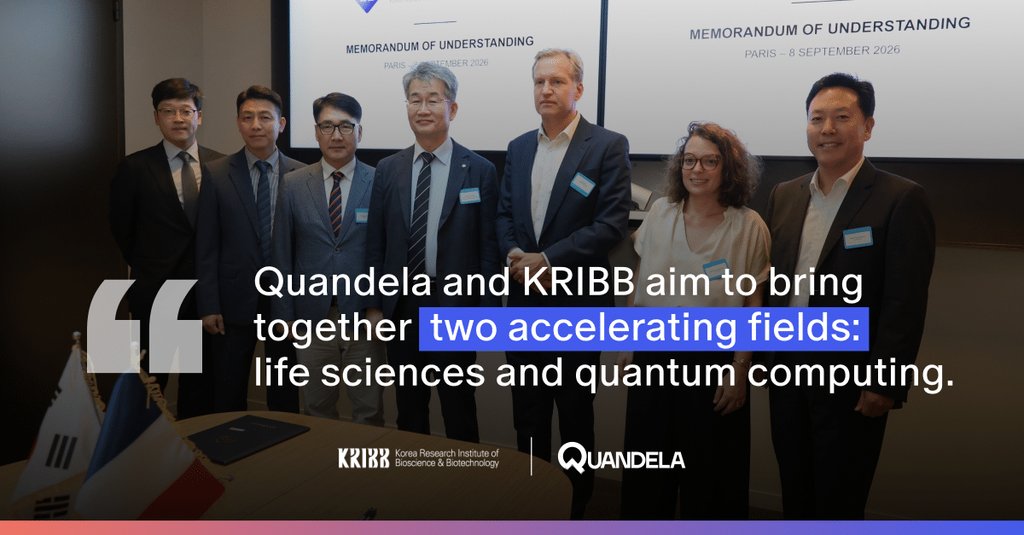
Quandela Expands Global Partnerships with KRIBB for Quantum Biotech and FPT Corporation in Vietnam
Quandela has announced two new international partnerships: with South Korea's KRIBB to advance drug discovery through hybrid AI/classical/photonic quantum computing, and with Vietnam's FPT Corporation to develop quantum algorithms, provide cloud access to Quandela's photonic systems, and integrate quantum education into FPT's university networks. These collaborations aim to deploy Quandela's hybrid photonic QPUs as specialized accelerators in high-performance computing centers and enterprise cloud networks.
-
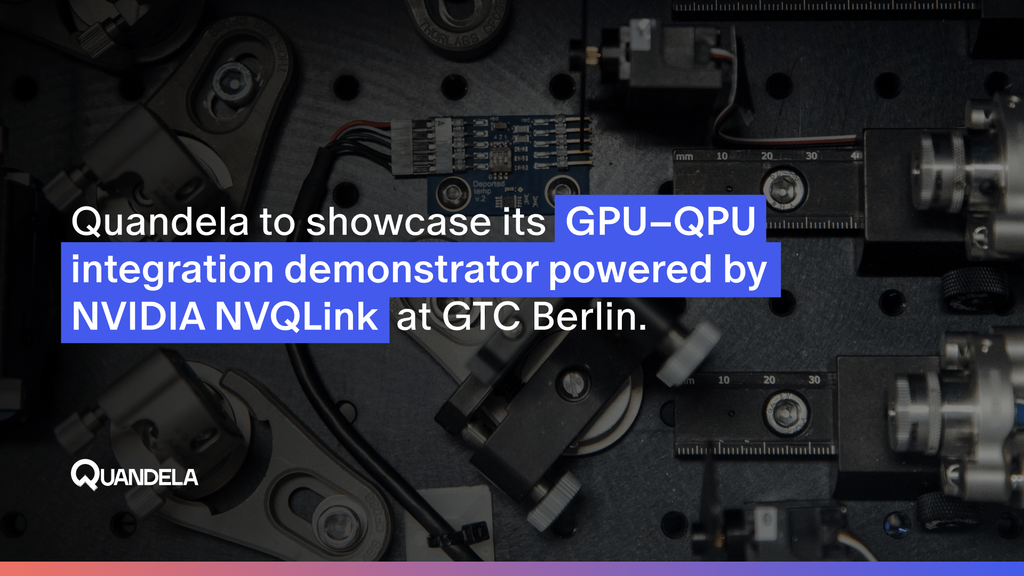
Quandela Demonstrates Live Hybrid Photonic GPU-QPU Architecture via NVIDIA NVQLink at GTC Berlin
Quandela demonstrated a live hybrid AI-quantum computing system at NVIDIA GTC Berlin, showcasing photonic quantum processing units (QPUs) as integrated accelerators within HPC and AI infrastructure. The demonstration highlighted a low-latency interconnect between NVIDIA accelerated computing nodes and Quandela's photonic hardware using NVIDIA NVQLink, enabling a hybrid workflow for a quantum reservoir-computing algorithm. This development underscores Quandela's role in advancing European quantum computing infrastructure and its collaboration with partners in Germany and France.
-