Author: Mohamed Abdel-Kareem
-
-
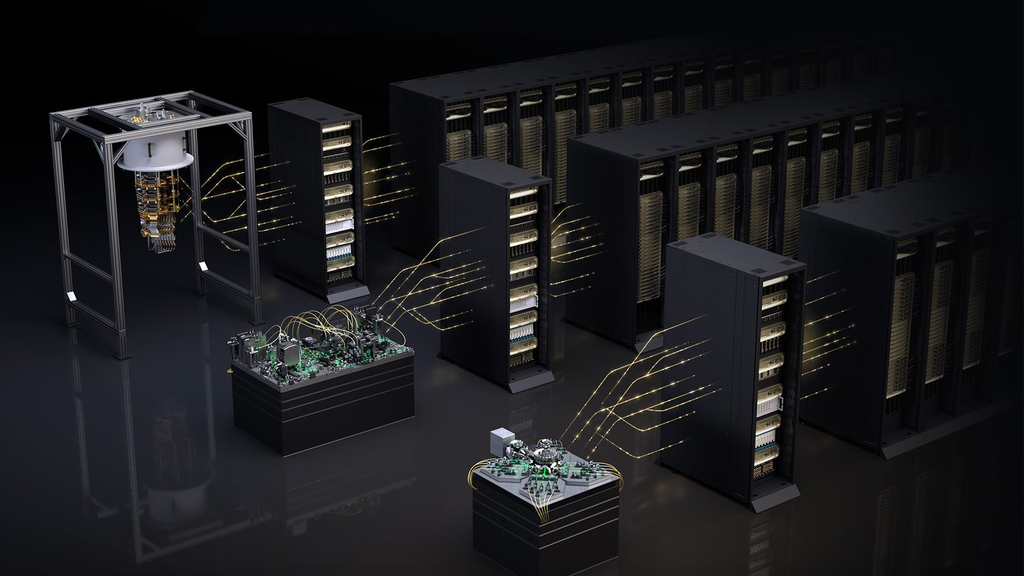
Qblox Achieves Sub-4 Microsecond Latency Integrating NVIDIA DGX Spark and RTX PRO 6000 Blackwell via NVQLink
Qblox has integrated its quantum system controller with NVIDIA DGX Spark and RTX PRO 6000 Blackwell GPUs using NVIDIA NVQLink, achieving real-time roundtrip latencies below 4.0 microseconds. This integration enables hardware-executed, closed-loop communication for continuous qubit parameter calibration and provides ultra-low-latency transport for quantum error correction data to GPU-based decoders. This allows for a unified development environment for quantum, AI, and classical simulation workloads that can scale from desktop units to GPU supercomputer clusters.
-
SEEQC and NVIDIA Demonstrate 50% QEC Latency and Error Rate Reduction via Digital Pre-Decoder Architecture
SEEQC and NVIDIA have demonstrated a 50% reduction in quantum error correction (QEC) latency and logical error rates. This was achieved by integrating SEEQC's chip-scale pre-decoder technology with NVIDIA's Ising AI model family. The new architecture filters and compresses data closer to the quantum processing unit, significantly improving communication and overall performance for quantum AI workloads.
-
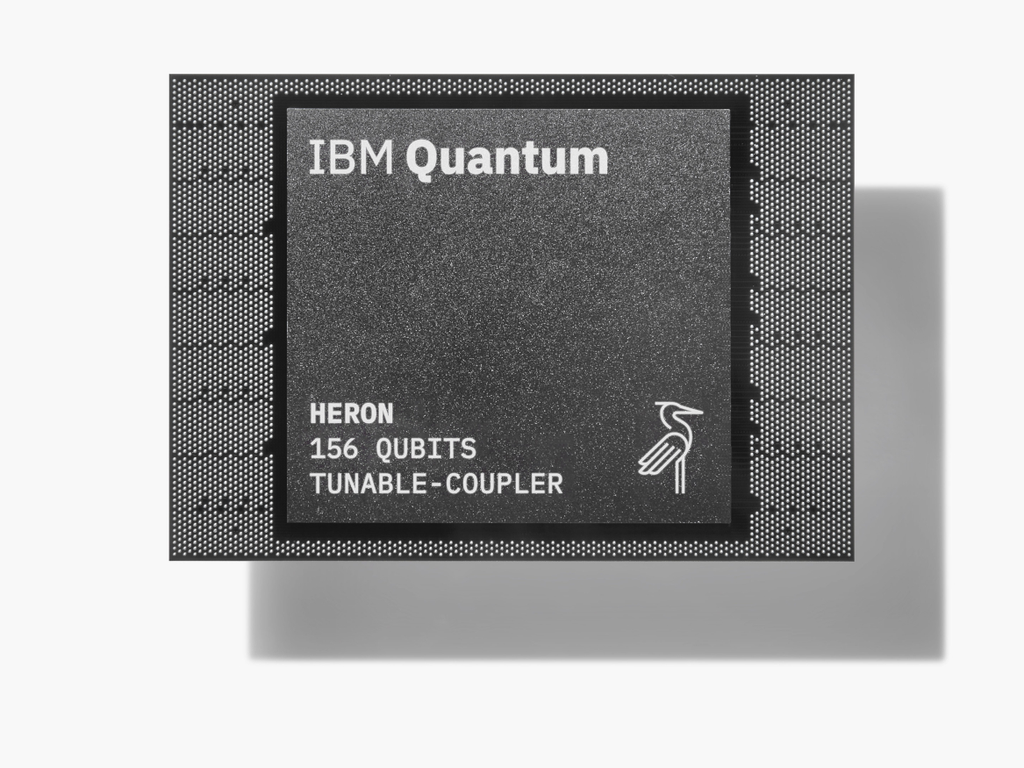
IBM and Rutgers Control Quantum Chaos Across 100 Qubits on Heron Processor
IBM and Rutgers researchers have demonstrated real-time quantum feedback control across 100 qubits on an IBM Quantum Heron processor. Their study, published in Nature Physics, implemented adaptive quantum circuits to validate non-unitary dynamics crucial for scalable quantum error correction. They observed a control-induced phase transition between chaotic and controlled phases, marking a significant step in experimental quantum control and hardware certification.
-
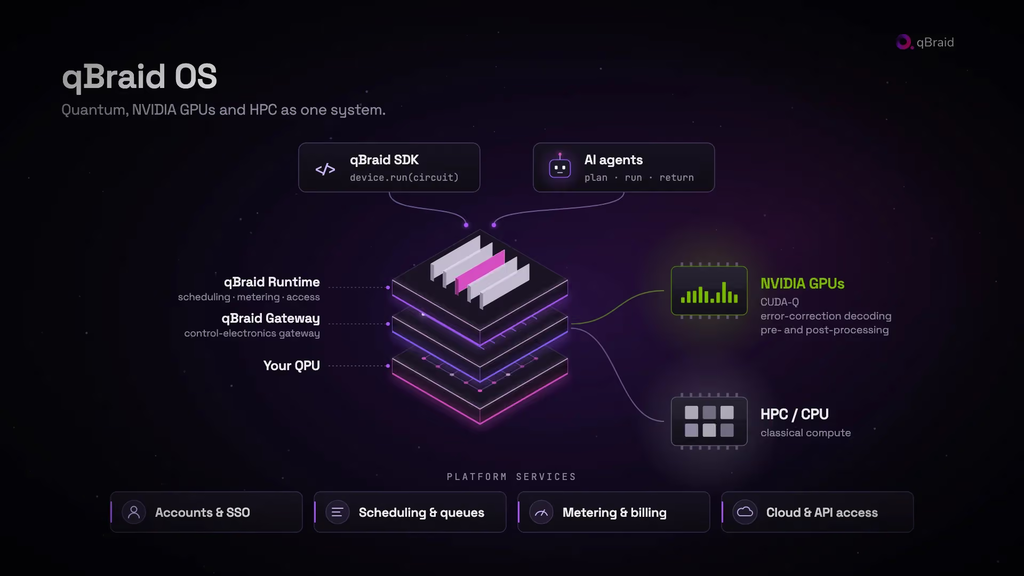
qBraid Unveils qBraid OS and Launches Hosted GH200 GPU Simulators at NVIDIA GTC Berlin
At NVIDIA GTC Berlin, qBraid unveiled qBraid OS, an agentic operating system for managing quantum processing units, and launched two hosted GPU-accelerated quantum simulators on NVIDIA GH200 Grace Hopper Superchips. The qBraid OS integrates with NVIDIA CUDA-Q and NVQLink for real-time QEC decoding and classical co-processing, while the gpu-sv and gpu-tn simulators offer significant performance improvements for quantum circuit simulation, supporting up to 35 and 500 qubits respectively.
-
UK National Physical Laboratory Secures £230,000 ($307.5K USD) GOTT Grant to Scale Quantum Ion-Trap Manufacturing
The National Physical Laboratory (NPL) in the UK has received a £230,000 ($307.5K USD) grant from the Government Office for Technology Transfer (GOTT). This funding will be used to accelerate the commercial development and scalable manufacturing of trapped-ion quantum computing hardware. The grant aims to improve fabrication yield and packaging processes for ion traps, crucial for scaling quantum computing systems.
-
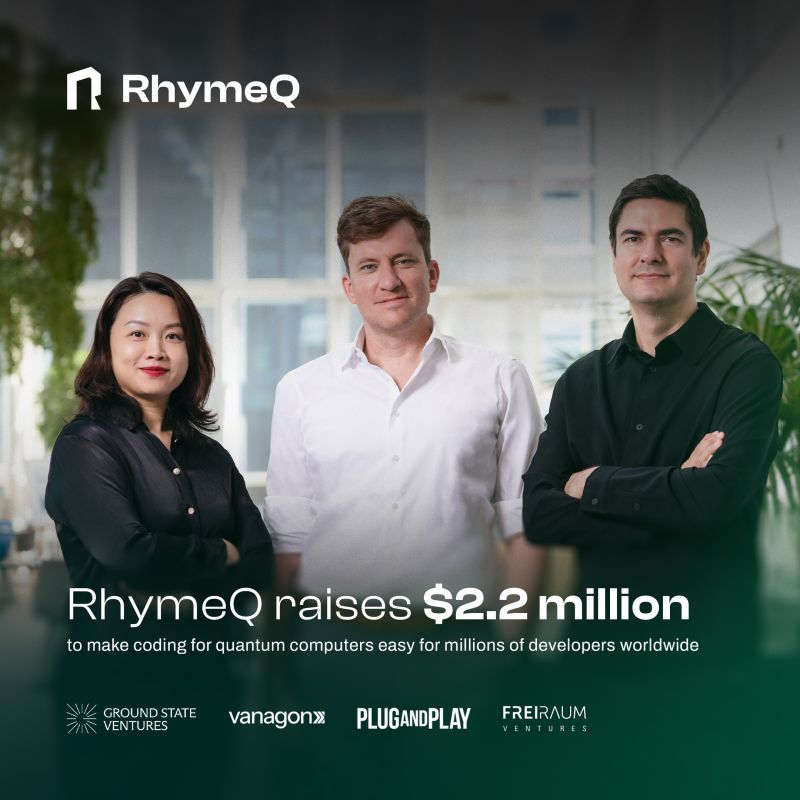
RhymeQ Emerges from Stealth with $2.2 Million Pre-Seed Round to Launch Python Abstraction Layer for Quantum Computing
Quantum software startup RhymeQ secured $2.2 million in pre-seed funding to develop Rhyme, a high-level quantum programming platform. Rhyme allows developers to program quantum software using Python, abstracting away low-level quantum circuit details. The platform compiles to NVIDIA CUDA-Q, enabling execution across various quantum hardware and simulators.
-
-
-
Plurilock Files Information Circular and Schedules Shareholder Vote for C$33.8M ($24M USD) Acquisition by Quantum eMotion
Plurilock Security Inc. will hold a shareholder meeting on November 18, 2026, to vote on its acquisition by Quantum eMotion Corp. for C$33.8 million (~$24 million USD). Plurilock shareholders will receive C$0.084 in cash and 0.0763 of a Quantum eMotion common share for each Plurilock share. This acquisition aims to integrate Quantum eMotion's quantum random number generators into Plurilock's cybersecurity solutions.
-
Coherence Quantum Launches with €2.78 Million ($3.1 Million USD) Seed Round to Scale Cryogenic Quantum Control
Coherence Quantum has launched with €2.78 million in seed funding to develop cryogenic quantum control infrastructure for solid-state quantum processors. The company aims to overcome thermal, wiring, and density bottlenecks in large-scale quantum computers by creating modular, low-noise signal-conditioning components and high-density interfaces. This funding will be used to establish a lab, accelerate prototype fabrication, and expand their engineering team in Espoo, Finland.
-
Black Kite Introduces Quantum Readiness Controls to Assess Third-Party Cryptographic Risk
Black Kite has launched Quantum Readiness, a new feature in its Cyber Rating engine that assesses third-party vendors' preparedness for post-quantum cryptography. This helps organizations identify vendors using quantum-resistant encryption and meet upcoming regulatory deadlines like OMB M-26-15 and EU NIS2. The tool aims to mitigate "harvest now, decrypt later" vulnerabilities before national PQC migration deadlines.
-
Bechtle and IQM Awarded DLR QCI Contract to Supply Superconducting Cloud Resources
Bechtle and IQM Quantum Computers have secured a contract with the German Aerospace Center’s Quantum Computing Initiative (DLR QCI) to provide cloud-based superconducting quantum computing resources until June 2027. This agreement will give DLR QCI researchers access to IQM's quantum processors through the IQM Resonance™ cloud platform, expanding their hardware options for applications in various fields. The contract also includes a dedicated classical server for hybrid quantum-classical algorithms and ensures all data processing remains within Germany.
-