
Author: Mohamed Abdel-Kareem
-
-
Postquant Labs Launches Quip Virtual Machine to Unify Quantum Execution Across Hardware Architectures
Postquant Labs has launched the Quip Virtual Machine (QVM) to standardize quantum execution across diverse hardware. The QVM features a gas-based cost model for quantum operations and has shown promising performance in benchmarking, outperforming classical solvers in portfolio optimization. The platform also incorporates a three-tier verification architecture to ensure execution accuracy.
-
Pasqal Launches Neutral-Atom Agentic Toolkit and Demonstrates QPU Workflows Across 258 Quantum Physics Papers
Pasqal has launched an AI-assisted workflow and an open-source Neutral-Atom Agentic Toolkit, enabling the translation of scientific papers and concepts into quantum experiments. This toolkit was validated by reproducing results from 258 arXiv quantum theory papers on Pasqal's QPUs. The software streamlines quantum computing research by automating the engineering pipeline while keeping human experts in control of scientific interpretation and validation.
-
Alice & Bob Reports Phase 1 Results of France’s PROQCIMA Quantum Program
Alice & Bob has released Phase 1 results for France's PROQCIMA quantum program, detailing technical milestones achieved with their fault-tolerant quantum computing technology. These include operating multi-qubit chips, executing noise-biased CNOT gates, and implementing quantum error correction cycles. The program aims for 1,000 logical qubits by 2032 with an increased budget.
-
-
-
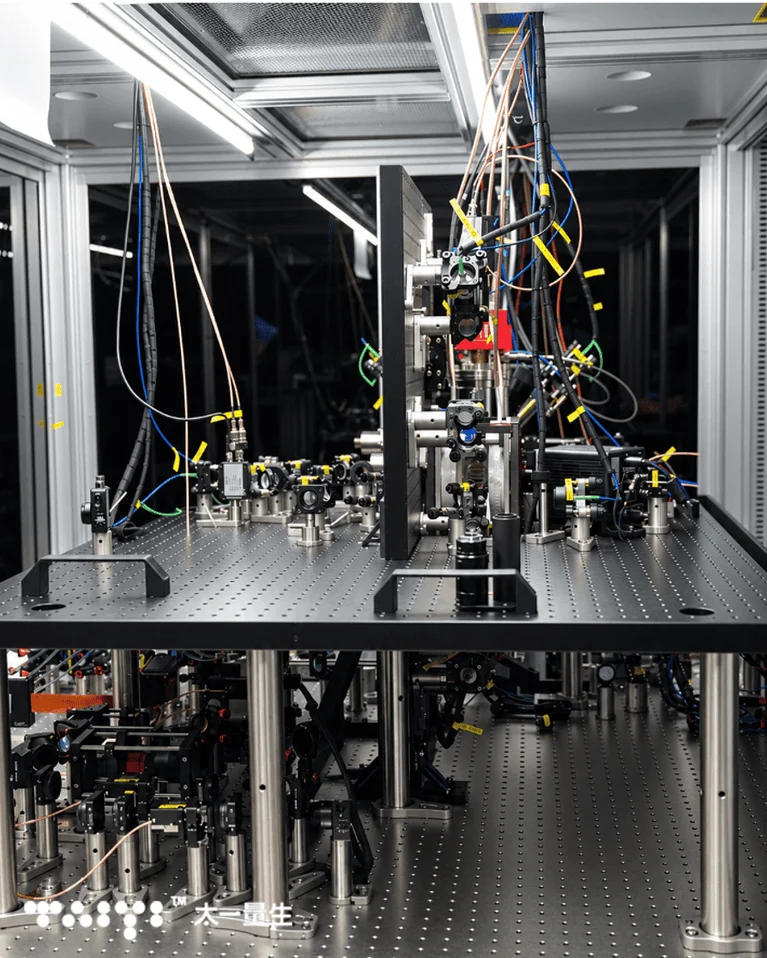
Taiyi Quantum Surpasses ¥1 Billion RMB ($149.6M+ USD) in Cumulative Funding for Ytterbium Neutral-Atom Systems
Taiyi Quantum, a Shanghai-based quantum hardware developer, has secured over ¥1 billion RMB (approx. $149.6M USD) in cumulative funding within nine months of its founding, achieving unicorn valuation status. The company specializes in Ytterbium neutral-atom arrays for fault-tolerant quantum computing and has made significant progress in hardware integration and open-sourced its LUOSHU compiler.
-
Chinese Startup FlipFlop Tuoyuan Emerges with Major VC Backing for 100-Logical-Qubit Neutral-Atom Systems
FlipFlop Tuoyuan, a Chinese quantum hardware startup, has secured over $14 million in early-stage funding to develop neutral-atom quantum processing units. Founded in July 2026 by Dr. Qiao Mu, the company aims to build a 100-logical-qubit fault-tolerant quantum computer and utilize AI for experimental design and hardware control.
-
UK Government and UKRI Unveil £78M ($103.8M USD) Quantum Commercialization, Networking, and Skills Package
The UK government and UK Research and Innovation (UKRI) have announced a £78 million (approximately $103.8 million USD) funding package to advance quantum sensing, networking, and workforce development. This initiative, part of the National Quantum Strategy, includes grants for commercial applications, supply-chain development, and an expansion of the QuEST Apprentices Programme. An additional £17 million has been allocated for integrating AI and high-performance computing with quantum platforms, aiming to solidify the UK's global leadership in quantum technologies.
-
NVIDIA and Jülich Run 104-Qubit Magic State Cultivation Simulation on JUPITER Supercomputer
NVIDIA and Jülich Supercomputing Centre simulated a 104-qubit fault-tolerant quantum computing experiment on the JUPITER supercomputer, Europe's first exascale system. This simulation, detailed in an NVIDIA technical report, validated a magic state cultivation protocol that significantly reduces physical qubit overhead. The project utilized JUPITER's 8,192 NVIDIA GH200 Grace Hopper Superchips and advanced software to model complex quantum error correction.
-
Xanadu Secures Up to $10 Million in Additional DARPA Funding Under QBI Program
Xanadu, a photonic quantum computing company, has secured up to $10 million in additional DARPA funding through the Quantum Benchmarking Initiative (QBI). This one-year contract extension will support Xanadu's hardware and software development, particularly for its fault-tolerant photonic architecture and the PennyLane open-source quantum software framework. The funding aims to accelerate the development of practical, fault-tolerant quantum computing for various industrial and government applications.
-
Quantinuum Demonstrates 99.9995% Logical Memory Fidelity on Helios Trapped-Ion Processor
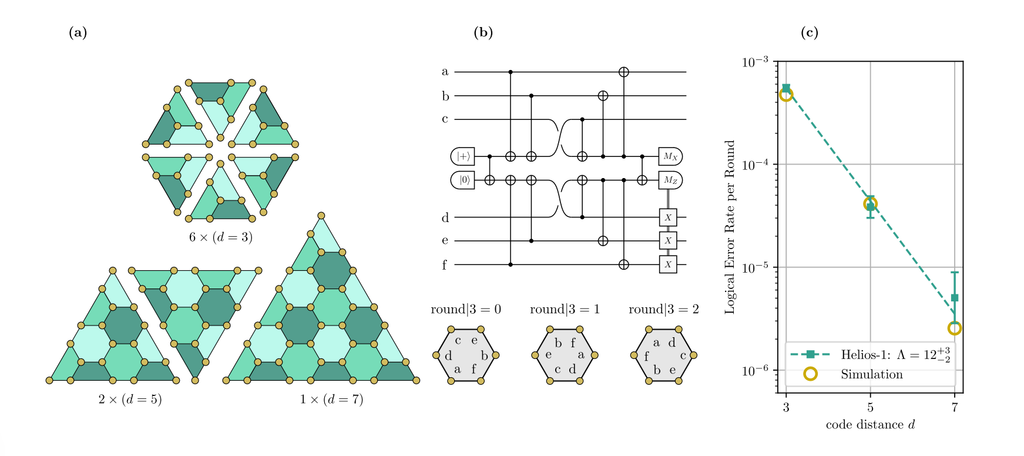
Quantinuum has demonstrated a 99.9995% logical memory fidelity on its Helios trapped-ion quantum computer, achieving a logical error rate of 5 × 10⁻⁶ per syndrome-extraction round on a distance-7 code. This performance shows exponential error suppression with increasing code distance, with a suppression factor of 12. These results align with the performance targets for Quantinuum's future universal fault-tolerant quantum system, Apollo.
-
-
-
Review Evaluates AI and Quantum Computing Paradigms for Adaptive Combinatorial Optimization
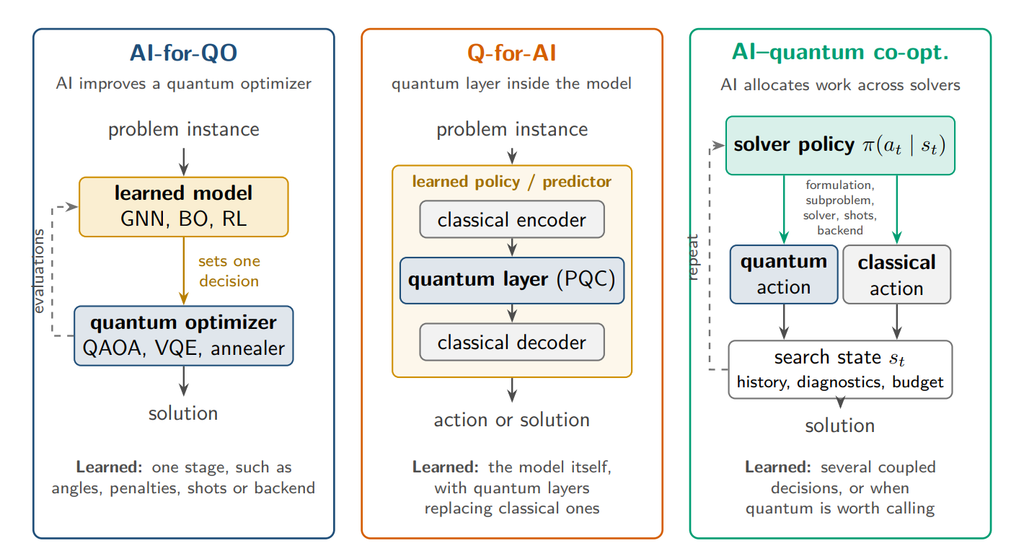
A new review paper by Hoong Chuin Lau examines the intersection of AI and quantum computing for combinatorial optimization, categorizing research into three paradigms: AI-for-Quantum Optimization (AI-for-QO), Quantum-for-AI (Q-for-AI), and AI-Quantum Co-Optimization. The study, which analyzed 119 papers, concludes that AI-assisted quantum optimization shows promise, while quantum-assisted AI models are largely unproven. The review emphasizes that scaling quantum optimization is a systems engineering problem requiring selective quantum use, with only a few studies isolating quantum contributions or establishing classical baselines.
-