Author: Mohamed Abdel-Kareem
-
-
Horizon Europe Launches €5M ($5.67M USD) Q-VERSE Consortium to Build Hardware-Agnostic Quantum Software Stack
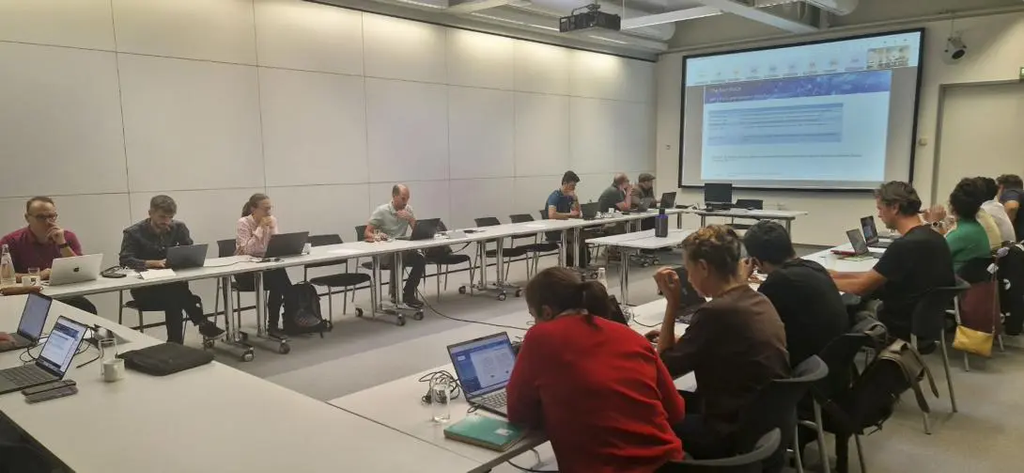
The Horizon Europe Q-VERSE consortium, funded with €5 million, is developing an open, hardware-agnostic quantum software stack. This initiative aims to unify quantum application development by decoupling it from low-level QPU architectures, utilizing the Eclipse Qrisp framework and standardized intermediate representations. The project, led by Fraunhofer FOKUS, involves 13 partners and will validate its platform across five industrial use cases, including railway scheduling and financial optimization.
-
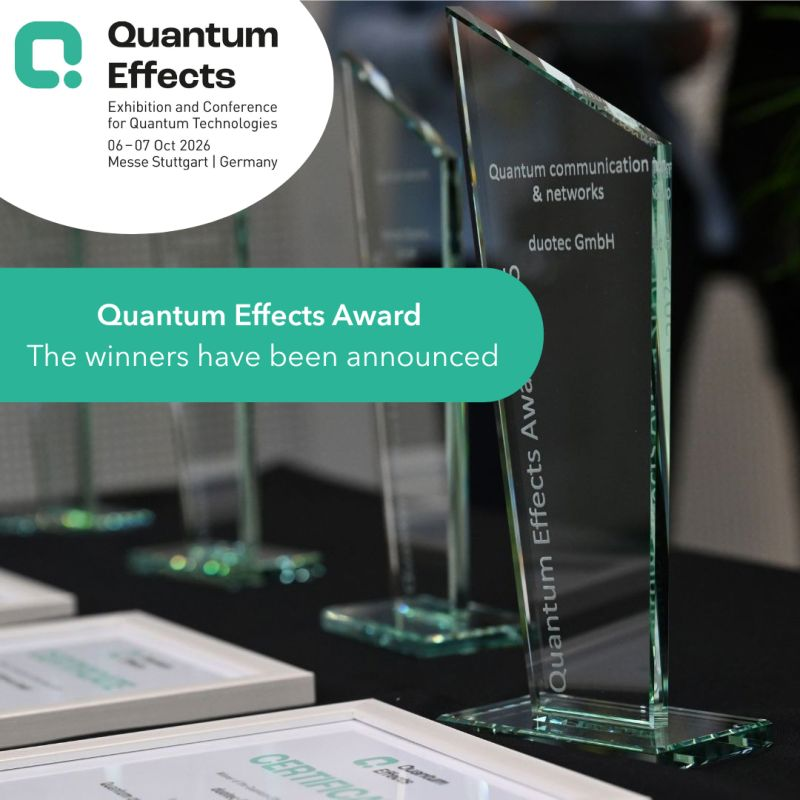
Messe Stuttgart Announces Winners of the Quantum Effects Award 2026 Across Four Hardware and Software Categories
Messe Stuttgart announced the winners of the Quantum Effects Award 2026 across four categories: C12 & Thales for Quantum Computing Hardware, Fraunhofer FOKUS for Quantum Computing Software, QSENSATO SRL for Quantum Sensing, and PicoQuant GmbH for Quantum Communication. These awards recognize application-oriented technical developments at TRL 5 or higher, showcasing direct industry utility and pathways for commercial deployment in the quantum technology sector.
-
Quantum eMotion to Acquire Plurilock for C$33.8M ($23.8M USD) to Commercialize Quantum-Safe Cybersecurity Platform
Quantum eMotion (QeM) is set to acquire Plurilock Security Inc. for C$33.8 million, creating a quantum-safe cybersecurity platform. The deal, expected to close in late 2026, combines QeM's quantum hardware with Plurilock's AI-driven cybersecurity to enhance access control and identity management. Plurilock shareholders will receive C$0.084 in cash and 0.0763 QeM shares per Plurilock share, totaling C$0.28 per share.
-
-
-
Quobly and CEA-Leti Strengthen Collaboration via FAMES Pilot Line to Scale 300 mm Silicon Spin-Qubit Platform
Quobly and CEA-Leti are strengthening their collaboration through the FAMES Pilot Line, providing Quobly access to advanced processing tools for prototyping 3D integration and RF control layers for next-generation quantum processing units (QPUs). This partnership, alongside STMicroelectronics, aims to scale Quobly's QSOI® architecture, which integrates silicon spin qubits directly onto a 300 mm FD-SOI CMOS substrate. Quobly plans to offer initial cloud availability for its Alloy Pioneer processor family by late 2026, targeting large-scale, fault-tolerant silicon architectures by 2032.
-
-
-
Who’s News: Strategic Appointments at D-Wave Quantum, Oxford Quantum Circuits, and Bifrost Electronics
Bernard Gavgani joins D-Wave Quantum's board, bringing fintech and cybersecurity expertise. Simon Phillips is now CPO at Oxford Quantum Circuits, focusing on commercializing Quantum-AI platforms, and Doug Campbell is the new CEO of Bifrost Electronics, leading the commercialization of their Heimdall Amplifier.
-
ETSI Identifies Technical Limitations and Implementation Vulnerabilities in Quantum Random Number Generators (ETSI TR 104 171)
ETSI's new report, TR 104 171, addresses vulnerabilities in Quantum Random Number Generators (QRNGs) due to practical hardware limitations. It provides guidelines across the QRNG lifecycle, including the Entropy Zero Trust (EZT) framework to mitigate side-channel attacks. The report also sets priorities for future standardization, such as API command sets and integration with post-quantum cryptography.
-
Pasqal Reports H1 2026 Financial Results: €312.9M Post-SPAC Cash Balance, 14% Revenue Growth, and 1,000-Atom Scale
Pasqal reported strong H1 2026 financial results with €312.9M post-SPAC cash and 14% revenue growth. The company achieved significant technological breakthroughs, including scaling to 1,024 atoms and demonstrating logical qubit execution. Pasqal also expanded commercially with new deployments in Saudi Arabia and Italy, and became an XPRIZE finalist.
-
-
-
Fairfax County Public Schools to Install XeedQ 4-Qubit Quantum Computer at Skyview High School
Fairfax County Public Schools (FCPS) will be the first K-12 public high school to install a physical quantum computer, the XeedQ XQ1e, at Skyview High School in December 2026. This 4-qubit quantum computer operates at room temperature and offers high-fidelity quantum computing for student learning. The initiative aims to create a regional talent development hub in quantum computing.
-
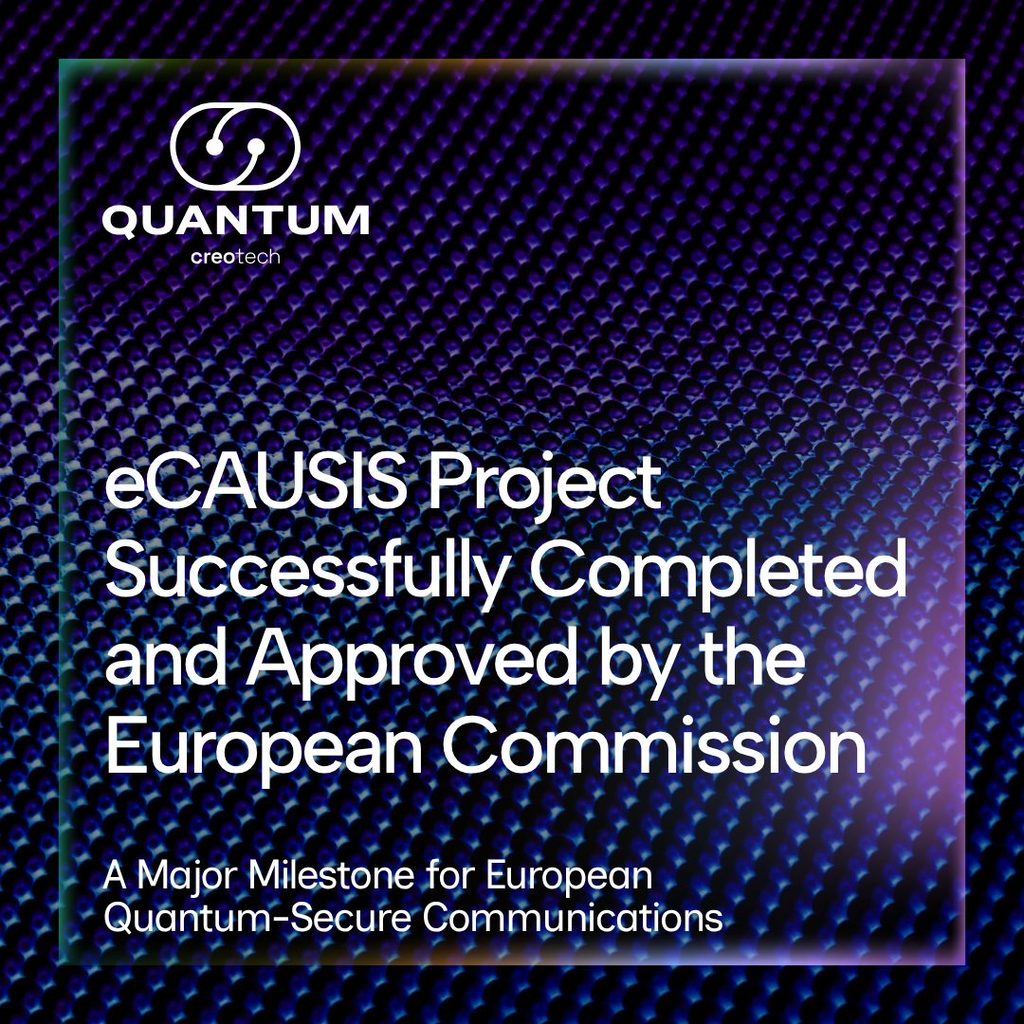
European Commission Approves eCAUSIS Results as Creotech Quantum Prepares QKD System for Commercial Rollout
Creotech Quantum's eCAUSIS project, funded by Horizon Europe, has received European Commission approval for its DV-QKD platform, transitioning it from R&D to commercial production. The project, with a total budget of nearly €7 million, involved Creotech Quantum as coordinator, along with AIT Austrian Institute of Technology and Fraunhofer Society. This initiative establishes a European supply chain for QKD modules, with an initial capacity of 1,000 units per year, potentially expanding to 10,000 annually.
-
Creotech Quantum Wins €2.33M ($2.66M USD) ESA Contract for Space-Grade Quantum Detectors
Creotech Quantum has secured a €2.33M contract from the European Space Agency (ESA) to develop advanced Superconducting Nanowire Single-Photon Detectors (SNSPDs) over 24 months. These detectors will be crucial for European quantum key distribution networks and deep-space optical communication, reaching Technology Readiness Level 5 (TRL 5). Creotech Quantum will lead the consortium, overseeing the design, manufacturing, and validation of the SNSPDs.
-