Author: Mohamed Abdel-Kareem
-
-
LUMI AI Factory Selects IQM’s Halocene Roadmap for Europe’s First Superconducting Logical Qubit System
IQM Quantum Computers will deploy Europe's first logical-qubit-capable superconducting quantum computer, LUMI-IQ, at CSC's Kajaani, Finland data center. This system, co-funded by the EuroHPC Joint Undertaking, will be integrated into the LUMI AI Factory, creating a hybrid HPC-AI-quantum supercomputing platform. LUMI-IQ will be delivered in three phases through 2029, starting with 150 physical qubits and eventually supporting up to 9 fault-tolerant logical qubits for advanced quantum computations.
-
Infleqtion and Cisco Partner to Advance Distributed Neutral-Atom Quantum Networking Architectures
Infleqtion and Cisco are partnering to advance distributed neutral-atom quantum networking architectures. This collaboration combines Infleqtion's quantum hardware, such as cold-atom QPUs and quantum memory modules, with Cisco's software-defined networking stack and hardware switches. Their goal is to integrate heterogeneous quantum devices into scalable distributed computing clusters, addressing the need for optical interconnects to scale beyond current quantum processing unit limitations.
-
Altera and Riverlane Partner on QEC Interfaces for Agilex FPGAs Following Post-Quantum Security Rollout
Altera and Riverlane have partnered to optimize quantum error correction (QEC) interfaces for Altera's Agilex FPGAs, enabling real-time QEC data movement and low-latency control. This collaboration, which includes an open-source QEC Interface (QECi) protocol, aims to standardize data exchange between quantum control electronics and QEC decoders. This initiative complements Altera's recent rollout of Post-Quantum Cryptography (PQC) support in its Agilex 3 and 5 FPGAs, establishing a dual strategy to secure classical infrastructure against quantum threats and provide control fabric for quantum computing.
-
Chalmers Researchers Accelerate Bosonic Quantum Operations by 1,000x Using Quantum Lattice Gates
Researchers at Chalmers University of Technology have developed a new method using Quantum Lattice Gates (QLGs) that accelerates bosonic quantum operations by up to 1,000 times. This breakthrough allows for faster and more robust quantum error correction by completing complex quantum operations within a single Floquet driving period, rather than thousands of repeated cycles, making it compatible with existing superconducting quantum circuits. The technique has achieved high-fidelity state preparation and logical gate operations, scaling linearly with Hilbert-space dimension.
-
BWT Alpine Formula One Team and SEALSQ Expand Quantum Partnership into Multiphysics Simulation
BWT Alpine Formula One Team and SEALSQ are expanding their partnership to integrate hybrid quantum-classical simulation capabilities into Formula One engineering, leveraging ColibriTD's quantum solvers for complex physics equations in car development. This collaboration aims to enhance simulation accuracy and secure intellectual property using SEALSQ’s post-quantum technology, aligning with SEALSQ's strategy of linking investments from its $200 million Quantum Fund with commercial opportunities.
-
Xanadu and AMD Launch Open-Source Backline Extension for PennyLane
Xanadu and AMD have launched Backline, an open-source framework integrated into Xanadu's PennyLane platform, to connect quantum and classical hardware. It provides ultra-low-latency links across CPUs, GPUs, FPGAs, and SmartNICs, resolving the classical-quantum data bottleneck for applications like quantum error correction. Backline enables Python-native, microsecond-scale communication, allowing standard processors to handle real-time quantum feedback loops and offering a hardware-agnostic architecture for hybrid quantum applications.
-
IBM Ventures Leads $8 Million Investment in BQP to Scale Quantum-Accelerated Physics Simulation
IBM Ventures led an $8 million investment in BQP, an enterprise software developer, to advance its BQPhy platform for quantum-accelerated physics simulation. This funding supports the commercial deployment of BQPhy, which optimizes GPU utilization for up to 10x faster performance in engineering environments, and prepares classical workloads for seamless transition to hybrid quantum-classical QPUs.
-
Qilimanjaro Quantum Tech Releases QiliSDK v0.3.0 with GPU-Accelerated Analog Simulation and Python 3.14 Support
Qilimanjaro Quantum Tech has released QiliSDK v0.3.0, updating its open-source framework with GPU-accelerated analog simulation, Python 3.14 support, and enhanced classical optimization capabilities. This version introduces new features like a stabilizer state simulator and improved tensor network engine, making it a versatile tool for quantum computing research.
-
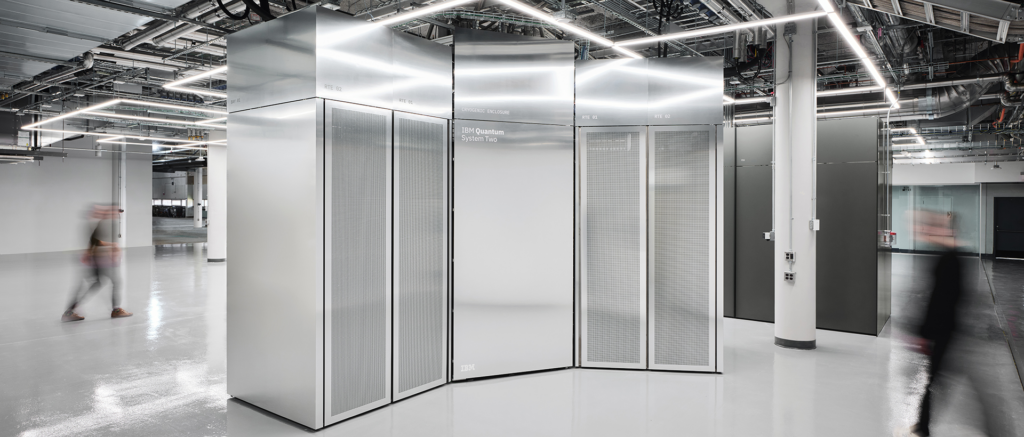
IBM and Lockheed Martin Partner with ETH Zurich to Deploy Switzerland’s First IBM Quantum System Two
IBM and Lockheed Martin, in an agreement with armasuisse, are establishing a national quantum innovation hub at ETH Zurich, featuring Switzerland's first on-premises IBM Quantum System Two by late 2026. This system, powered by the Nighthawk r2 processor, will be installed at the Swiss National Supercomputing Centre (CSCS) in Lugano, providing a quantum-centric supercomputing environment for hybrid classical-quantum workflows. The initiative, funded by Swiss defense procurement, aims to advance quantum research and includes dedicated defense R&D programs.
-
-
-
Fujitsu and Yaqumo Begin Hardware Validation of STAR Architecture on Neutral-Atom QPUs
Fujitsu and Yaqumo have partnered to experimentally validate Fujitsu's STAR architecture on Yaqumo's neutral-atom quantum processors. This collaboration aims to reduce physical qubit overhead and improve quantum error correction by leveraging the strengths of neutral-atom systems. They are also integrating Fujitsu's Open Quantum Toolchain to enable external users to access diverse hardware modalities through a unified cloud interface.
-