
Author: Mohamed Abdel-Kareem
-
-
University of Guelph and Xanadu Sign MOU to Advance Quantum Education and Talent Development
The University of Guelph and Xanadu Quantum Technologies have signed a three-year MOU to advance quantum education and workforce development. This partnership integrates Xanadu’s PennyLane software into U of G’s curriculum, aiming to train future quantum software developers and researchers and strengthen Canada’s quantum technology ecosystem.
-
Xanadu and University of Alberta Partner to Accelerate Photodynamic Cancer Drug Discovery
Xanadu Quantum Technologies and the University of Alberta have partnered to use photonic quantum computing for cancer drug discovery. Their collaboration focuses on developing quantum algorithms to model light-matter interactions in photosensitizers for photodynamic therapy, aiming to overcome classical computational limitations and design more effective cancer treatments.
-
BTQ Technologies Signs MOU with ITCENGLOBAL Subsidiary ITCEN PNS to Deploy Post-Quantum Security in South Korea
BTQ Technologies has partnered with ITCEN PNS, a subsidiary of ITCENGLOBAL, to implement post-quantum security solutions across South Korea’s IT infrastructure, including financial, public, and enterprise sectors. This collaboration will integrate BTQ’s quantum-safe technologies with ITCEN PNS’s validated cryptographic modules and expertise in national PQC standardization. The initiative aims to enhance security in areas like banking networks, digital identity, and biometric authentication.
-
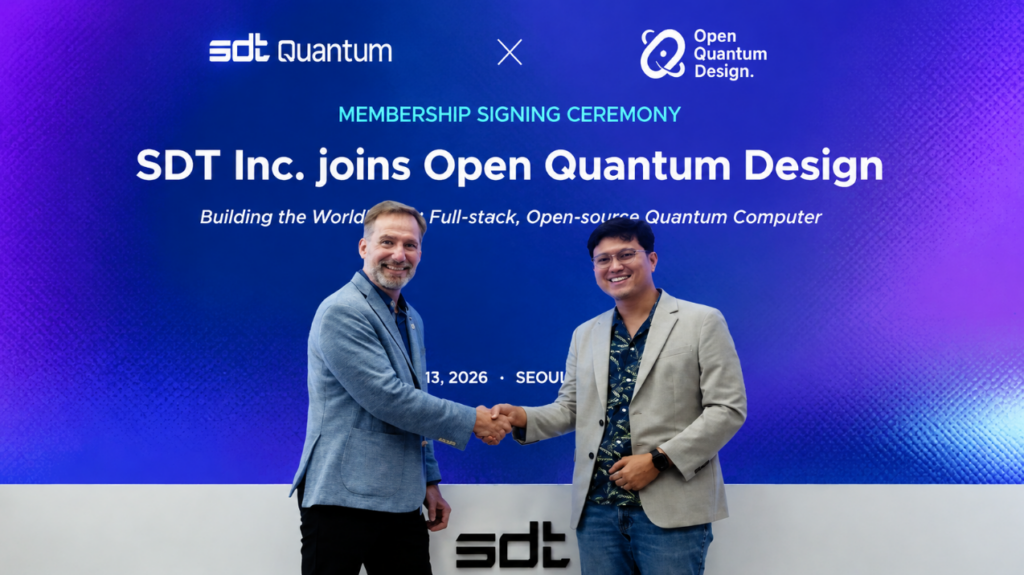
SDT Joins Canadian Non-Profit Open Quantum Design as Official Manufacturing Partner
SDT has partnered with Open Quantum Design (OQD) to manufacture open-source trapped-ion quantum computers, translating OQD’s blueprints into physical hardware. This collaboration expands OQD’s reach and strengthens SDT’s role in the global quantum hardware supply chain, alongside SDT’s deployment of its QuREKA Quantum Computing as a Service (QCaaS) platform for hybrid quantum research in South Korea.
-
New York State Launches $60M RFP for Regional Quantum Technology Commercialization Hubs
New York State is investing $60 million to establish up to four regional Quantum Technology Commercialization Hubs, each receiving up to $15 million. This initiative, building on a $300 million investment in a Quantum Research and Innovation Hub, aims to accelerate the commercialization of quantum computing, sensing, and secure communications. The hubs will focus on specialized quantum domains and provide access to advanced infrastructure for startups and researchers.
-
-
-
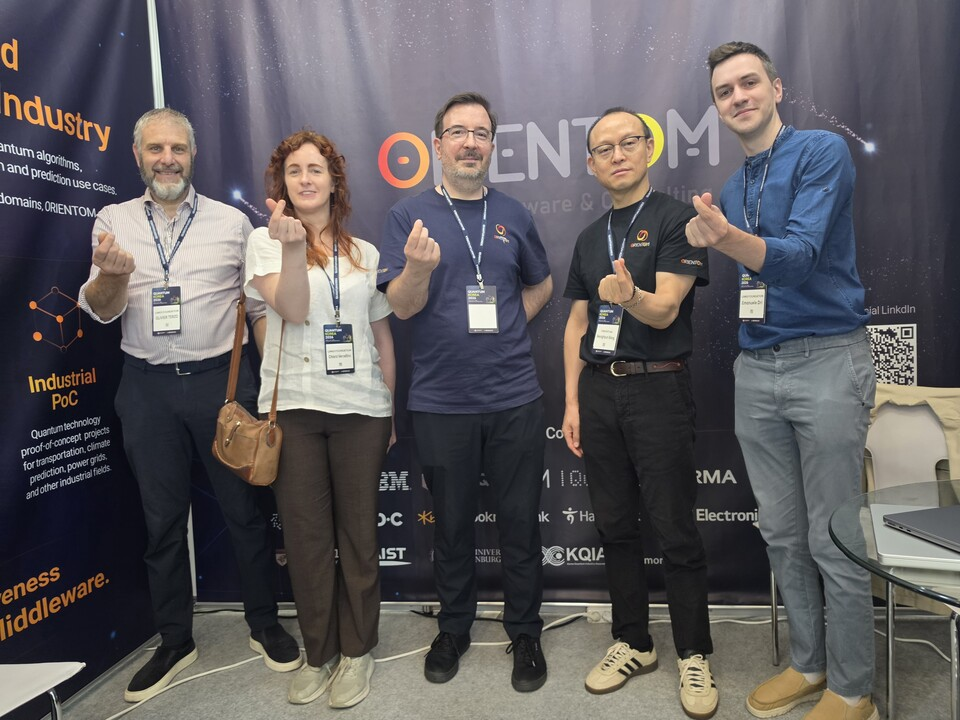
ORIENTOM and Fondazione LINKS Form Research Partnership for Financial Quantum Computing
ORIENTOM and Fondazione LINKS have partnered to advance quantum computing in finance, banking, and insurance. The collaboration will leverage ORIENTOM’s Quantum Middleware and Fondazione LINKS’ HPC infrastructure to develop solutions for derivatives pricing, portfolio optimization, risk management, and banking/insurance machine learning, with a focus on hybrid classical-quantum workflows and potential expansion into other industrial domains.
-
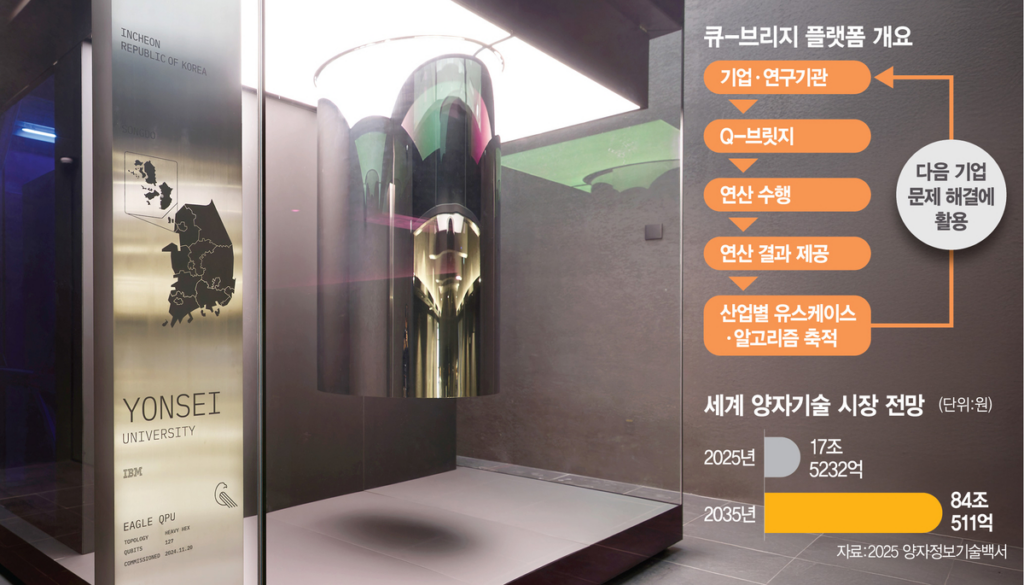
Yonsei University to Upgrade On-Premises IBM Quantum System One to Next-Generation Nighthawk QPU
Yonsei University is upgrading its on-premises IBM Quantum System One with the new 120-qubit Nighthawk QPU by November 2026, making it the second facility globally to host this advanced system. This upgrade will enhance computational capacity by 40% due to Nighthawk’s square lattice topology and increased qubit connectivity. The university plans to leverage this for hybrid quantum-HPC workloads, including research on Leigh syndrome, and will launch “Q-Bridge” to foster commercial application adoption.
-
Infleqtion Reports Q2 2026 Results: Record Revenue Up 116% YoY, Raised Guidance to $43M, and $100M CHIPS Act LOI
Infleqtion reported record Q2 2026 revenue of $12.63 million, a 116.3% increase year-over-year, driven by organic growth in quantum computing and sensing. The company raised its full-year 2026 revenue guidance to $43 million and received a $100 million CHIPS Act Letter of Intent. Infleqtion also made significant progress in its computing roadmap, including a contract to deploy a quantum computer at the Illinois Quantum & Microelectronics Park and advancements in quantum sensing with its Tiqker atomic clocks.
-
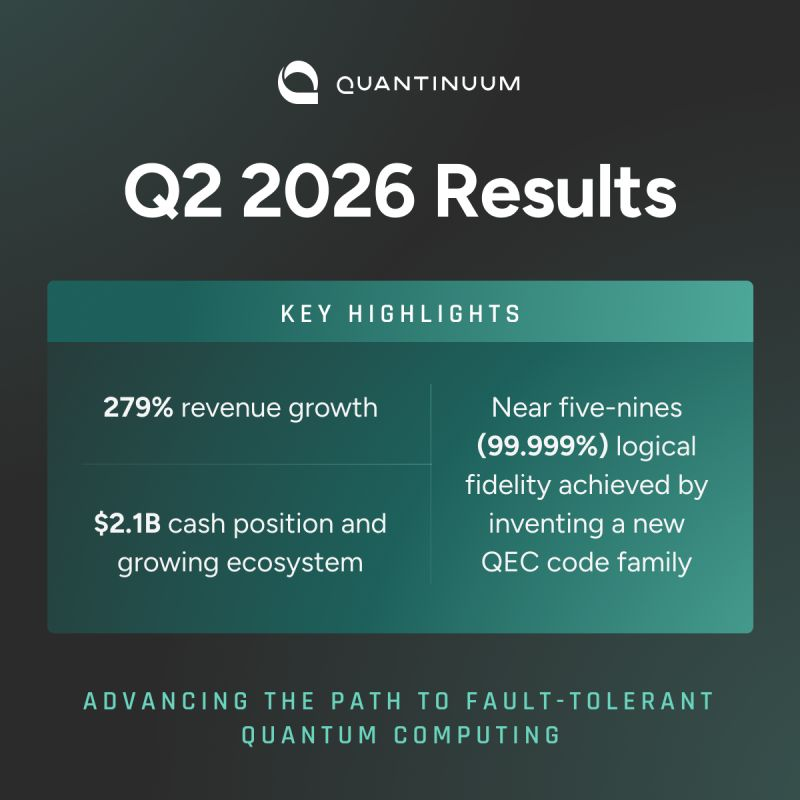
Quantinuum Reports Q2 2026 Results: Revenue Up 279% YoY, $1.7B Traditional IPO, and Oracle Cloud Integration
Quantinuum Inc. reported a Q2 2026 revenue of $8.00 million, a 279.4% year-over-year increase, following its $1.7 billion IPO. The company ended the quarter with $2.11 billion in cash and provided a full-year 2026 revenue guidance of $28 million to $32 million. Key highlights include a strategic partnership with Oracle Cloud Infrastructure, advancements in quantum computing hardware and software, and a letter of intent with the U.S. Department of Commerce’s CHIPS R&D Office.
-
Quantinuum and Oracle Partner to Bring Helios Quantum Computer to Oracle Cloud Infrastructure
Quantinuum and Oracle have partnered to integrate Quantinuum’s Helios quantum computer directly into Oracle Cloud Infrastructure (OCI) AI data centers. This collaboration will make Helios available as a managed OCI quantum service, combining trapped-ion quantum processing units with OCI’s high-performance computing to accelerate hybrid quantum-AI workloads for various applications. This marks Quantinuum’s first on-premises deployment within a major public cloud provider’s AI data center ecosystem.
-