
Author: Mohamed Abdel-Kareem
-
-
Quantum X Labs Expands Intellectual Property and R&D Across Neutral-Atom Hardware, Rydberg Sensing, and Circuit Security
Quantum X Labs Inc. announced new intellectual property filings and R&D in quantum technology. This includes a patent application for structured-beam Zeeman slower and atomic push-beam systems for neutral-atom quantum computing, and a laboratory program integrating Ramsey-CPT atomic clocks with Rydberg atom RF sensors. Additionally, a patent was filed for watermarking quantum circuits using Weyl (KAK) coordinate decomposition for IP protection.
-
University of Auckland, NIST, and UMD Demonstrate Octave-Spanning Chip-Scale Microcomb in Nature
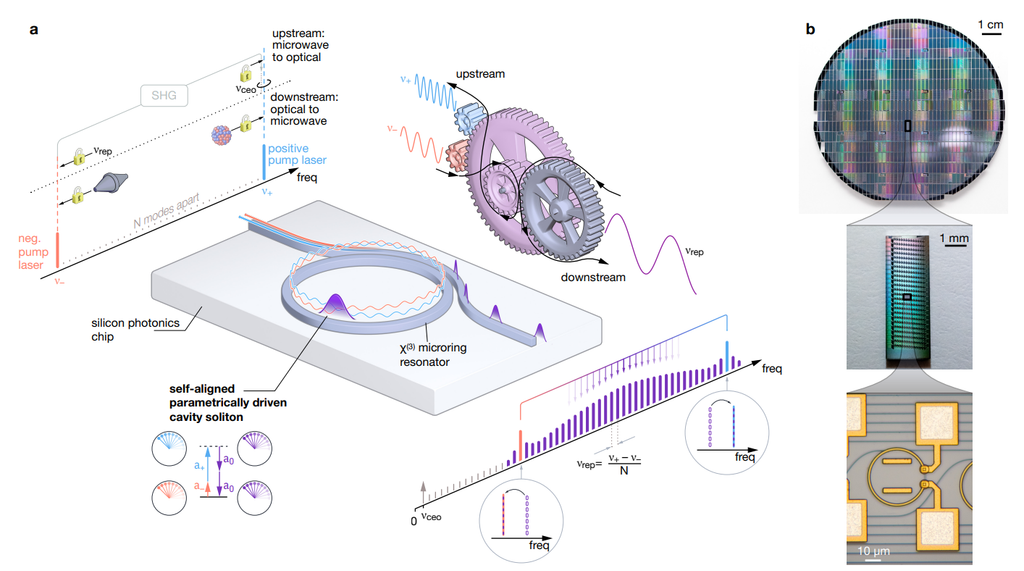
Researchers from the University of Auckland, NIST, UMD, and UC Santa Barbara have developed a chip-integrated optical frequency comb that addresses long-standing stability and control issues in microcomb metrology. They achieved this by inverting traditional frequency comb architectures, using two pump lasers an octave apart to generate a self-aligned, octave-spanning microcomb on a single chip. This innovation has significant implications for deployable optical atomic clocks, GPS-denied quantum navigation, and precision quantum sensing, with a provisional patent filed for commercialization.
-
Arqit Quantum Inc. Reports Select Preliminary FY 2026 Financial Results: Annual Revenue Tops $975K, NATO Contract Win, and Cash Position Reaches $51M
Arqit Quantum Inc. reported strong preliminary financial results for FY 2026, with annual revenue estimated between $975,000 and $1,000,000, an 84% to 89% increase from FY 2025. The company also secured a NATO contract and ended the fiscal year with a robust cash position of $51.0 million. This growth was driven by new commercial contracts and initial traction for its Encryption Intelligence solution.
-
Quantinuum and HQS Simulate 21-Spin NMR Spectrum on 42 Qubits With 1,400+ Two-Qubit Gate Circuits
Quantinuum and HQS Quantum Simulations successfully simulated a 21-spin NMR spectrum on Quantinuum's 42-qubit quantum computer, the H2-1. This simulation, which modeled 1,2-di-tert-butyl-diphosphane, demonstrated the viability of deep digital Hamiltonian simulation for complex NMR challenges, even reproducing a subtle double-peak structure that previous systems struggled with. This advancement, detailed in a preprint on arXiv, marks a significant step for quantum computing in scientific research.
-
Fujitsu Partners with State of New Mexico to Establish Quantum Computing R&D Center
Fujitsu is partnering with the State of New Mexico to establish a quantum computing R&D center, focusing on hardware, software, and algorithm design. This collaboration expands on existing research with New Mexico universities and integrates with national laboratories to develop hybrid computing workflows. New Mexico is investing significantly in quantum initiatives, including a $150 million matching fund, to support this partnership and advance fault-tolerant quantum algorithm design.
-
Quobly and SiPearl Form Partnership to Integrate European ARM CPUs and Silicon Spin QPUs
Quobly and SiPearl have partnered to integrate SiPearl's ARM-based Rhea1 CPU with Quobly's silicon QPU hardware, aiming for hybrid CPU-QPU co-design and HPC-quantum workload optimization. This collaboration will establish a European-sourced hardware pipeline connecting supercomputing nodes with quantum coprocessors. The companies plan to seek joint European funding to advance sovereign HPC-quantum infrastructure in Europe.
-
IonQ Demonstrates 1 kHz Memory-Enhanced Quantum Interconnect Connecting Trapped Ions and Diamond Color Centers
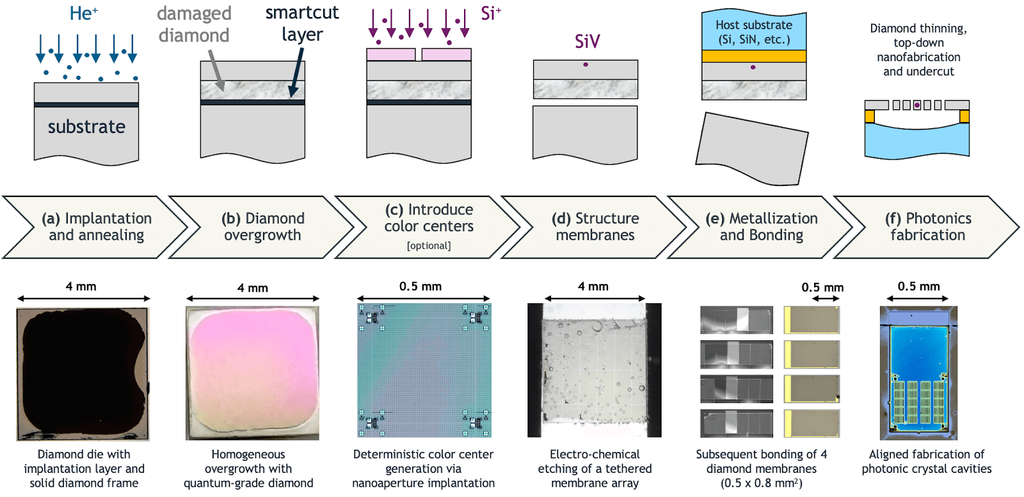
IonQ has achieved a breakthrough in quantum computing with a memory-enhanced quantum interconnect, linking a trapped ion qubit with a diamond-based quantum memory. This system operates at a record-breaking entanglement rate of over 1 kHz with high fidelity, significantly improving upon previous benchmarks. This advancement, supported by collaborations with Element Six and AWS, addresses photon-loss bottlenecks and is a crucial step towards scalable distributed quantum computing networks.
-
NTT DOCOMO BUSINESS Partners with Classiq to Expand Enterprise Quantum Software Adoption in Japan
NTT DOCOMO BUSINESS has partnered with Classiq to distribute Classiq's quantum software development platform in Japan, aiming to expand quantum computing adoption across various enterprise sectors. This collaboration leverages NTT DOCOMO BUSINESS's existing quantum-safe security infrastructure, including a 600-kilometer quantum cryptography communication network, to offer a comprehensive solution for quantum application development and secure communication. The partnership seeks to identify, co-develop, and validate industrial gate-based quantum computing applications for Japanese enterprises.
-
-
-
U.S. Department of Energy Unveils Quantum Genesis Priority Applications to Guide Fault-Tolerant Scientific Utility
The U.S. Department of Energy (DOE) Office of Science has released the Quantum Genesis Priority Applications (QGPAs), outlining eight key scientific problems to assess the relevance of fault-tolerant quantum computers. This framework supports the federal Quantum Genesis initiative, including the $215M Q Competition and a National Quantum Computing User Facility. The QGPAs focus on areas where classical computing faces limitations, such as chemistry, materials, subatomic physics, and applied mathematics.
-
U.S. Department of Energy Allocates $159 Million in Phase II Genesis Mission Awards for Quantum Error Correction and Materials Co-Design
The U.S. Department of Energy has awarded $159 million in Phase II Genesis Mission awards to 12 projects. These projects focus on quantum error correction, materials co-design, and custom microelectronics, leveraging AI and high-performance computing. Key initiatives include Harvard's ASQC project for quantum error correction, Oak Ridge National Laboratory's AI-Empowered Design of Functional Quantum Magnets, and Fermilab's AXESS project for accelerating chip design for extreme environments.
-