
Author: Mohamed Abdel-Kareem
-
-
NVIDIA Commits $1 Billion over Five Years to Accelerate U.S. Scientific Computing and Quantum Infrastructure
NVIDIA is investing $1 billion over five years to advance U.S. scientific computing and quantum infrastructure. This commitment supports research institutions, cloud providers, and national laboratories, focusing on hybrid quantum-classical hardware integration, fault-tolerant quantum software, fusion energy, and microelectronics design. A key aspect is expanding access to high-performance computing and NVIDIA's open-source CUDA-Q platform for quantum processor simulation and control.
-
U.S. Department of War Announces $350 Million Quantum Package, Highlighted by $150 Million OSC Loan Commitment for PsiQuantum
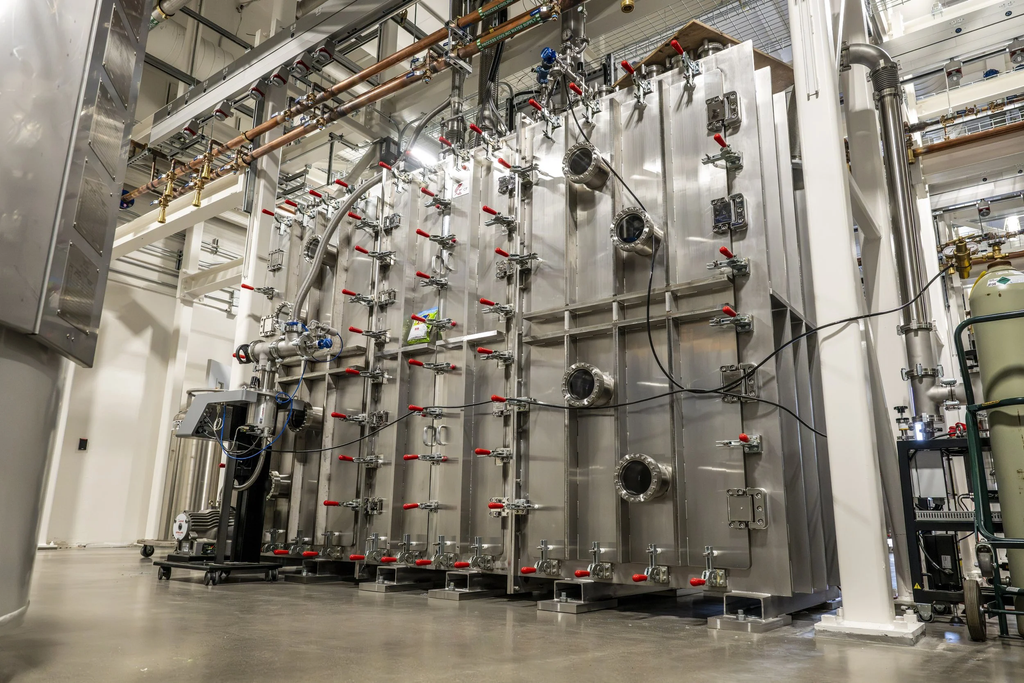
PsiQuantum has secured a conditional loan commitment of up to $150 million from the U.S. Office of Strategic Capital to expand its PsiFactory in Milpitas, California. This funding will support the development of a domestic supply chain for quantum computing and follows other significant investments from DARPA and the U.S. Department of Commerce. PsiQuantum is also developing facilities in Illinois and Australia.
-
India’s MeitY Sanctions ₹99.94 Crore ($10.3 Million USD) for IIT Madras and izmo Microsystems Silicon Photonics Program
India's MeitY has sanctioned ₹99.94 crore (approx. $10.3 million USD) for Phase II of the SPECTRA program at IIT Madras, in partnership with izmo Microsystems. This five-year initiative focuses on developing silicon photonics for high-bandwidth data centers, AI compute clusters, and quantum communications, including chip-scale QRNG and integrated QKD photonic circuits. The collaboration aims to establish an end-to-end solution for photonic integrated circuits from fabrication to system integration.
-
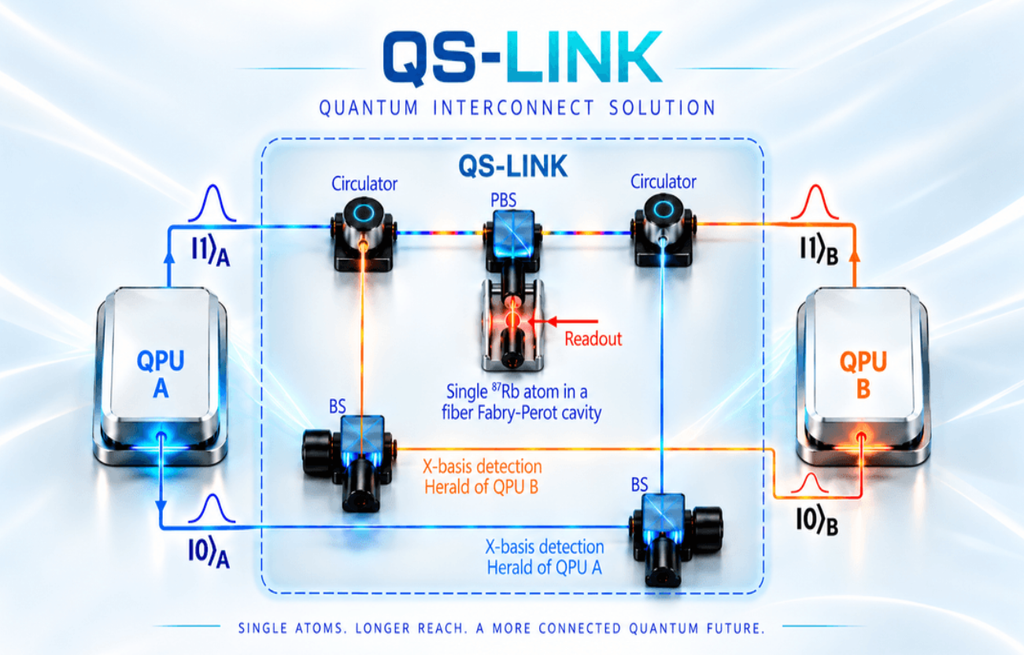
Quantum Source Introduces Memory-Assisted Photonic Interconnect to Unify Multi-Modal Quantum Computing
Quantum Source has introduced QS-LINK, a memory-assisted photonic interconnect that unifies multi-modal quantum computing. This technology overcomes scaling limitations in multi-processor quantum networks by using a single cavity-trapped rubidium-87 atom as an asynchronous quantum memory buffer to establish remote entanglement between separate quantum processing units (QPUs). QS-LINK significantly reduces the attempts needed to achieve entanglement compared to traditional methods, operating at room temperature and supporting various hardware modalities.
-
Universal Quantum Closes $100 Million Series A to Accelerate Modular Trapped-Ion Architecture Scaling
Universal Quantum, a UK-based hardware developer specializing in trapped-ion quantum processors, has successfully closed a $100 million Series A funding round. This investment will fuel their international expansion, including operations in Europe, Singapore, the U.S., and Japan, and support their $77 million contract with the German Aerospace Center. Their technology utilizes modular silicon chiplets connected by micro-electric ion-shuttling links, operating at a mild cryogenic temperature of 70 Kelvin, which reduces error rates and avoids complex sub-Kelvin cooling systems.
-
Neutral-Atom Developer Oratomic Secures $775 Million in Cumulative Funding for Fault-Tolerant System R&D
Oratomic, a Pasadena-based quantum hardware developer, has secured $775 million in cumulative funding to advance its fault-tolerant quantum computing systems. The company focuses on neutral-atom arrays and quantum error correction, aiming for utility-scale quantum computers.
-
-
-
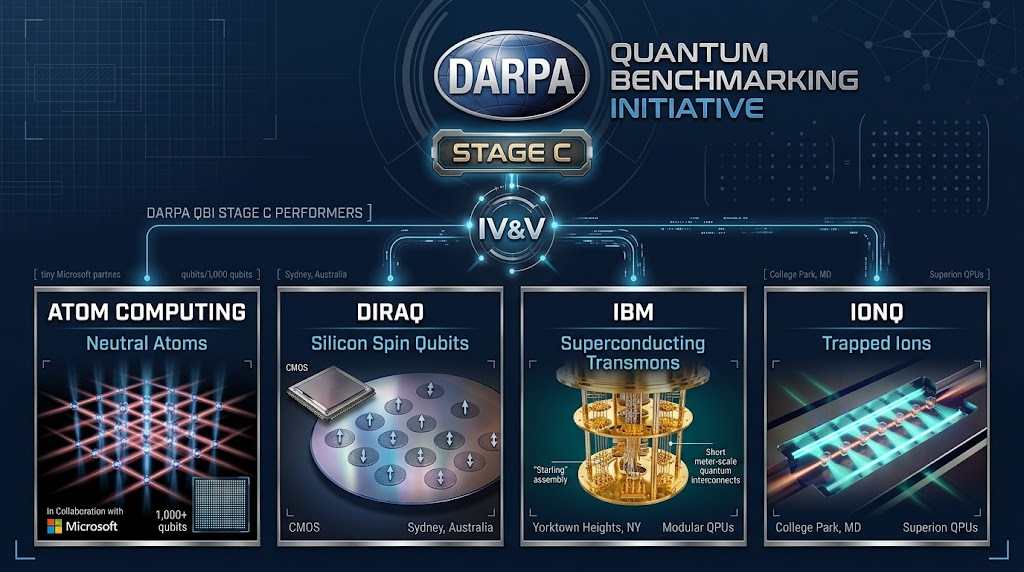
DARPA Selects Atom Computing, Diraq, IBM, and IonQ for Final Stage C Verification under Quantum Benchmarking Initiative
DARPA has selected Atom Computing, Diraq, IBM, and IonQ for Stage C of its Quantum Benchmarking Initiative (QBI) to verify the performance of their fault-tolerant quantum computing architectures. This stage involves direct physical testing and empirical validation of their hardware, aiming to assess their potential for utility-scale operation by 2033. The chosen companies represent diverse qubit technologies, including neutral atoms, silicon spin qubits, superconducting transmons, and trapped ions.
-
Cisco Releases Quantum Network Controller and Network-Aware Compiler v0.2.0 for Distributed Quantum Infrastructure
Cisco's Outshift division has launched the Quantum Network Controller and Network-Aware Quantum Compiler v0.2.0 to manage multi-node quantum networks. The Controller offers Entanglement-as-a-Service, enabling on-demand entanglement across diverse quantum hardware. The Compiler integrates circuit compilation, qubit partitioning, and distributed quantum error correction, optimizing for physical network limitations.
-
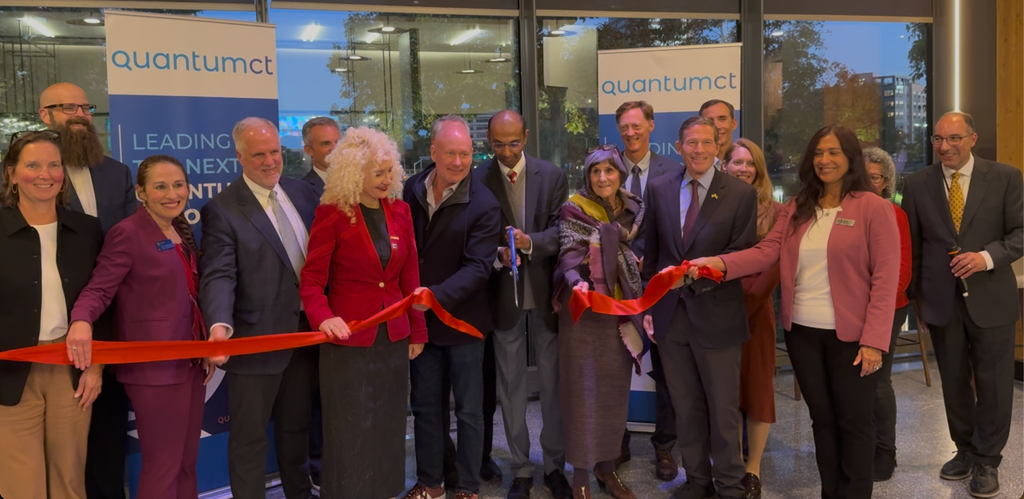
QuantumCT Opens 4,500 Sq. Ft. Innovation Headquarters in New Haven to Anchor Connecticut Quantum Corridor
QuantumCT has opened its 4,500-square-foot innovation headquarters in New Haven, serving as a central hub for quantum computing research, talent development, and startup incubation. This initiative, backed by significant public and private funding, aims to establish Connecticut as a leading U.S. quantum commercialization center. Key funding includes a $50.5 million state allocation and a $15 million NSF grant, alongside institutional research from Yale and UConn, and industry investment from D-Wave.
-
GAO Audit Finds All 24 CFO Act Federal Agencies Unprepared for Post-Quantum Cryptography Migration
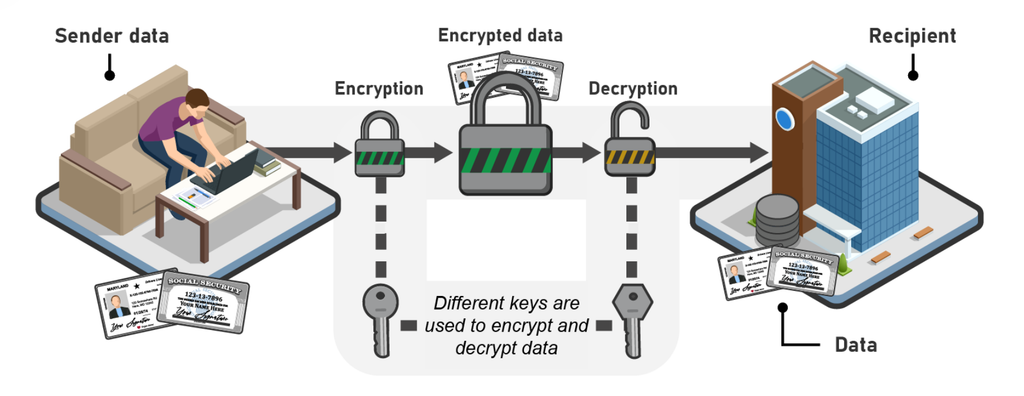
A GAO audit found that all 24 CFO Act federal agencies are unprepared for post-quantum cryptography migration, with none having fully implemented the required preparatory practices. The audit, publicly released in October 2026, revealed significant deficits in cryptographic asset inventory, migration funding assessments, and operational PQC testing. This lack of readiness leaves critical federal data vulnerable to future quantum attacks, particularly from "harvest now, decrypt later" tactics by hostile nation-states.
-