Category: Uncategorized
-
-
Qambria Secures $2.4M Pre-Seed Funding to Commercialize Sub-Microsecond Classical Control Infrastructure for Fault-Tolerant Quantum Systems
Qambria AG, a Swiss quantum infrastructure developer, has successfully closed a $2.4 million pre-seed funding round led by Syntropy. The company aims to commercialize a classical engine for quantum computing, focusing on software and control orchestration to integrate quantum processing units with high-performance computing. Qambria's IP-licensing model will help lower costs and complexity for quantum hardware manufacturers and data centers.
-
-
-
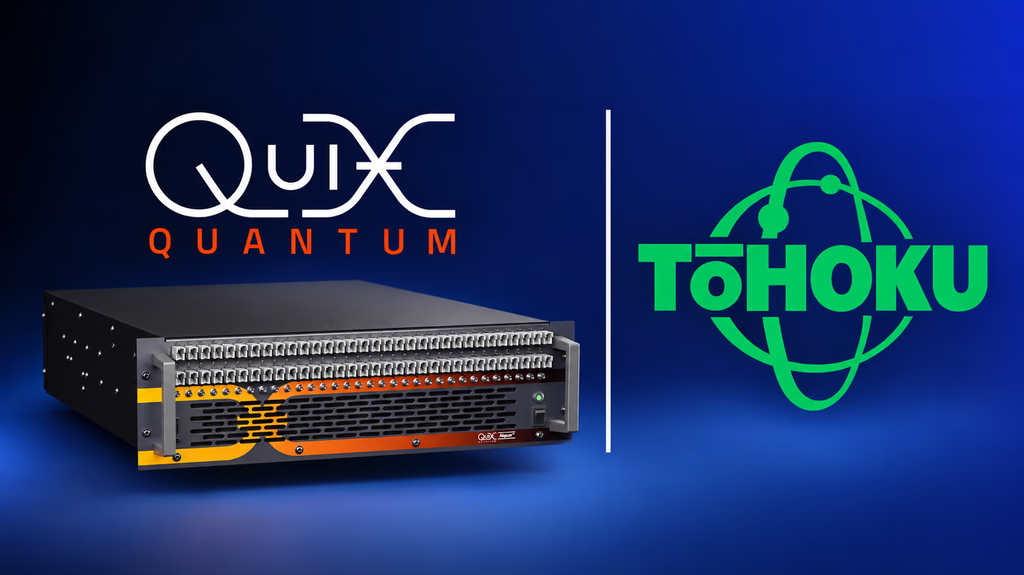
QuiX Quantum Partners with Tohoku Electronic Industrial for Exclusive Distribution in Japan
QuiX Quantum has partnered with Tohoku Electronic Industrial Co., Ltd. (TEI-C) for exclusive distribution of its integrated photonic processing hardware in Japan. This includes the Alquor 2.0 quantum photonic processor and the PACU control unit. The partnership aims to accelerate access to commercial quantum hardware for Japanese customers, aligning with Japan's national quantum initiatives.
-
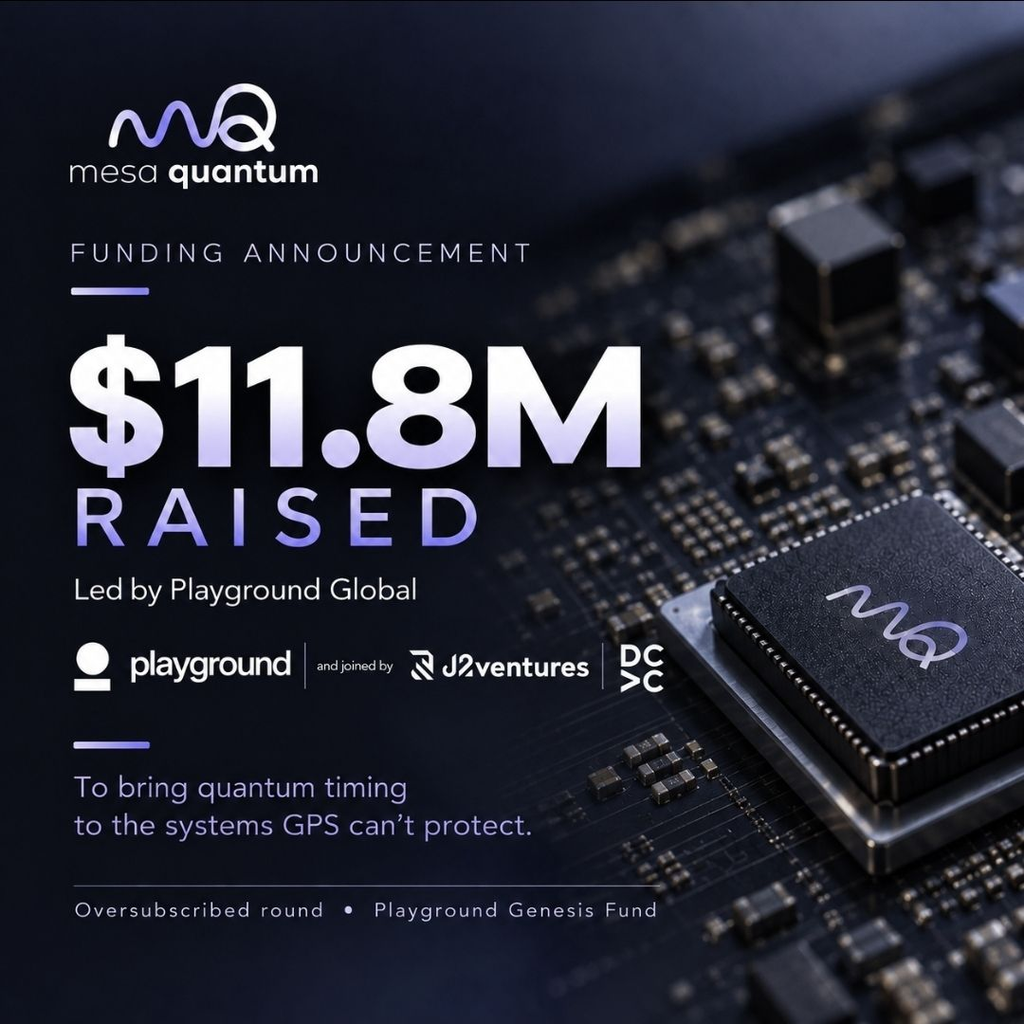
Mesa Quantum Raises $11.8M to Scale Chip-Scale Quantum Sensors and Alternative PNT Infrastructure
Mesa Quantum has raised $11.8 million in funding, led by Playground Global, bringing their total venture funding to nearly $16 million. This capital will accelerate the development and manufacturing of their chip-scale quantum sensors and alternative PNT infrastructure. Their technology, which includes chip-scale atomic clocks and quantum inertial sensors, provides precise timing and navigation independent of GPS, addressing vulnerabilities in satellite-based systems.
-
Infleqtion Achieves 30 Entangled Logical Qubits on Sqale Neutral-Atom Quantum Processor
Infleqtion has achieved 30 entangled logical qubits on its commercial Sqale quantum computing platform, utilizing 80 physical neutral-atom qubits. This breakthrough, announced at Quantum World Congress 2026, was enabled by an AI-assisted logical circuit discovery and software-based loss correction. This positions Infleqtion to scale to 100 logical qubits by 2028 and 1,000 by 2030, with current applications in biomarker discovery.
-
Mphasis and Copa Airlines Partner on Global Quantum Computing Challenge for Airline Disruption Management
Mphasis and Copa Airlines partnered on a global Quantum Computing Challenge, bringing together academic teams to develop quantum optimization solutions for airline passenger re-accommodation during disruptions. The hackathon leveraged quantum algorithms and real operational data to improve efficiency in reassigning passengers while maintaining operational constraints. This initiative is part of Mphasis's broader enterprise quantum software portfolio.
-
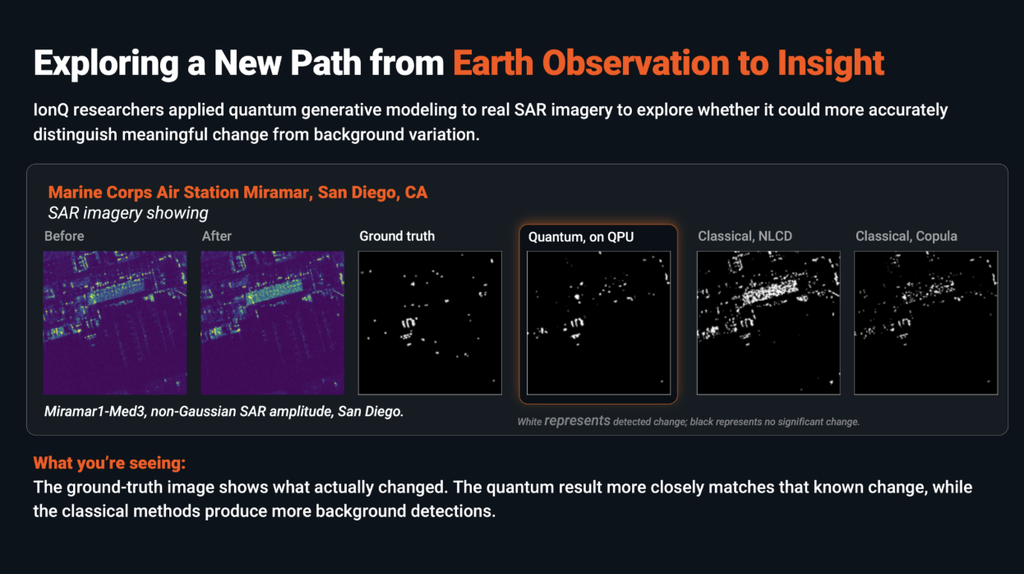
IonQ Demonstrates Quantum Generative Modeling Advantage for High-Resolution Satellite Radar Change Detection
IonQ's research shows that quantum generative machine learning models on their trapped-ion quantum processing units can more accurately detect ground-level changes from satellite radar imagery, especially with high-resolution data causing sparse pixel statistics. Their Quantum Circuit Born Machines (QCBMs) outperformed classical methods in detecting changes at MCAS Miramar Airfield and showed strong generalization capabilities. This advancement has implications for defense, intelligence, infrastructure monitoring, and disaster response.
-
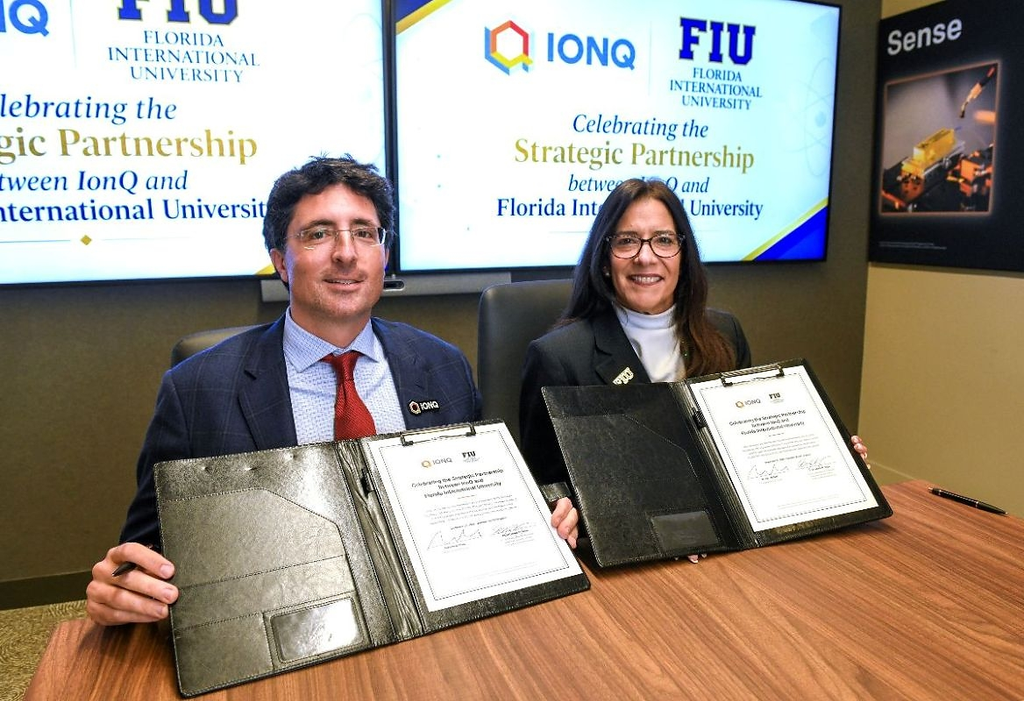
Florida International University Contracts IonQ for On-Premises Superion 256 Trapped-Ion Quantum Computer
IonQ has signed an agreement with Florida International University (FIU) to provide and install an on-premises IonQ Superion 256 trapped-ion quantum computer by late 2027. This makes FIU IonQ's main academic partner in Florida and the first to have a 256-qubit system in the state. The quantum computer will be used for research in various fields, including material science, AI, and cybersecurity, and will be accessible to FIU's faculty, students, and regional partners.
-
QC Design Unveils Meridian: Purpose-Built AI Architecture System Demonstrates Over 10× Reduction in Logical Error Rates
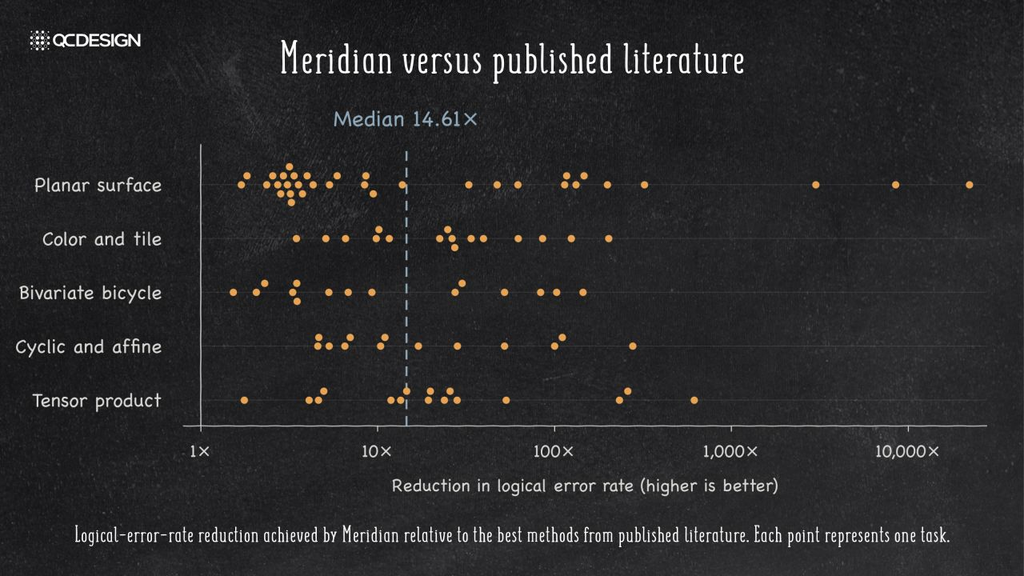
QC Design has introduced Meridian, an AI-powered platform for optimizing fault-tolerant quantum computing (FTQC) hardware. Meridian has demonstrated a 14.6x median reduction in logical error rates compared to existing methods and a 43% reduction against other frontier AI agents like GPT-6 Astra. This platform aims to accelerate the development of scalable quantum processors by automating multi-layer architectural design.
-
memQ Open-Sources Industry-First Modality-Agnostic Distributed Quantum Compiler (memQ DQC)
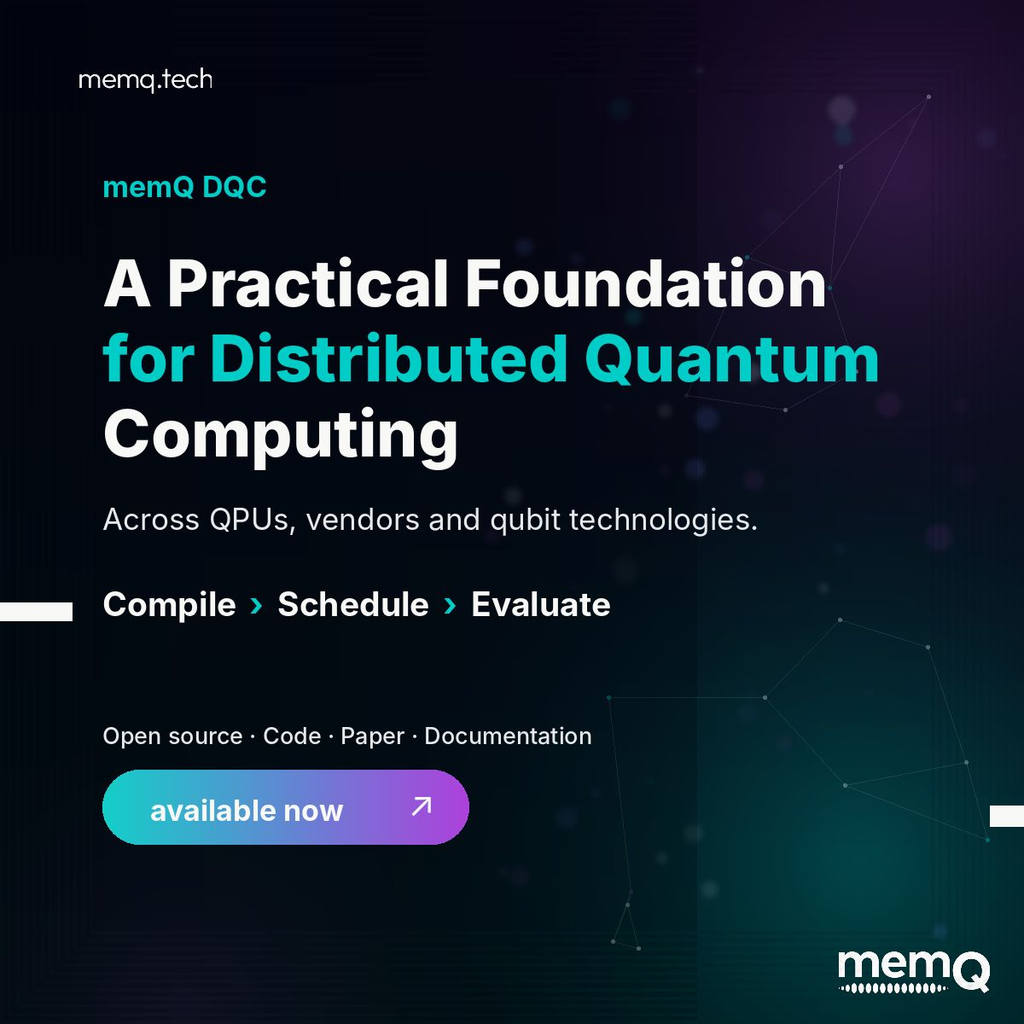
memQ Inc. has open-sourced its Distributed Quantum Compiler (memQ DQC), a modality-agnostic software framework for scaling quantum computing across multi-vendor QPU networks. This release aligns with U.S. federal directives and allows developers to model multi-QPU execution and analyze resource trade-offs without manual low-level programming. The toolchain features an interactive Quantum Network Constructor and dynamic partitioning, with accompanying research highlighting the importance of compiler selection based on hardware topology.
-
Patenting Quantum Computing Innovations – Part 3: Implementing a Logical Qubit in a Surface Code
Surface codes are a promising class of quantum error correction codes that will likely be used in fault-tolerant quantum computing.
-