

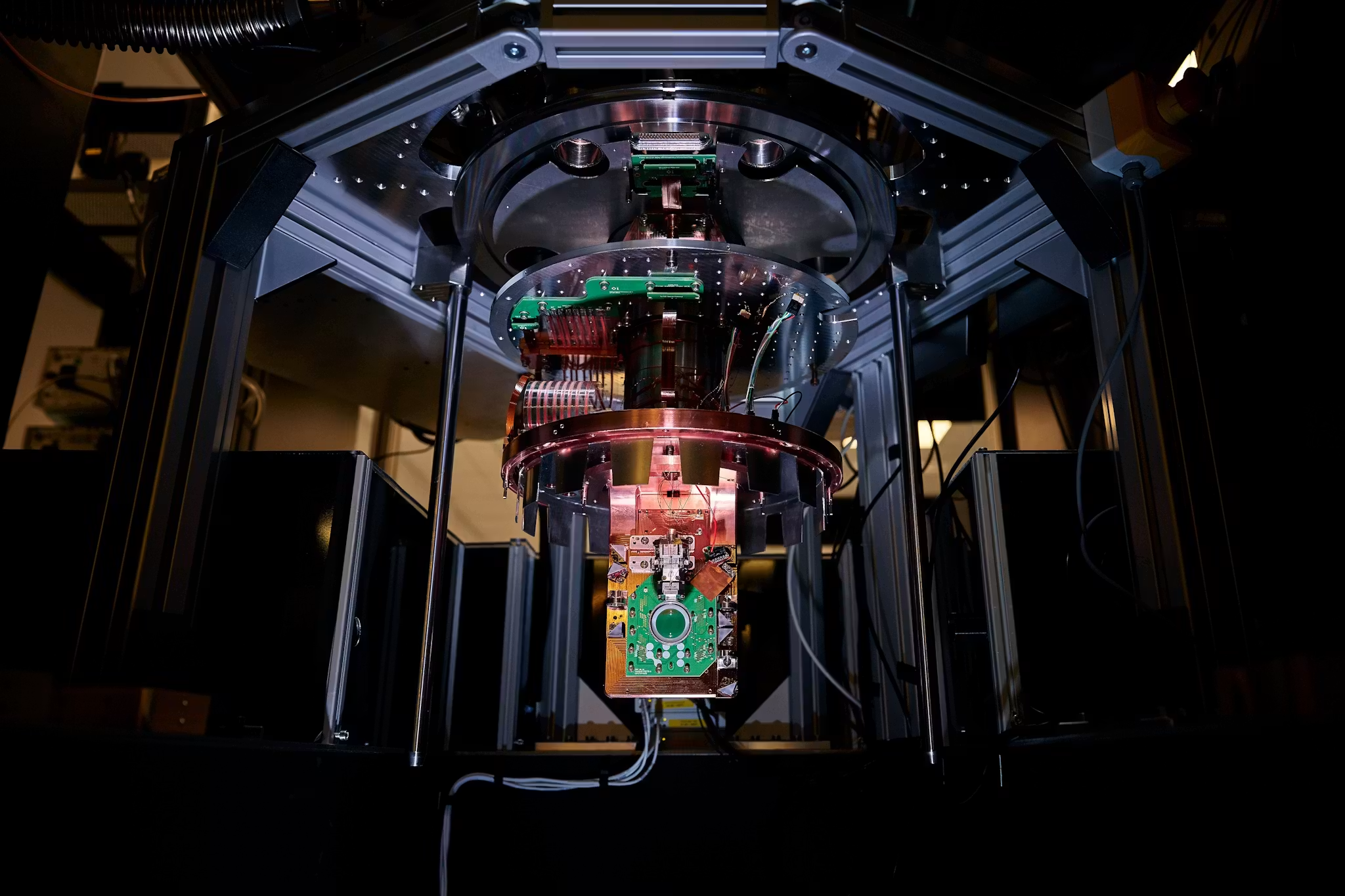
Integrated software infrastructure pioneer Horizon Quantum Holdings Ltd. has announced plans to deploy its second hardware testbed location at its European headquarters in Dublin, Ireland. The facility will host a sixth-generation, chip-based 256-qubit trapped-ion system developed by IonQ. Backed by Ireland’s National Semiconductor Strategy (Silicon Island) and supported by IDA Ireland, the hardware expansion builds directly upon the company’s existing multi-vendor superconducting testbed array assembled at its Singapore headquarters. It aims to accelerate the deployment of high-fidelity, hardware-agnostic coding applications across the European Union deep-tech corridor.
Trapped-Ion Architecture and Low-Abstraction Compilation Stacks
The engineering milestone centers on the integration of IonQ’s 256-qubit processor topology with Horizon Quantum’s native software ecosystem to evaluate real-time runtime compiler execution stacks. While traditional superconducting qubits are fixed geometrically on solid-state chip surfaces, trapped-ion systems utilize individual, electromagnetically isolated ions suspended in free space via micro-fabricated electrode traps, offering long-range connectivity graphs and uniform qubit reproducibility. Horizon Quantum plans to map this noise-biased architectural behavior into its Triple Alpha integrated development environment (IDE). The IDE allows software engineers to compile hardware-agnostic programs across multiple tiers of computational abstraction without manually reconstructing gate-level pulser code for differing quantum modalities.
Ecosystem Integration and National Strategic Infrastructure Realization
Led by CEO and Founder Dr. Joe Fitzsimons, the deployment strategy anchors high-value operations and specialized engineering teams within Dublin to interface directly with local supply chains, academic research labs, and regional enterprise end-users. This deployment satisfies national investment goals managed by Ireland’s Department of Enterprise, Tourism and Employment, positioning the state to act as a localized hub for cloud-accessible quantum infrastructure. By pairing the upcoming trapped-ion system with open-source high-performance computing (HPC) software pipelines, the Dublin testbed will serve as a live operational foundry for third-party developers looking to test, benchmark, and deploy hybrid quantum-classical algorithms on a commercial scale.
The official corporate announcement and associated executive transaction statements can be reviewed directly via the active Horizon Quantum Newsroom here. Our previous coverage on the platform’s technological roadmap includes initial reporting on the IonQ hardware acquisition here and the company’s Nasdaq listing transaction here.
In GQI Portal
The players behind the news
The team that writes QCR tracks every company, deal and technology in the GQI Factory, GQI's verified database of the quantum industry. Next up: every story linked to its players, coming to QCR's paid plans.
- Players Companies and institutions across the quantum industry, by segment.
- Scorecards How the players compare on hardware, software, funding and more.
Newsletter
QCR Alerts in your inbox
The latest reporting and analysis from Quantum Computing Report. Free, unsubscribe any time.