
News
Company, funding, product and policy news from across the quantum industry, as it happens.
-
-
Tennessee Allocates $3 Million to Incentivize Local Realocation of NSF X-Labs Quantum Teams
Tennessee has committed $3 million to attract NSF X-Labs quantum research teams to the state, aiming to transition advanced quantum research into local commercial operations. This initiative, called the Tennessee Quantum X-Labs Challenge, offers incoming teams access to regional testing facilities, cleanroom environments, and workforce recruitment infrastructure, along with integrated capital pipelines through LaunchTN to provide sustained funding paths. This new incentive builds on a previous $43 million allocation for expanding advanced energy grids and quantum networking test beds.
-
Chips JU and Pasqal Launch €50M ($57.2M USD) Q-PLANET Pilot Line to Industrialize Neutral Atom Quantum Chips
The Chips JU and Pasqal have launched Q-PLANET, a €50 million initiative to industrialize neutral atom quantum chips by establishing a pan-European fabrication backbone. This project aims to resolve scalability bottlenecks by developing standardized manufacturing processes for laser-on-chip systems, advanced atom chips, and microfabricated vapor cells, ultimately providing open-standard Process Design Kits and Assembly Design Kits to lower market entry barriers for quantum hardware development.
-
-
-
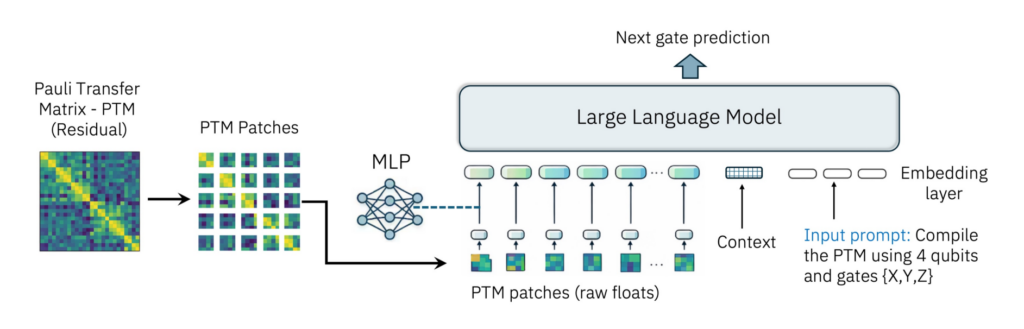
MIT and IBM Project Quantum Unity Operators into Language Model Latent Spaces for Multimodal Circuit Synthesis
MIT and IBM researchers have developed a multimodal framework that integrates quantum unitary operators into a large language model’s (LLM) latent space. By translating quantum operations as “visual inputs” into the LLM, the system can reason, compile, and manipulate quantum states using natural language instructions. This approach, which processes Pauli Transfer Matrices as image grids, achieves high compilation success rates and allows for language-conditioned circuit synthesis, outperforming traditional quantum compilation methods.
-
ETH Zurich Combines Superconducting Qubits with Mechanical Resonators to Build Vibrating Quantum RAM
ETH Zurich researchers have developed a new quantum computing architecture that uses mechanical resonators for quantum RAM, separating processing from memory. This design stores quantum information as acoustic vibrations, offering increased on-chip storage, extended coherence times, and a smaller physical footprint. The platform has been validated with foundational quantum algorithms like the Quantum Fourier Transform, demonstrating its potential for scalable, general-purpose quantum computation.
-
Google and Fraunhofer Launch Global Calls for Early Fault-Tolerant Algorithms and Enterprise Use Cases
Google Research and Fraunhofer INQUBATOR have launched global calls for proposals in early fault-tolerant quantum computing. Google’s program, open to academic institutions until August 7, 2026, focuses on novel algorithms and applications for limited-qubit systems, offering grants up to $100,000. Fraunhofer’s call, closing August 31, 2026, targets industry-specific use cases, pairing commercial enterprises with research consortia to develop and test quantum solutions for real-world economic challenges.
-
Who’s News: Strategic Appointments at Photonic, Aliro Quantum, Florida Atlantic University, QuSecure, Quantum Elements, and QAI Ventures
Photonic Inc. appointed Orlagh Neary as CMO and Briony Shipman as VP, Global Government Affairs. Aliro Quantum named Mohiuddin Muneeb Khan as SVP of Engineering, and Florida Atlantic University appointed Robert Loredo as Executive Director of its Center for Quantum Technologies. QuSecure Inc. added Rear Admiral Doug Small to its Federal Advisory Board, Quantum Elements hired Ben Pressley as CRO, and Lisa Schroeder became Managing Director at QAI Ventures Singapore.
-
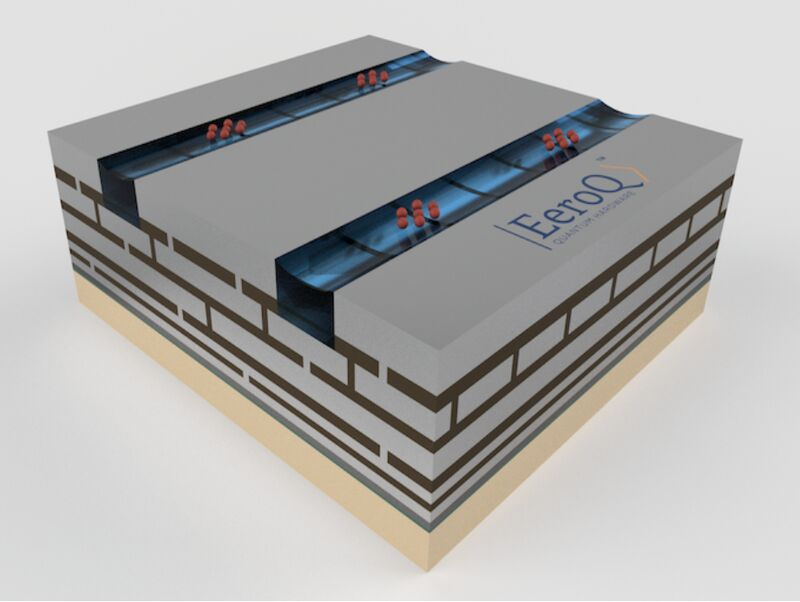
EeroQ Validates CMOS-Controlled Electron Shuttling on Superfluid Helium for All-to-All Qubit Routing
EeroQ has successfully demonstrated a novel method for quantum computing using electron shuttling on superfluid helium, controlled by a commercial silicon architecture. This technology, detailed in Physical Review Applied, allows for lossless, long-distance transport of electron packets, overcoming limitations of solid-state systems. Their “Wonder Lake” chip utilizes a Charge-Coupled Device (CCD) architecture with 14 control lines to manage 128 channels, enabling all-to-all qubit connectivity and offering a scalable solution for quantum hardware development using existing semiconductor manufacturing processes.
-
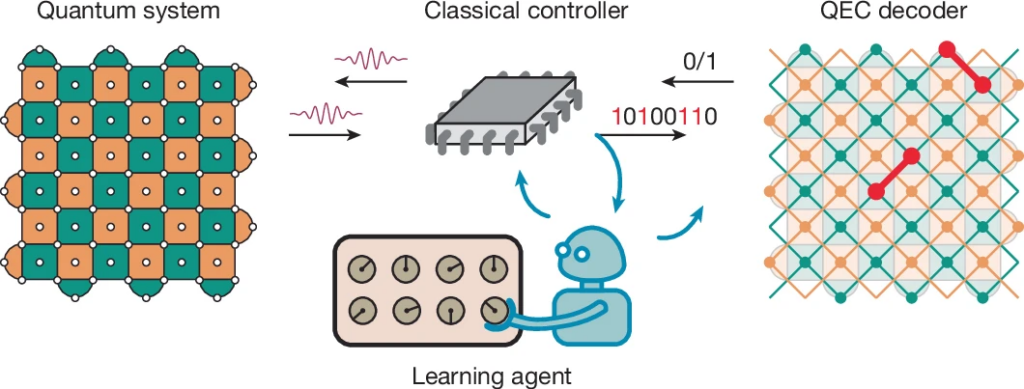
Google Research Stabilizes “Willow” Quantum Processor Using Continuous Reinforcement Learning Control Layers
Google Quantum AI has developed a novel hardware-control framework called “Willow” that uses reinforcement learning (RL) to stabilize logical qubits during continuous operation. This system addresses the challenge of environmental drift in quantum computing by allowing an autonomous RL agent to continuously learn from errors, eliminating the need for manual calibration. The Willow processor, utilizing distance-5 and distance-7 surface codes and a distance-5 color code, demonstrated significant improvements in logical stability and error rate suppression, with simulations indicating predictable scaling for future fault-tolerant quantum computers.
-
NordLocker Deploys “Project Renaissance” Architecture to Implement Atomic-Journaling Encrypted Cloud Platform
NordLocker has launched “Project Renaissance,” a major overhaul of its cloud storage architecture, transitioning to a decentralized, append-only journaling engine. This new system replaces their old monolithic file trees with an atomic metadata logging model, significantly improving upload/download speeds and reducing multi-file processing latency. The update also enables granular sharing, root-level uploads, and prepares their cryptography for post-quantum security.
-
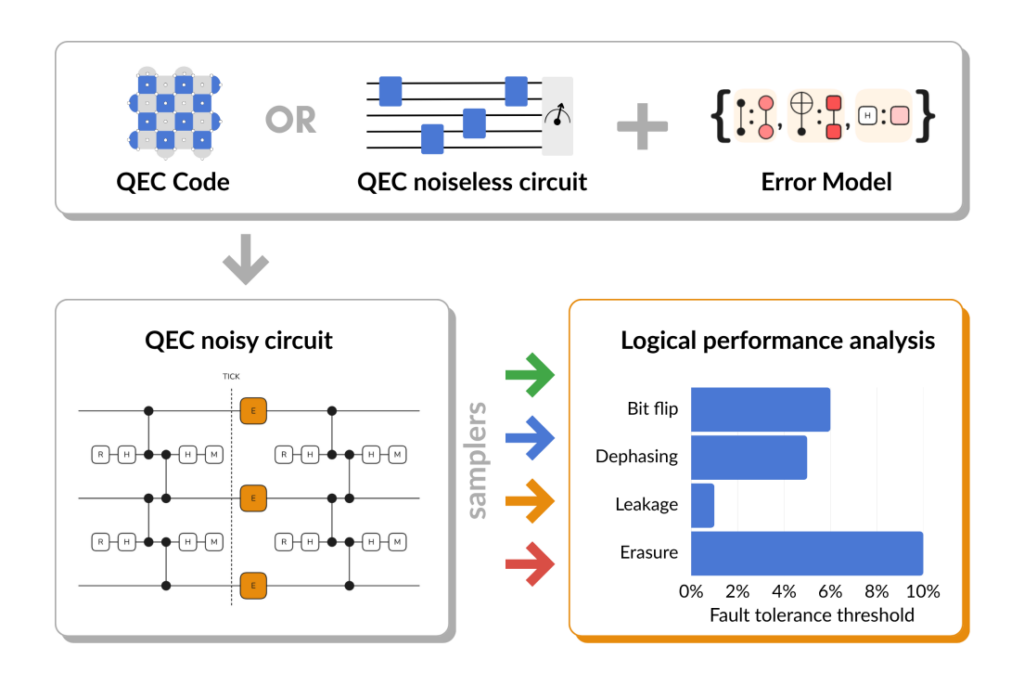
QC Design Publishes Unified “Plaquette” Framework to Automate Hardware-Aware Fault-Tolerant Simulation
QC Design has introduced Plaquette, a new framework for fault-tolerant quantum computer simulation that moves beyond idealized error models to account for real-world physical qubit imperfections like multi-state leakage and coherent over-rotations. This platform offers hardware-agnostic automation and a multi-sampler compilation approach, enabling accurate prediction of logical error rates and efficient hardware design for various quantum computing architectures.
-
SEALSQ and Quobly Execute $5M Commercial Accord to Embed Post-Quantum Cryptography in Silicon Quantum Processors
SEALSQ and Quobly have signed a $5 million agreement to integrate post-quantum cryptography into Quobly’s silicon quantum processors. This partnership focuses on securing the classical and mixed-signal subsystems that drive the quantum core, using Cryo CMOS ASICs, Hardware-Based Roots of Trust, and Quantum-Resistant PKI. The collaboration aims to launch Quobly’s “Alloy Pioneer” quantum computer by the end of 2026, establishing a secure European deep-tech supply chain.
-
BTQ Technologies and ICTK Finalize Architecture for Next-Generation Post-Quantum Security Chip
BTQ Technologies and ICTK have finalized the design for a next-generation hybrid security processor, integrating post-quantum cryptography with physical hardware-rooted identity. This chip, featuring BTQ’s Quantum Compute-in-Memory (QCIM) and ICTK’s VIA PUF™ technology, aims to provide crypto-agile, low-latency security for edge computing and IoT devices. Commercialization will target federal infrastructure and regulated markets, with test chip shipments expected by late 2026.
-
-
-
SAS Unveils Quantum Lab on Viya Platform, Combining Emulated Workloads with a “Physics-First” Auditing Approach
SAS has launched Quantum Lab on its Viya platform, a cloud-native development and simulation environment for quantum computing. It emphasizes a “classical-first” auditing approach, using classical infrastructure to verify and auto-tune quantum algorithms before deployment on physical quantum processors. This strategy aims to overcome adoption barriers related to uncertain real-world use cases and high hardware costs, offering significant speedup and cost reduction in quantum algorithm development.
-
Shanghai Quantum Sensing Intelligence Secures Tens of Millions of Yuan in Angel Round to Scale Photonic Sensing Infrastructure
Shanghai Quantum Sensing Intelligence, a deep-tech hardware developer, secured tens of millions of yuan in an angel funding round led by Futeng Capital. Specializing in room-temperature quantum precision measurement devices, the company is commercializing photonic quantum enhancement technology for high-precision navigation and trace gas monitoring, with plans to integrate quantum sensing with Edge Quantum AI.
-
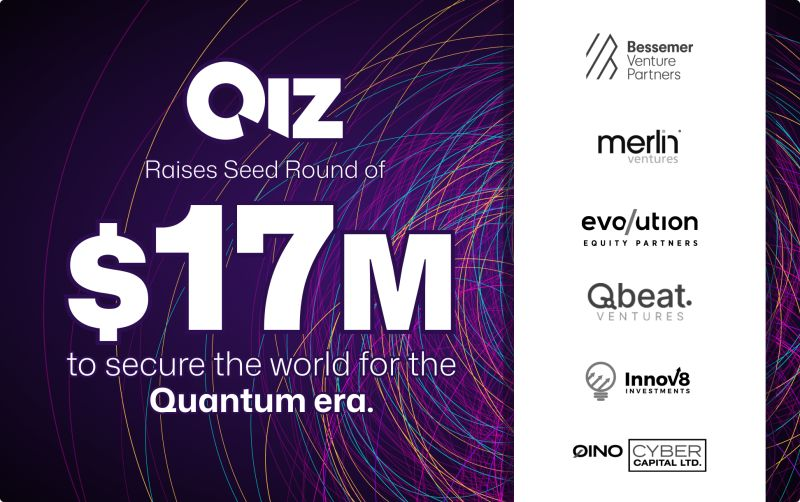
QIZ Security Raises $17M Seed Round to Scale Enterprise Cryptographic Posture Platforms
QIZ Security has successfully raised $17 million in seed funding to advance its unified cryptographic governance and discovery platform. This investment will fuel product enhancements and market expansion, addressing the urgent need for enterprises to prepare for “Q-Day” and the challenges of post-quantum cryptography. The company’s platform offers an agentless, API-based solution for real-time cryptographic asset discovery and vulnerability remediation, with strategic partnerships to ensure crypto-agility for its clients.
-
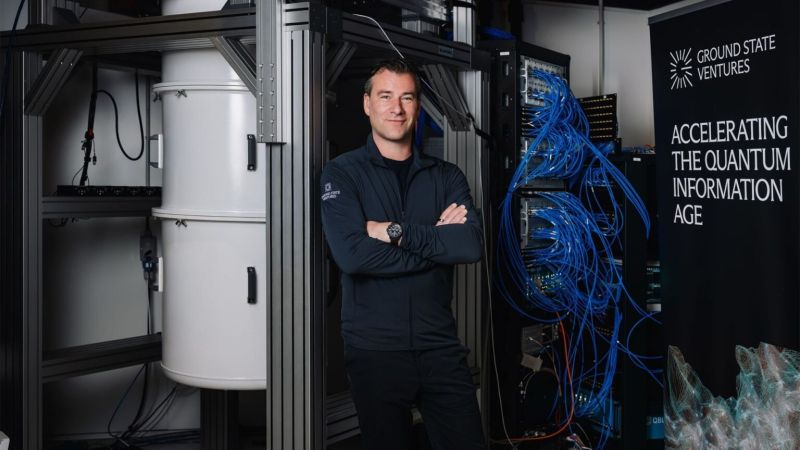
Amsterdam’s QDNL Participations Rebrands as Ground State Ventures, Secures Over €75.2M for Early-Stage Quantum Fund
QDNL Participations has rebranded as Ground State Ventures, successfully securing over €75.2 million for its early-stage quantum technology fund, exceeding its initial target. This rebrand signifies a strategic shift from localized Dutch investments to a broader, cross-border focus across Europe and the US, reinforced by the addition of Chad Rigetti and a team of physics PhDs. The fund’s portfolio, including companies like QuantWare and Sygaldry Technologies, has achieved a cumulative valuation of $1.3 billion within 15 months.
-
QuTech Launches Open-Architecture Tuna-17 Superconducting Processor on Quantum Inspire Cloud Platform
QuTech has launched Tuna-17, a 17-superconducting qubit processor accessible globally via the Quantum Inspire cloud platform. This open-architecture system, developed in collaboration with TU Delft and TNO, provides free access for researchers and educators, supporting quantum error correction and integrated with open-source software like Qiskit and PennyLane. It represents a significant step in establishing European technological sovereignty in quantum computing and training a skilled quantum workforce.
-
Xanadu Establishes New York Operations Hub to Expand Photonic Hardware Manufacturing Footprint
Xanadu Quantum Technologies has expanded its U.S. operations with a new office in Albany, New York, strategically located within the semiconductor research and packaging corridor. This move supports the company’s focus on manufacturing room-temperature fault-tolerant photonic quantum processors and aims to leverage existing commercial semiconductor foundries for mass production. With increased workforce and supply chain partnerships, Xanadu plans to accelerate the commercialization of its Aurora system architecture for utility-scale quantum computation.
-
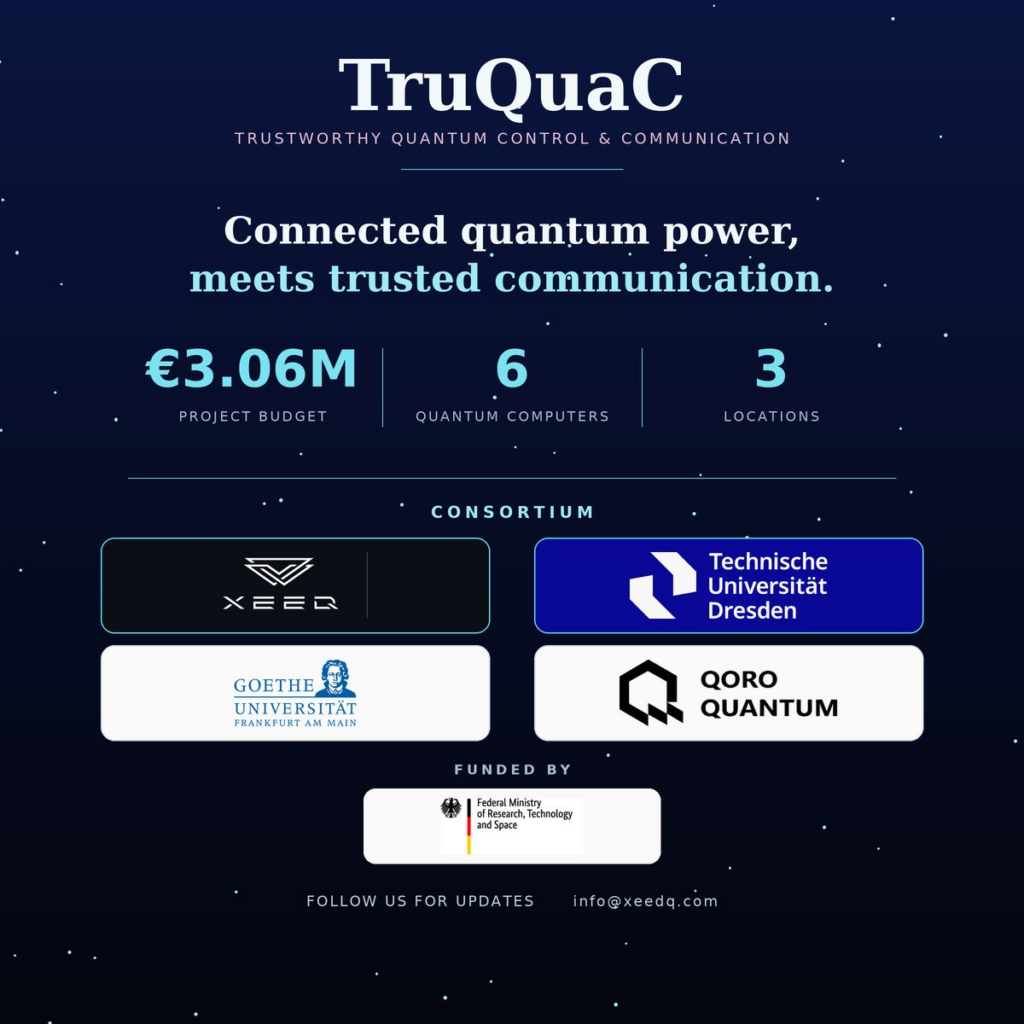
Qoro Quantum and XeedQ Join €3M ($3.5M USD) BMFTR-Funded TruQuaC Consortium for Distributed Quantum Orchestration
The TruQuaC consortium, funded by a €2.46 million grant from the German Federal Ministry for Research, Technology, and Space (BMFTR), is launching a 36-month project (June 2026 – May 2029) to develop a secure control-plane and gateway architecture for distributed quantum systems. Led by XeedQ GmbH and Qoro Quantum, with academic support from TU Dresden and Goethe University Frankfurt, the project aims to integrate isolated quantum nodes into classical communication networks, fostering Germany’s technological sovereignty and cybersecurity against quantum threats.
-
Quantum Rings’ Open Quantum Product Now Available on the Qbraid Platform
Quantum Rings has partnered with qBraid to integrate their Open Quantum platform into qBraid Lab, offering developers and researchers free, subsidized access to various QPUs. This collaboration simplifies access to quantum computing, allowing users to run programs across different quantum architectures with minimal code changes and providing financial incentives for new and existing users.
-
Diraq and imec Demonstrate Eight-Qubit Linear Array Fabricated on 300 mm CMOS Silicon Foundries
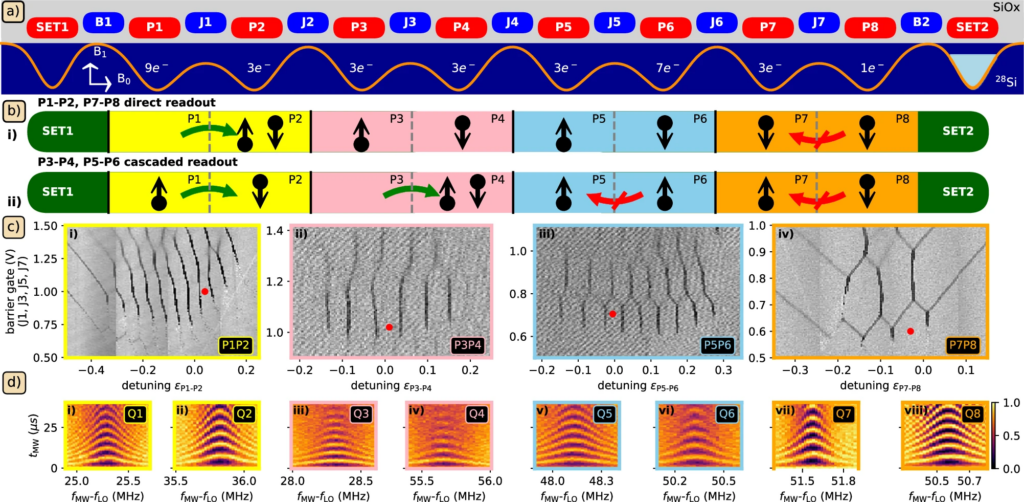
Diraq and imec have successfully fabricated and demonstrated an eight-qubit linear array on a 300 mm CMOS silicon foundry line, marking a significant advancement in silicon-based quantum computing. This achievement, detailed in Nature Communications, showcases the ability to scale quantum dot configurations without sacrificing coherence or control, utilizing industry-standard manufacturing processes. The device exhibits impressive coherence times and a compact readout architecture, paving the way for Diraq’s commercial roadmap to develop highly scalable quantum processors.
-
QUDORA and QAI Partner to Integrate Trapped-Ion Quantum Computer into South Korean AI Data Center
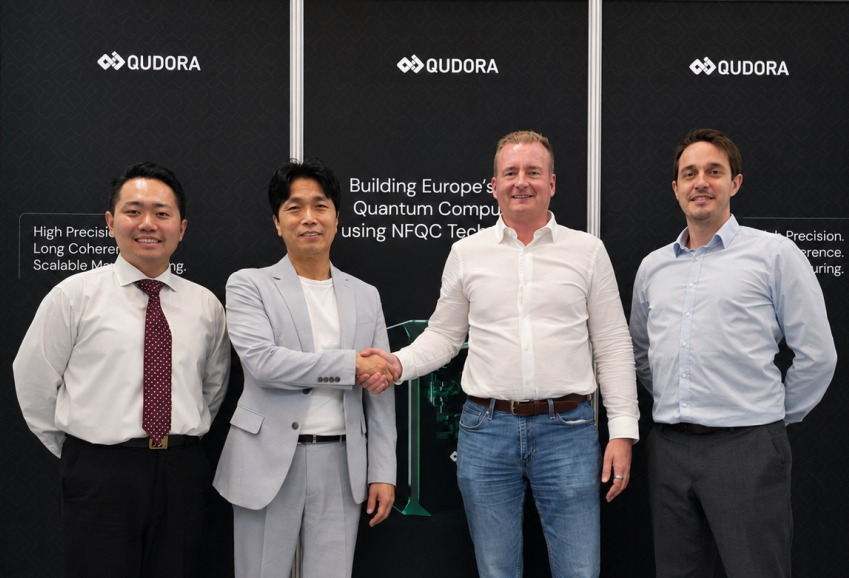
QUDORA and QAI have partnered to integrate QUDORA’s trapped-ion quantum computers into QAI’s AI data centers in South Korea, aiming to create a co-processing testbed for dynamic workload bouncing between GPUs and quantum nodes. This collaboration leverages QUDORA’s laser-free Near Field Quantum Control technology and QAI’s algorithmic libraries for applications in finance, transport, and pharmaceutical discovery, with plans for expansion across the Asia-Pacific markets.
-
QuantumDiamonds Expands Semiconductor Failure Analysis Footprint via TUM Partnership and South Korean Distribution Accord
In February 2026, QuantumDiamonds GmbH expanded its market presence by partnering with the Technical University of Munich (TUM) to optimize quantum nitrogen-vacancy (NV) metrology for AI chips, and by signing a Memorandum of Understanding with Woowon Technologies Co., Ltd. for the distribution of its 3D magnetic current imaging machinery in South Korea. These initiatives aim to enhance failure analysis in advanced AI processors and penetrate the East Asian memory hardware ecosystem with their QD m.1 inspection system.
-
QuantumDiamonds Secures €91M ($104.1M USD) to Scale Nitrogen-Vacancy Diamond Semiconductor Inspection Systems
QuantumDiamonds has secured €91 million ($104.1 million USD) in funding, combining a €15 million Series A round and €76 million in manufacturing grants, to mass-produce its quantum-based semiconductor inspection systems. This funding will enable the company to scale its nitrogen-vacancy diamond technology, which offers non-destructive 3D quantum magnetic current microscopy to detect hidden defects in advanced chip architectures, and expand its global operations. The company plans to build a €152 million production facility in Munich and double its engineering workforce to meet increasing demand from the world’s top semiconductor manufacturers.
-
-
-
QAI Ventures Launches Inaugural Singapore Quantum Accelerator Cohort to Anchor APAC Expansion
QAI Ventures has launched its first Singapore Quantum Accelerator cohort, partnering with Enterprise Singapore to boost early-stage quantum and advanced computing ventures in the APAC region. The program offers SGD 300,000 to each of the four selected startups, along with workspace, market-entry coaching, and access to quantum hardware from IonQ, QuEra, and Fujitsu. The five-month curriculum, running from July to October 2026, culminates in a Demo Day for investors.
-