
News
Company, funding, product and policy news from across the quantum industry, as it happens.
-
-
SkyWater Technology and SQC Partner to Advance Hybrid Quantum-Classical Computing
SkyWater Technology and Silicon Quantum Computing (SQC) have partnered to accelerate the commercialization of hybrid quantum-classical computing. The collaboration integrates SQC’s atomically engineered QPUs with SkyWater’s secure U.S. production line, focusing on high-volume fabrication and advanced packaging to unlock higher performance and efficiency in the emerging “future compute” stack.
-
Alice & Bob Recognized in Sifted’s ‘Future 50’ List for Growth in European Quantum Sector
Alice & Bob, a French quantum computing company, is the only quantum computing company recognized in Sifted’s ‘Future 50’ list of Europe’s top-performing emerging startups. The ranking is based on a calculated Compound Annual Growth Rate (CAGR) of 417.38%, reflecting the company's significant expansion and its push to deliver a utility-scale quantum computer by 2030 using its proprietary cat-qubit chips.
-
QSimulate Raises New Financing and Launches QUELO v2.3 for Quantum-Powered Drug Discovery
QSimulate has raised new seed financing, bringing its total funding to over $11 million, and simultaneously launched QUELO v2.3, the latest generation of its quantum-powered simulation platform. QUELO v2.3 introduces enhanced sampling techniques for larger molecules and is claimed to perform predictive molecular simulations 1,000x faster than traditional methods for drug discovery.
-
IBM and Cisco Announce Collaboration to Design Fault-Tolerant Quantum Computer Network
IBM and Cisco have announced an intention to collaborate on the foundational architecture for networked distributed quantum computing, targeting realization as soon as the early 2030s. The collaboration will combine IBM's hardware expertise with Cisco's networking innovations to scale large-scale, fault-tolerant quantum computers, including the development of an IBM Quantum Networking Unit (QNU) and microwave-optical transducers.
-
-
-
Classiq and BQP Demonstrate Hybrid Quantum Workflow for Scalable CFD Simulation on NVIDIA CUDA-Q
Classiq and BQP have demonstrated a hybrid quantum workflow for scalable Computational Fluid Dynamics (CFD) simulation, integrating Classiq’s automated synthesis engine, BQP’s Variational Quantum Linear Solver (VQLS) implementation, and the NVIDIA CUDA-Q platform. The collaboration successfully reduced circuit size and trainable parameters to strengthen the viability of hybrid methods for industrial CFD and digital twin applications.
-
DOE and Fermilab Partner with Qblox to Commercialize QICK Quantum Control Platform in U.S.
The DOE and Fermilab have partnered with Qblox to accelerate the commercialization and distribution of the open-source Quantum Instrumentation Control Kit (QICK) in the United States. Qblox will coordinate QICK manufacturing and supply chain operations domestically, transitioning the foundational platform from research to production to strengthen U.S. quantum research and workforce development capabilities.
-
-
-
Jülich Supercomputing Centre Launches Dual-Path Hybrid Quantum Strategy with Pasqal and JUPITER Exascale Supercomputer
The Jülich Supercomputing Centre (JSC), under the EuroHPC HPCQS project, has inaugurated two Pasqal neutral-atom quantum processors (Jade and Ruby) for hybrid HPC integration. Concurrently, JSC and NVIDIA set a new record by simulating a 50-qubit universal quantum computer on the JUPITER exascale supercomputer, underscoring the shift to practical quantum resources for complex problems.
-
QSolid Project Integrates 10-Qubit Prototype Quantum Computer into Jülich Supercomputing Centre’s JUNIQ Infrastructure
The QSolid consortium successfully integrated a 10-qubit prototype quantum computer into the Jülich Supercomputing Centre’s (JSC) JUNIQ infrastructure. The €76.3 million German project, supported by partners like Qruise and Eviden, establishes a blueprint for a national quantum computer, accessible via the JuDoor cloud platform.
-
SandboxAQ Partners with DoW’s Defense Innovation Unit to Advance Quantum-Enabled Magnetic Navigation
SandboxAQ has joined the Department of War’s (DoW) Defense Innovation Unit (DIU) Transition of Quantum Sensing (TQS) program to advance quantum-enabled Magnetic Navigation (MagNav) technologies. The company will deploy its AQNav software, which uses quantum sensors and AI to provide PNT resilience where GNSS (GPS) signals are unreliable or denied.
-
NTT and OptQC Sign Collaboration Agreement with Goal of 1 Million Optical Qubits by 2030
NTT and OptQC Corp. have signed a collaboration agreement to accelerate the development of scalable and highly reliable optical quantum computers. The partnership, leveraging NTT’s advanced optical communication technologies, has the ambitious goal of achieving one million qubits and establishing error-tolerant technologies by 2030.
-
Amazon Braket Integrates AQT IBEX Q1, Securing First EU-Hosted Trapped-Ion System
Amazon Braket has integrated AQT’s IBEX Q1 trapped-ion quantum computer, marking the first time an EU-hosted trapped-ion system is available on a major cloud provider. The 12-qubit system, located in Austria, features all-to-all connectivity and is engineered for practical deployment at room temperature, supporting enterprise customers with a Quantum Volume of 128 (2⁷).
-
NVIDIA Announces Additional Support for the NVQLink Interconnect Technology
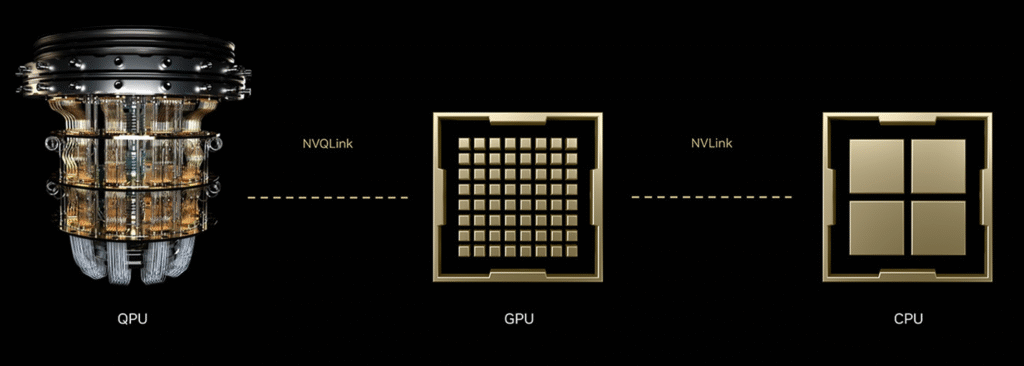
NVIDIA’s NVQLink, an open interconnect for hybrid quantum–classical supercomputers, has now been adopted by 17 global supercomputing centers across Asia, Europe, and the Middle East, in addition to 9 U.S. national laboratories. The technology delivers a 400 Gb/s link with less than 4 μs latency, enabling Quantinuum to demonstrate the first real-time use of a scalable decoder for qLDPC codes.
-
Bridgewater State University Awarded $1.1 Million Grant to Advance Photonics and Quantum Research
Bridgewater State University (BSU) has been awarded a $1.1 million grant from the Healey-Driscoll Administration and the Northeast Microelectronics Coalition (NEMC) to expand its Visible Spectrum Characterization and Packaging Hub (VISPACK). The funding will provide advanced equipment to train undergraduate students on industry standards for reliable photonics technology and quantum computing packaging, strengthening the technical workforce pipeline in Massachusetts.
-
-
-
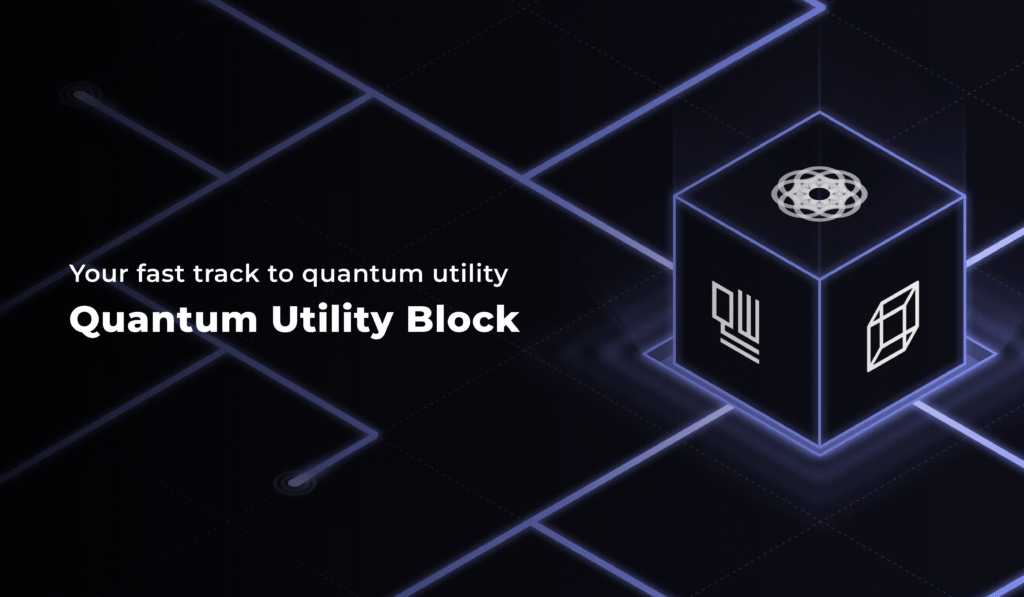
QuantWare, Q-CTRL, and Qblox Launch QUB Reference Architecture for Quantum Adoption
Quantum Computing Inc. (QCi) will debut Neurawave, a photonics-based reservoir computing system, at the SuperCompute25 (SC25) conference. The compact, room-temperature system uses a standard PCIe interface and is designed for edge-AI use cases like signal processing and time-series forecasting, leveraging optical computing with digital electronics for energy-efficient performance.
-
Quantum Computing Inc. to Debut Neurawave Photonics-Based Reservoir Computer at SC25
Quantum Computing Inc. (QCi) will debut Neurawave, a photonics-based reservoir computing system, at the SuperCompute25 (SC25) conference. The compact, room-temperature system uses a standard PCIe interface and is designed for edge-AI use cases like signal processing and time-series forecasting, leveraging optical computing with digital electronics for energy-efficient performance.
-
IonQ Announces Intent to Acquire Skyloom Global to Accelerate Quantum Networking and Sensing Infrastructure
IonQ has announced a definitive agreement to acquire Skyloom Global, a U.S.-based provider of high-performance optical communications infrastructure. The acquisition is intended to accelerate IonQ’s full-stack quantum-secure communications and distributed quantum entanglement capabilities by integrating Skyloom’s Optical Communications Terminals (OCTs), which are expected to boost data throughput by up to 500%.
-
QuEra and Dell Technologies Partner to Demonstrate Quantum-Classical Integration at SC25
QuEra Computing and Dell Technologies have partnered to demonstrate hybrid quantum–classical computing (HQCC) at SC25. The proof-of-concept integrates QuEra’s neutral-atom system with Dell HPC infrastructure and the Dell Quantum Intelligent Orchestrator (QIO), showcasing qubit shuttling and parallel gate execution for a scalable HQCC pathway.
-
Quobly and QPerfect Launch GPU-Accelerated QLEO Emulator with NVIDIA CUDA-Q Compatibility
Quobly and QPerfect have launched a major upgrade to their quantum emulator, QLEO, introducing GPU acceleration and full NVIDIA CUDA-Q compatibility. The new system achieves over 100 times speedups compared to CPU-only simulation, accelerating the development of hybrid quantum-classical workflows for quantum chemistry, optimization, and quantitative finance.
-
-
-
UIUC Grainger Engineering Awarded $4.8 Million by AFOSR to Investigate Superconducting Qubit Defects
UIUC Grainger Engineering has received a $4.8 million award from the AFOSR and ARO/LPS to investigate the origins of Two-Level System (TLS) defects in superconducting quantum hardware. The research, led by Professor Angela Kou, employs a systematic loop of growth, characterization, and theory to provide a "recipe for reducing the occurrence of TLS defects."
-
Who’s News: Leadership Updates at IonQ, IQM, Quantum Fabrix, NVIDIA, Quantum Elements and QuSecure
In a significant round of leadership updates, IonQ appointed Mihir Bhaskar as SVP of Global R&D and Gen. John W. “Jay” Raymond ("Father of the Space Force") to its Board. NVIDIA hired Krysta Svore as VP of Applied Research—Quantum Computing (formerly Microsoft), while Quantum Elements added Dr. Chad Rigetti (founder of Rigetti Computing) to its board. IQM named Claudia Nemat Chairwoman of its Quantum Council, and Quantum Fabrix (QFX) appointed Dr. Timothy Ballance as CEO.
-
SBQuantum Wins Second ESA Contract for Quantum Diamond Magnetometer Prototype
SBQuantum has won its second ESA contract, valued at nearly $1 million USD, to deliver an advanced prototype of its diamond-based quantum magnetometer sensor for Earth Observation (EO) missions. The funding will support enhanced capabilities, including sub 100 Picotesla sensitivity and 400 Hz bandwidth, which are necessary for monitoring critical climate data.
-
Classiq Secures Strategic Funding from AMD, Qualcomm Ventures, and IonQ
Classiq has secured a strategic funding up-round of tens of millions of dollars, bringing its cumulative funding to over $200 million. The round included major strategic investors AMD Ventures, Qualcomm Ventures, and IonQ, signaling a focus on heterogeneous computing and accelerating Classiq’s global Go-To-Market presence for its optimized quantum circuit synthesis technology.
-
-
-
Haiqu Demonstrates High-Dimensional Quantum Embedding for Anomaly Detection on IBM Quantum Heron
Haiqu has demonstrated a proprietary technique for high-dimensional quantum embedding for anomaly detection on an IBM Quantum Heron processor. The method successfully loaded over 500 features into quantum circuits on 128 qubits, achieving an F1 score of 0.96 and outperforming a classical baseline, with the quantum preprocessing time reportedly faster than classical simulation.
-
IQM Launches Halocene Product Line to Scale Quantum Error Correction Research
IQM Quantum Computers has launched IQM Halocene, a new product line of open and modular on-premises quantum computers designed to accelerate Quantum Error Correction (QEC) research. The first release will be a 150-qubit system with a target 99.7% physical two-qubit gate fidelity, commercially available by the end of 2026. The system includes an open QEC stack, a modular decoder architecture, and supports NVIDIA NVQLink, with future models planned to exceed 1,000 qubits.
-
Microsoft Opens Largest Quantum Lab Globally in Denmark to Advance Topological Qubit Fabrication
Microsoft has unveiled the expansion of its quantum facility in Lyngby, Denmark, now the company’s largest quantum site globally, with a total investment exceeding DKK 1 billion ($156 million USD). The facility is dedicated to accelerating topological qubit fabrication, providing the capacity to fully fabricate the core of Microsoft’s “Majorana 1” quantum processing unit, a key step toward achieving scalable, fault-tolerant quantum computing.
-