
News
Company, funding, product and policy news from across the quantum industry, as it happens.
-
-
IonQ Completes Oxford Ionics Acquisition, Announces Intent to Acquire Vector Atomic for Quantum Sensing
IonQ has completed its acquisition of Oxford Ionics, while also announcing its intent to acquire Vector Atomic, a company specializing in quantum sensors. The acquisitions are intended to accelerate IonQ’s technology roadmap, strengthen its presence in Europe, and expand its entry into the quantum sensing market for national security applications, with Vector Atomic already contributing to the U.S. Department of Defense's X-37B project.
-
Infleqtion Unveils New Architecture to Achieve 1,000 Logical Qubits by 2030
Infleqtion has unveiled a new architecture for its Sqale quantum computer and an updated roadmap, with the goal of delivering a fault-tolerant system with over 1,000 logical qubits by 2030. The company has already achieved 12 logical qubits with error detection and successfully executed a variant of Shor’s algorithm on them, a milestone detailed in a preprint on arXiv.
-
EPB Quantum Adds Hybrid Computing Capabilities with NVIDIA and ORNL for Grid Optimization
EPB Quantum has added hybrid computing capabilities with the installation of an NVIDIA DGX system at its Quantum Center, an agreement with Oak Ridge National Laboratory (ORNL). The center, which also has an IonQ Forte Enterprise quantum computer, will use the combined platform to explore solutions for optimizing power grids and to serve as a national resource for commercial applications.
-
Riverlane Launches Deltakit: An Open-Source QEC SDK for Real-Time Decoding
Riverlane has launched Deltakit, an open-source software platform designed to accelerate the adoption of Quantum Error Correction (QEC). The platform includes an SDK and the Deltakit Textbook, providing practitioners with resources to generate QEC circuits, simulate execution, and run real-time decoding experiments.
-
Maryland Quantum-Thermodynamics Hub Receives $5 Million in State and Private Funding
The Maryland Quantum-Thermodynamics Hub at the University of Maryland (UMD) has received over $5 million in funding from a combination of state support, the John Templeton Foundation, and private companies like Fidelity Investments and Normal Computing. The new capital will support the hub’s research into how quantum features influence thermodynamic processes, which is also relevant to error correction in quantum computing.
-
QuSecure Launches QuProtect R3, an Integrated PQC Platform for Encryption Modernization
QuSecure has launched QuProtect R3, a fully integrated Post-Quantum Cryptography (PQC) platform designed to simplify encryption modernization. The platform features three modules—Reconnaissance, Resilience, and Reporting—to provide visibility into vulnerable encryption, fortify networks, and streamline compliance with standards like CNSA 2.0.
-
OQC, Digital Realty, and NVIDIA Launch First Quantum-AI Data Centre in New York City
OQC, Digital Realty, and NVIDIA have launched the first Quantum-AI Data Centre in New York City as a flagship initiative of the UK–US Tech Trade Partnership. The center integrates OQC’s GENESIS quantum computer with NVIDIA GH200 Grace Hopper Superchips to support hybrid quantum-AI workloads and enterprise adoption.
-
-
-
Bluefors to Procure Lunar Helium-3 from Interlune for Quantum Cryogenic Systems
Bluefors, a manufacturer of cryogenic cooling systems for quantum technology, has agreed to purchase up to ten thousand liters of helium-3 annually from Interlune, a space resource company. The deliveries are scheduled to take place from 2028 to 2037. This partnership is aimed at establishing a supply chain for helium-3, which is a critical element for the development and operation of quantum computers.
-
PQShield Selected as NCSC Official PQC Consultant for UK Critical Infrastructure
PQShield has been selected by the UK’s National Cyber Security Centre (NCSC) for a pilot Assured Cyber Security Consultancy (ACSC) scheme. The company will provide guidance on Post-Quantum Cryptography (PQC) migration for critical national infrastructure (CNI), with an NCSC deadline of 2031 for the highest-priority upgrades.
-
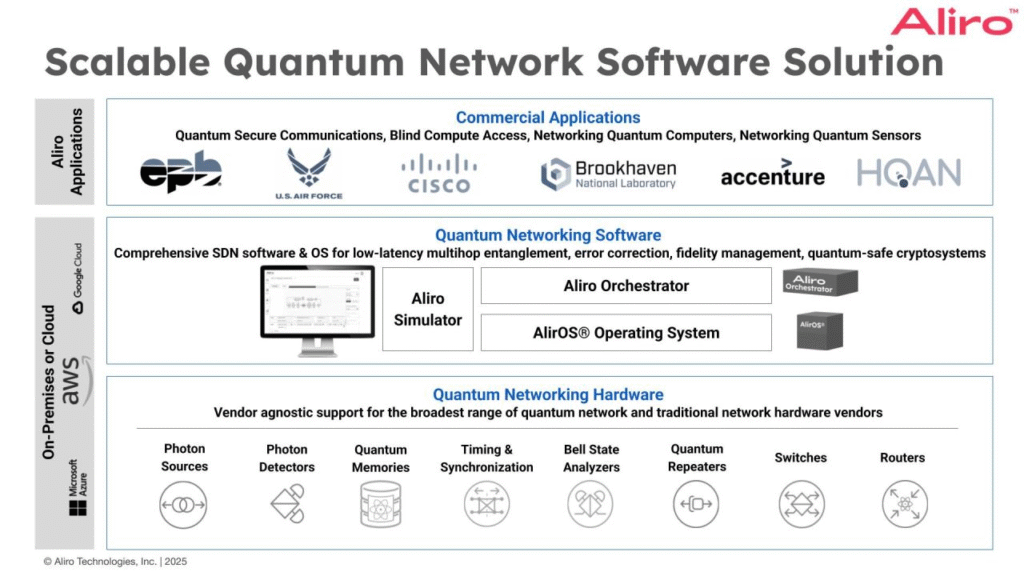
Aliro Unifies Multi-Vendor Quantum Networking with Support for Over 50 Devices
Aliro, a quantum networking software company, has announced its software stack now supports over 50 quantum network devices, a milestone for a scalable quantum internet. The vendor-agnostic software, which enables entanglement-based key generation, interoperates with hardware from Single Quantum, Cisco, Qunnect, and others to prevent vendor lock-in and accelerate network deployments.
-
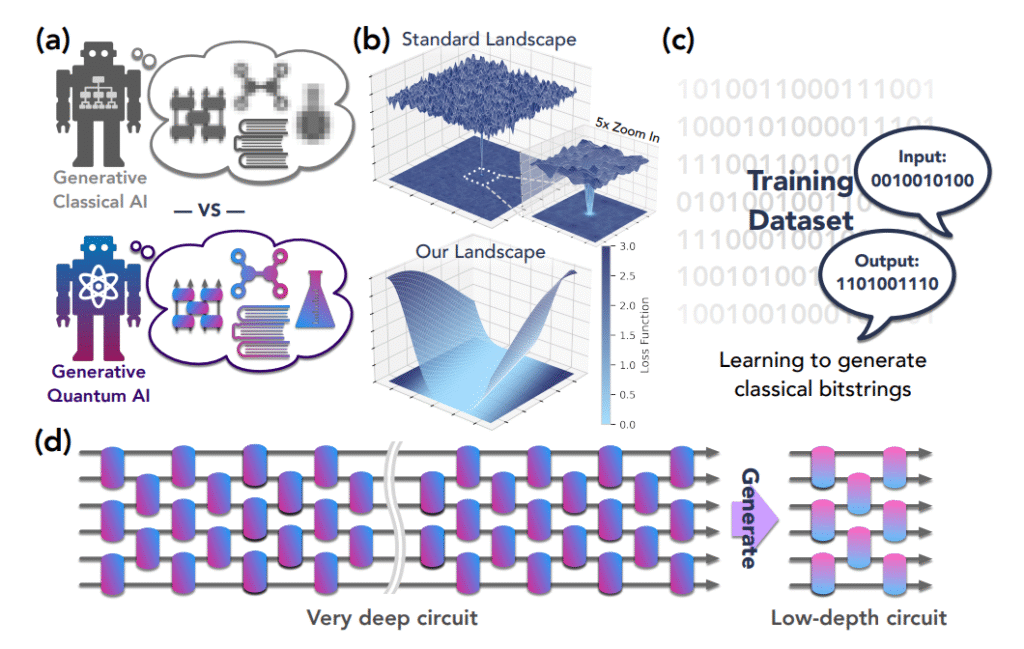
Google Quantum AI Researchers Demonstrate Generative Quantum Advantage for Classical and Quantum Problems
Researchers from Google Quantum AI, the California Institute of Technology, and Purdue University have published a paper demonstrating generative quantum advantage for classical and quantum problems. Using a 68-qubit superconducting processor, the team trained quantum models that are difficult to simulate classically, which is a significant step in quantum machine learning.
-
-
-
Ueno Bank Implements Quantum-Resistant Banking with SignQuantum and QANplatform
Ueno Bank, Paraguay’s largest bank, has implemented a quantum-resistant solution from SignQuantum and QANplatform to secure its digital operations. The solution uses a quantum-resistant digital signature and blockchain technology to provide immutable proof of timing for digitally signed documents, protecting them from future quantum threats.
-
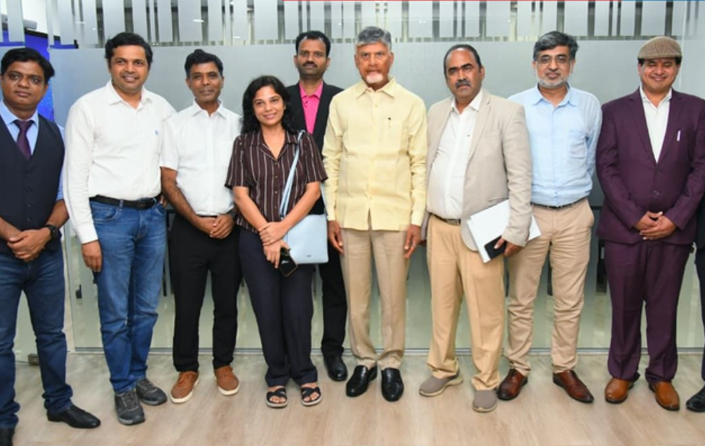
Andhra Pradesh Government Announces First Quantum Reference and Cryogenic Facilities in Amaravati
The Andhra Pradesh government has announced India’s first Quantum Reference Facility, with a ₹40 crore ($4.5 million USD) investment, and Amber Enterprises will establish the first Quantum Cryogenic Components Facility with a ₹200 crore ($23 million USD) investment. Both facilities will be located in the Amaravati Quantum Valley (AQV), aiming to strengthen India’s domestic quantum hardware ecosystem.
-
Quantum Motion Delivers Full-Stack Silicon CMOS Quantum Computer to UK’s NQCC
Quantum Motion has delivered a full-stack quantum computer built with mass-manufacturable 300mm silicon CMOS wafer technology to the UK National Quantum Computing Centre (NQCC). The system, the first silicon spin-qubit computer installed at the Centre, uses a scalable tile architecture designed for expansion to millions of qubits per QPU.
-
QuantWare and C-DAC to Co-Develop Indigenous Superconducting Quantum Hardware and Cryogenic Electronics
QuantWare and India’s Centre for Development of Advanced Computing (C-DAC) have signed an LoI to co-develop indigenous superconducting quantum hardware and cryogenic electronics. The partnership, which aligns with C-DAC's Hybrid HPC-Quantum Mission, combines QuantWare’s expertise in superconducting processors with C-DAC’s R&D capabilities to build a robust quantum ecosystem in India.
-
-
-
IonQ Announces Regulatory Approval for Oxford Ionics Acquisition and Provides a Roadmap Update at Its 2025 Analyst Day Meeting
IonQ held is 2025 Analyst Day presentation and provided updates on the approval of its Oxford Ionics acquisition, its technology development status, roadmap, customer engagements, finances, and other items .
-
Unitary Foundation Launches 2025 Quantum Open Source Software Survey
The Unitary Foundation has launched its 2025 Quantum Open Source Software (QOSS) Survey, an annual initiative to collect data on the quantum open-source software community. The survey, which will be open until October 3, 2025, aims to provide a public resource for the field’s tools, research, and resources.
-
-
-
qBraid Secures $300K NSF Grant to Advance Hardware-Agnostic SDK for Quantum Software
qBraid has secured a $300,000 NSF grant to advance its qBraid-SDK, a hardware-agnostic, open-source framework for quantum software. The funding from the NSF’s POSE program will support the development of a graph-based transpiler and expand the SDK’s capabilities to unify how developers interact with over 25 quantum devices and more than 20 frameworks.
-
NSF Invests $16 Million in Four Teams to Design National Quantum Virtual Laboratory Infrastructure
The NSF is investing $16 million in four teams to design infrastructure for the National Quantum Virtual Laboratory (NQVL). Each team receives a $4 million grant to design systems including the QACTI trapped-ion quantum computer, the ORAQL neutral atom processor, photonic architectures, and a 10-node quantum network.
-
Chicago Quantum Exchange Announces New Corporate Partners: Belden and Photon Queue
The Chicago Quantum Exchange (CQE) has announced that Belden, a provider of network infrastructure solutions, and Photon Queue, a quantum hardware startup, have joined as corporate partners. Belden will focus on a PQC approach for its networking products, while Photon Queue will work with the CQE to advance its low-cost quantum memories for networking and computing.
-
BSA Launches Inaugural Quantum Policy Agenda to Guide Governments on Quantum Readiness
The Business Software Alliance (BSA) has launched its inaugural quantum policy agenda, a strategic roadmap to guide governments on quantum readiness. The agenda identifies six priority actions, including investing in quantum infrastructure and software, and developing a national transition plan for Post-Quantum Cryptography (PQC).
-
BTQ’s Quantum Secure Stablecoin Network Adopted as Global Standards Initiative by QuINSA and Highlighted by U.S. PQFIF
BTQ Technologies' Quantum Secure Stablecoin Network (QSSN) has been highlighted by the U.S. PQFIF as a model for quantum-secure tokenized deposits and adopted as a global standards initiative by QuINSA. The framework uses post-quantum signatures to protect stablecoins and deposit tokens against quantum threats without a system overhaul.
-
-
-
Qunnect Deploys Carina Product Suite for Quantum Entanglement Network at Montana State University
Qunnect has deployed its Carina product suite at Montana State University (MSU), establishing a quantum entanglement network in the Northwestern U.S. The system, designed to generate high-rate entangled photon pairs at telecom wavelengths for up to 100 km, will serve as a testbed for real-world research and applications, strengthening MSU’s role in quantum innovation.
-
PsiQuantum Raises $1 Billion to Build Fault-Tolerant Quantum Computers, Announces Collaboration with NVIDIA
PsiQuantum has raised $1 billion in Series E funding, valuing the company at $7 billion, to build utility-scale photonic quantum computers. The company, which is also collaborating with NVIDIA on quantum algorithms and software, will use the funding to deploy large-scale prototype systems and advance its fault-tolerant architecture, with sites planned for Brisbane and Chicago.
-
IonQ Announces IonQ Federal to Meet Demand from U.S. and Allied Governments
IonQ has announced the formation of IonQ Federal, a new organization dedicated to integrating its quantum computing and networking technologies for the U.S. government and its allies. Robert Cardillo, former Director of the National Geospatial-Intelligence Agency, has been appointed Executive Chairman to lead strategic operations and partnerships for the new organization.
-