

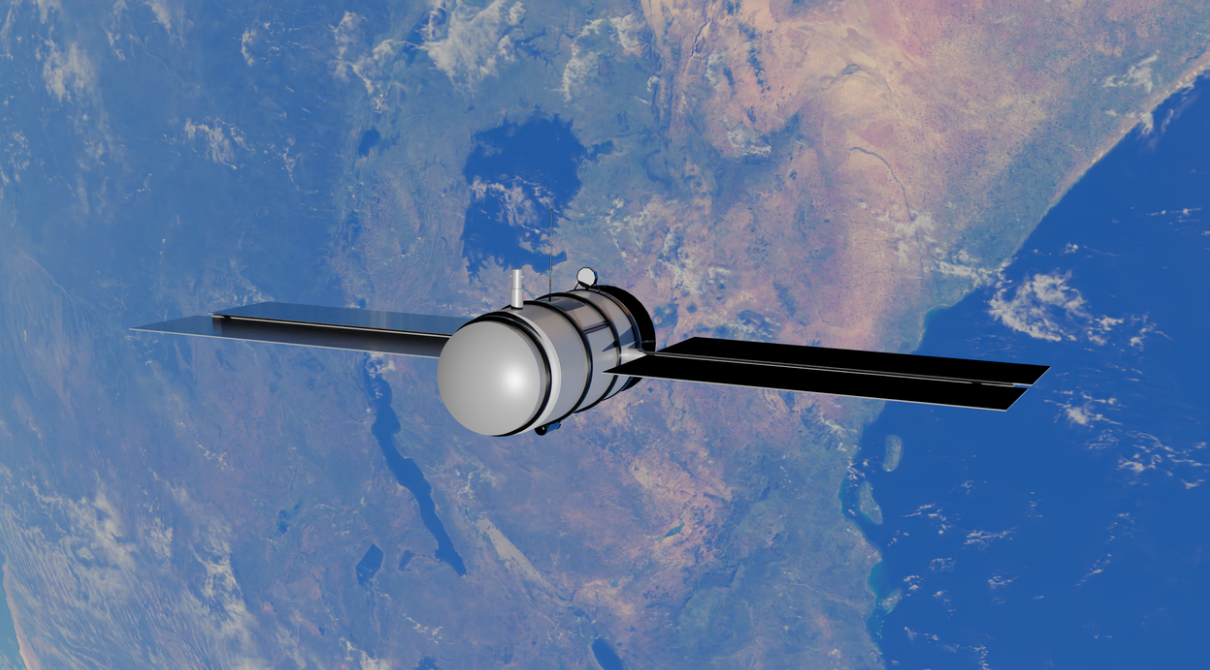
Post-quantum semiconductor developer SEALSQ Corp and its parent company WISeKey International Holding Ltd have detailed engineering and deployment milestones for their Quantum Spatial Orbital Cloud (QSOC) platform. The space-based infrastructure architecture is designed to configure low-Earth orbit (LEO) satellites as independent, tamper-resistant computing nodes delivering post-quantum cryptography (PQC), certified quantum randomness, and localized edge processing from orbit. The companies confirmed that the initial QSOC-dedicated hardware payload has finalized development and remains on schedule for orbital deployment aboard a SpaceX mission during the fourth quarter of 2026, anchoring a multi-year scaling roadmap aimed at establishing a 100-satellite constellation by 2033.
The Converged Hardware Payload: Lattice Cryptography and Orbital Randomness
The technical execution of the QSOC framework relies on a distinct hardware-software integration layer embedded directly within the satellite’s core processing backplane. SEALSQ supplies the underlying physical architecture, incorporating hardware-accelerated post-quantum cryptographic microcontrollers designed to execute lattice-based mathematical algorithms capable of resisting future quantum decryption threats. The onboard instrumentation package pairs these secure chips with localized Quantum Random Number Generation (QRNG) hardware modules and autonomous edge artificial intelligence processors. By establishing an independent Root of Trust (RoT) outside of terrestrial data center boundaries, the satellite nodes can perform real-time cryptographic key distribution, decentralized identity verification, and machine-to-machine (M2M) ledger authentication sequences directly from space to land-based critical infrastructure.
Constellation Scaling Frameworks and Stratified Commercial Operations
The late 2026 launch transitions previous orbital validation metrics into a standardized commercial cloud service layer, building upon data gathered from 21 partner-operated satellite payloads successfully deployed via SpaceX vehicles since 2023. These preliminary flight operations verified the functionality of onboard cryptographic digital wallets and secure microcontrollers under severe radiation and thermal stresses in space. At Full Operational Capability (FOC) in 2033, the global infrastructure will operate under a bifurcated commercial framework: WISeKey’s subsidiaries will manufacture, launch, and manage the physical satellite buses and ground-segment communications, while SEALSQ will function as the independent cloud operator, managing customer service-level agreements (SLAs), post-quantum security tokens, and autonomous node orchestration for governments, financial institutions, and defense networks.
The official corporate announcement detailing the upcoming SpaceX payload integration timelines and infrastructure milestones can be reviewed via the active GlobeNewswire here. For a comprehensive historical overview tracking the multi-year division of labor, cloud capacity agreements, and SLA structures established for this space network, read our recent coverage on the platform’s operational architecture here.
In GQI Portal
The players behind the news
The team that writes QCR tracks every company, deal and technology in the GQI Factory, GQI's verified database of the quantum industry. Next up: every story linked to its players, coming to QCR's paid plans.
- Players Companies and institutions across the quantum industry, by segment.
- Scorecards How the players compare on hardware, software, funding and more.
Newsletter
QCR Alerts in your inbox
The latest reporting and analysis from Quantum Computing Report. Free, unsubscribe any time.