

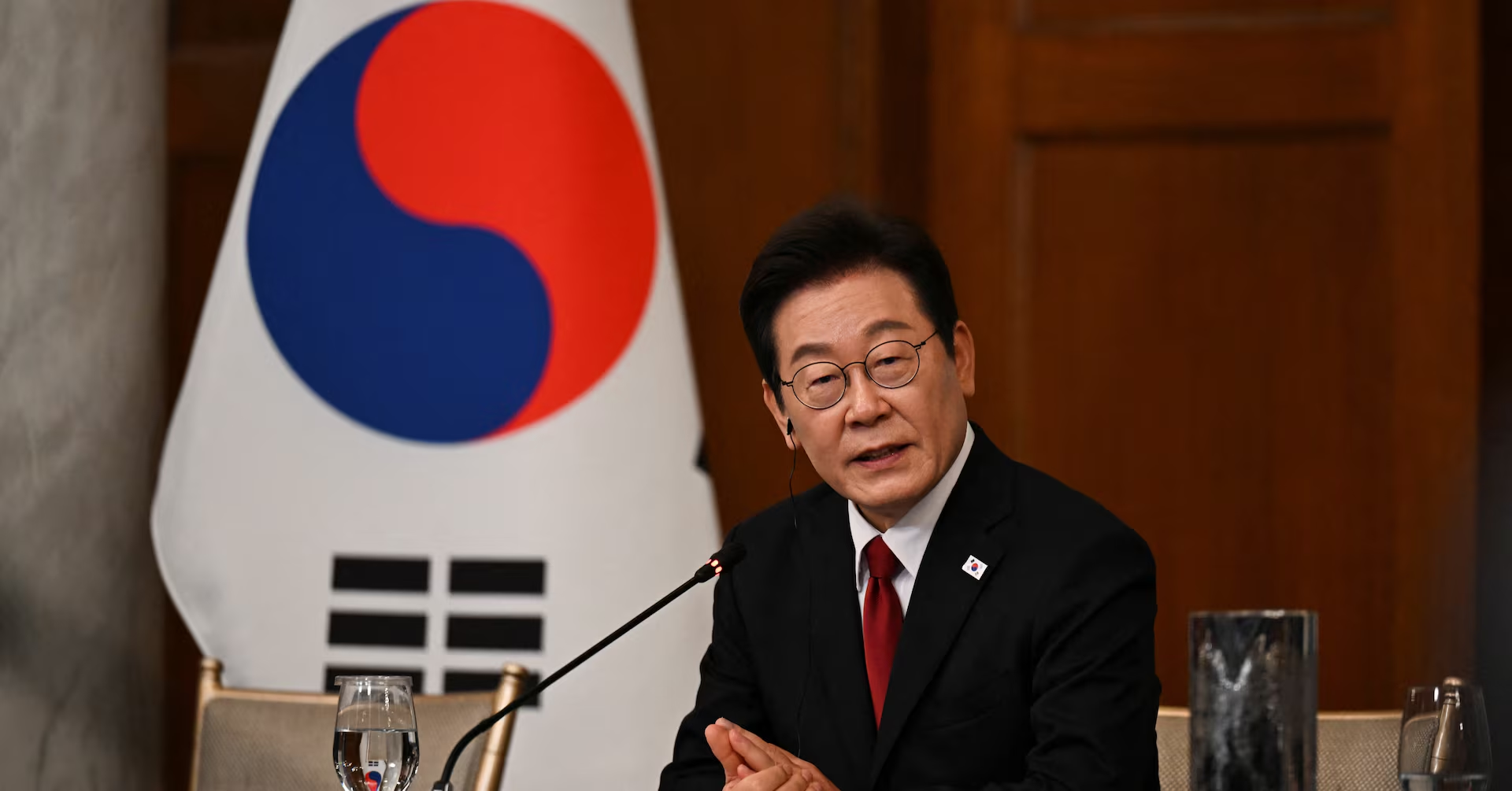
The Ministry of Science and ICT has finalized the Sixth Basic Plan for Science and Technology (2026–2030), establishing South Korea’s highest-level statutory framework for long-term technological sovereignty and AI-driven growth. Following a formal deliberation meeting by the National Science and Technology Advisory Council, the government committed to investing over 200 trillion won ($128.8 billion USD) in public-funded research and development over a five-year period. Managed under a unified national coordination system led by Deputy Prime Minister and Minister of Science and ICT Bae Kyung-hoon, the comprehensive blueprint marks a sharp shift from prior fiscal discipline programs, introducing stable funding baselines to insulate local supply chains against volatile external macroeconomic disruptions.
                    [ South Korea Sixth Basic Plan Capital Blueprint ]
[ Total Public R&D Funding ] ──► 200+ Trillion Won (Secured through 2030 for sovereign tech)
                                        │
                                        ▼
[ Earmarked Strategic Pool ] ──► 60 Trillion Won (Concentrated across 55 core tech vectors)
                                  • Core: AI, Semiconductors, Bio, and Quantum computing
The Ten Strategic Vectors and Sovereign Infrastructure Initiatives
The cornerstones of the technology-led growth strategy are ten designated national strategic technology fields, which will directly receive 60 trillion won of the centralized budget across 55 targeted technology classifications. These critical vectors include:
- Artificial Intelligence (AI) & Next-Generation Networks: Developing independent sovereign foundation models by 2027 to branch into domain-specific specialized applications, while backing commercial 6G rollouts by 2030.
- Semiconductors & Displays: Implementing the Semiconductor Special Act to fund ultra-high-efficiency, low-power microchip architectures and accelerate high-capacity industrial clusters with dedicated site, power, and water logistics.
- Quantum Technologies: Stabilizing long-horizon deep-tech development pathways across quantum computing, secure quantum communications, and quantum sensing frameworks.
- Advanced Bio & Future Energy: Scaling up digital healthcare platforms alongside carbon-free energy systems, including next-generation nuclear fusion, modular arrays under the Special Act on Small Modular Reactors, and an ultra-high-voltage direct current (HVDC) west coast transmission line connecting Saemangeum and Seohwaseong by 2030.
- Aerospace, Oceans, Batteries, Security, Robotics, and Advanced Materials: The remaining cross-ministerial clusters driving deep-tech military, commercial, and manufacturing autonomy.
Securing 260,000 GPUs and Overhauling the Academic Research Ecosystem
To establish a world-leading computing base for nationwide AI transformation, the government will secure a massive pool of 260,000 public-private graphics processing units (GPUs). This high-performance hardware deployment will work in tandem with the construction of the nation’s sixth national supercomputer and the National AI Computing Center. Legal enforcement structures will be stabilized via the Special Act on AI Data Centers in February 2027 and the National Research Data Act in June 2027. Through an “AI for Everyone” free public service framework, the administration aims to elevate the baseline AI service experience rate from 44.5% to over 70% by 2030, while simultaneously scaling the gross sales of localized research and development special zones from 85 trillion to 150 trillion won.
                           [ Research Environment Re-Engineering ]
Administrative Cut  ──► Dropping research forms by 90% (from 2,171 down to 154 documents).
Evaluation Reform   ──► Abolishing strict grade scales to reward challenging, failure-tolerant R&D.
Human Capital Pool  ──► Funding 20 National Scientists, 10,000 student grants, & 4,000 postdocs.
The Sixth Basic Plan fundamentally overhauls the domestic research ecosystem to eliminate administrative overhead. The government will eliminate long-criticized bureaucratic hurdles by cutting research administrative forms by 90% (reducing them from 2,171 down to 154 specific formats). To foster breakthrough innovation, the strict project-based evaluation grade system is being dismantled; instead, follow-up funding will link seamlessly to high-risk, challenging projects regardless of whether initial targets are met. To mitigate brain drain, the ministry will fund 20 “national scientists” annually, provide stable scholarships to 10,000 science and engineering graduate students, support 4,000 new postdoctoral researchers, and allocate 240 master’s-level specialist AI research personnel annually to private industries and government research labs to secure South Korea’s structural competitiveness.
The official cross-ministerial execution roadmaps, GPU procurement targets, and evaluation metrics can be reviewed here, and the data regarding national quantum milestones, deep-tech corporate creation tasks, and regional development initiatives can be accessed here.
In GQI Portal
The players behind the news
The team that writes QCR tracks every company, deal and technology in the GQI Factory, GQI's verified database of the quantum industry. Next up: every story linked to its players, coming to QCR's paid plans.
- Players Companies and institutions across the quantum industry, by segment.
- Scorecards How the players compare on hardware, software, funding and more.
Newsletter
QCR Alerts in your inbox
The latest reporting and analysis from Quantum Computing Report. Free, unsubscribe any time.