

By Doug Finke
When I was a junior mainframe computer engineer at IBM, management constantly drilled one core concept into us: RAS: Reliability, Availability, and Serviceability. This principle remains just as vital today as it was back then.
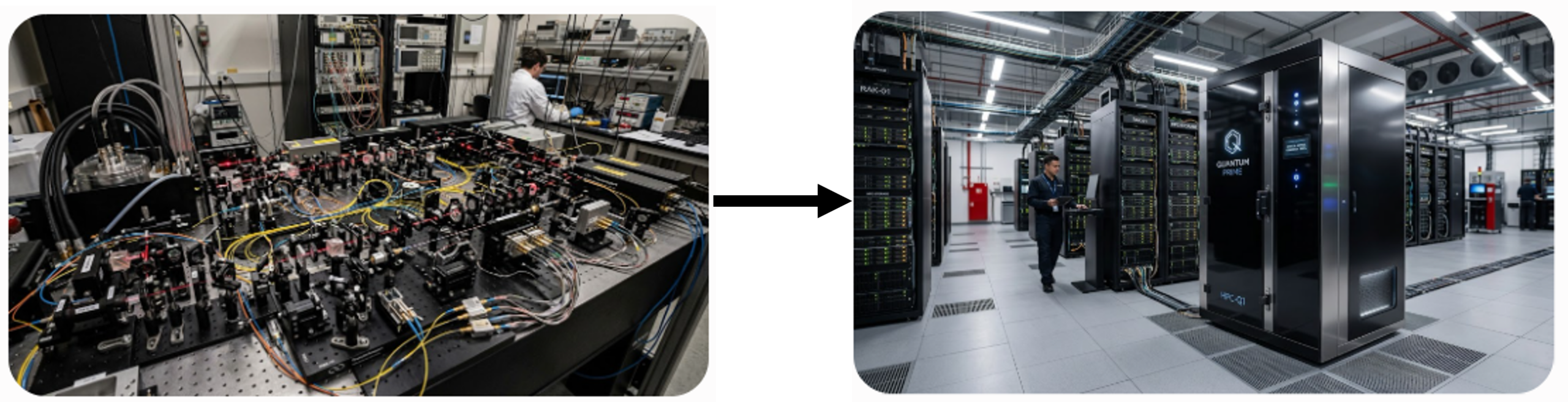
The quantum computing landscape is evolving rapidly as these machines transition from laboratory prototypes to commercial production. Quantum systems are growing exponentially more powerful and capable; we are seeing an increase in on-premise installations at remote customer sites, and end users are beginning to rely on quantum computers for mission-critical operations.
The Shift from Lab to Enterprise
The requirements for a prototype machine housed in a university or corporate R&D lab are vastly different from those of a commercially deployed system. While unexpected downtime is always a nuisance in a development environment, the consequences are rarely as severe as they are when an enterprise depends on that machine for live, production-level activities.
Availability
In a development setting, engineers frequently take systems offline to implement fixes, modify hardware, or run experimental tests. Consequently, these machines operate nowhere near the 99.9% uptime (availability) typically mandated by enterprise production environments.
Serviceability
Serviceability requirements also diverge sharply between development and production models. If a component fails in a lab, replacing it is relatively straightforward because the engineers and senior technicians who built or specified the part are usually right there on-site. However, servicing a computer at a remote customer facility is a completely different challenge. To mitigate this, enterprise machines must be designed for maximum simplicity, utilizing modular Field Replaceable Units (FRUs) and other techniques.
Commercial Expectations
Enterprise customers purchasing computers for commercial use are far less tolerant of unexpected disruptions or limited availability. They have their own operational objectives, and the computer is simply a tool to help them achieve those goals. Users expect the system to be online whenever they need it; any failure can cause severe, costly disruptions to their business.
As quantum computers proliferate, quantum hardware manufacturers will increasingly adopt long-standing practices from the classical computing industry. This shift will include:
- Service Level Agreements (SLAs): Contractual guarantees ensuring specific levels of uptime and availability.
- Strategic Inventories: Maintaining local and regional stockpiles of spare parts for rapid deployment.
- Hardware Redundancy: Engineering duplicate critical subsystems to keep the machine running seamlessly if a primary component fails.
- Remote Telemetry: Implementing secure, outbound communication links so manufacturers can proactively monitor system health and performance.
Deployment and Security Considerations
Installing an on-premise quantum computer at a customer site introduces unique facilities challenges. Infrastructure requirements must be meticulously audited before delivery:
- Can the facility supply the substantial electricity required?
- Are there dedicated liquid or water-cooling infrastructure needs?
- Can the physical system actually fit through the facility’s doors and freight elevators once delivered?
Finally, because quantum computers must interface directly with a customer’s existing classical IT infrastructure, cybersecurity is paramount. Vendors must ensure that the quantum computer’s software stack introduces no new vulnerabilities that a hacker could exploit to penetrate the broader enterprise network. To provide enterprise buyers with peace of mind, quantum vendors will increasingly need to secure SOC 2 Type 2 certification, proving they maintain rigorous security and data confidentiality controls.
Conclusion
When reading news reports about the latest quantum computing breakthroughs, discussions almost exclusively focus on glamorous design metrics like qubit counts, gate fidelities, and error-correction codes. Yet, practical operational characteristics like RAS can be just as critical to long-term success—even if they often fly under the radar until it is too late.
Fortunately, many quantum hardware companies have already hired industry veterans who understand these challenges from their experience in classical IT. But if you are an end user, it is vital to grill potential vendors on these operational logistics during your evaluation and installation planning. And if you are a quantum hardware provider lacking the personnel to manage these deployment challenges, you need to start recruiting for that talent immediately.
In GQI Portal
The players behind the news
The team that writes QCR tracks every company, deal and technology in the GQI Factory, GQI's verified database of the quantum industry. Next up: every story linked to its players, coming to QCR's paid plans.
- Players Companies and institutions across the quantum industry, by segment.
- Scorecards How the players compare on hardware, software, funding and more.
Newsletter
QCR Alerts in your inbox
The latest reporting and analysis from Quantum Computing Report. Free, unsubscribe any time.